

More news on this day
Oman is moving ahead with a major new luxury tourism complex in Muscat, with Omran Group partnering on a nearly 400 million US dollar Four Seasons branded resort and residences that will also see one of the capital’s key marinas upgraded into a high-end leisure hub.
Get the latest news straight to your inbox!
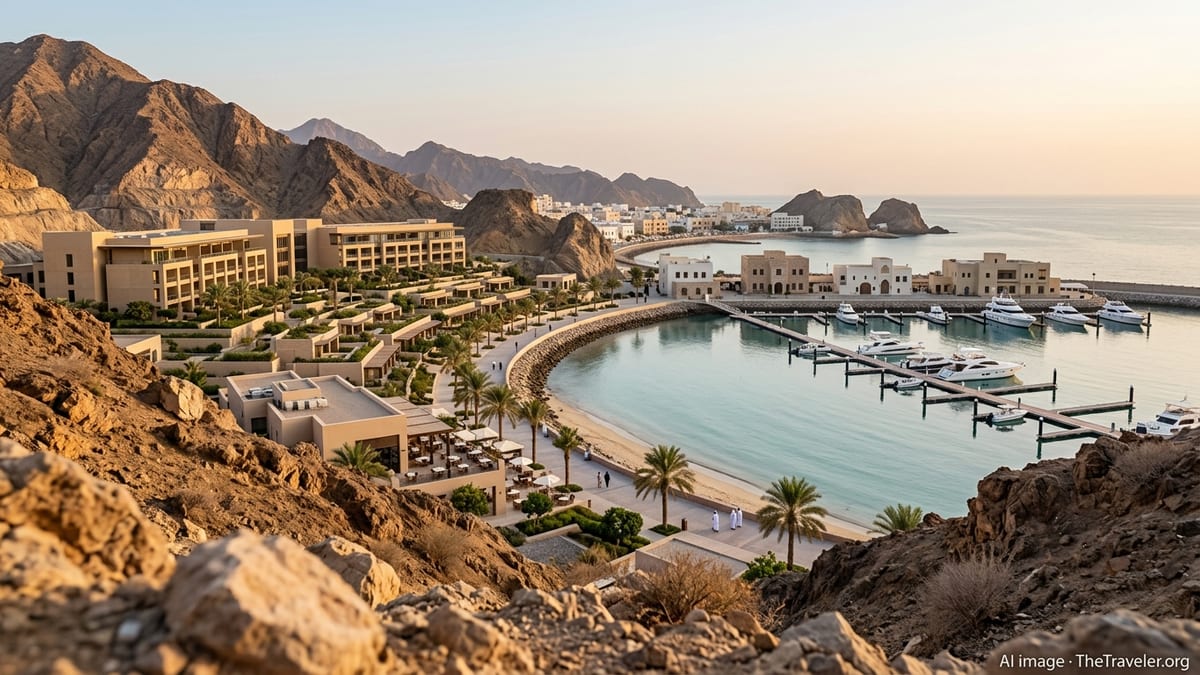
Flagship Waterfront Project for Muscat’s Tourism Vision
Publicly available tender and planning documents describe the Four Seasons luxury resort and residences in Muscat as a flagship mixed-use development on a prime waterfront site in the Al Bustan area of the capital. The project is positioned as part of Oman’s wider strategy to expand high-end tourism capacity and attract international visitors seeking upscale coastal stays.
Information released through Omran Group materials indicates that the scheme will comprise a 200 key five star hotel alongside 91 branded luxury apartments. The mixed-use complex is planned to include food and beverage outlets and high end retail, creating an integrated destination that can serve both international tourists and Muscat residents.
The total built up area is described as approximately 180,000 square metres, placing the development among Muscat’s more substantial hospitality-led projects. Reports on the investment scale place the value of the complex at close to 400 million US dollars, aligning it with other large Gulf luxury tourism ventures that combine resort, residential and lifestyle elements.
The Four Seasons resort will mark the first presence of the Canadian luxury hotel brand in Oman, adding another globally recognised name to Muscat’s growing portfolio of high-profile hospitality operators and reinforcing the city’s positioning in regional luxury travel.
Marina Upgrade at Bandar Al Rawdha as a Core Feature
A defining component of the project is the planned renovation and upgrade of Marina Bandar Al Rawdha, highlighted in project descriptions as one of Oman’s oldest and largest marinas. The marina sits adjacent to the planned resort site, giving the Four Seasons complex direct access to the Gulf of Oman and to leisure boating activities.
According to project briefs shared as part of an expression of interest process, the development scope includes revitalising the marina infrastructure and its ancillary utility buildings. This is expected to enhance berthing capacity and services, aligning the facility with the expectations of visiting yachts and high-end travelers, and integrating it more fully into Muscat’s emerging coastal tourism circuit.
By anchoring the resort to an enhanced marina, planners are positioning the development as both a beachfront retreat and a gateway for excursions along the Omani coast. The approach reflects a broader trend in Gulf tourism planning in which marinas serve as lifestyle anchors, connecting hotels, dining and retail with nautical recreation.
The marina component also supports Oman’s objective to draw more regional and international yacht traffic, which can generate higher-spend visitation and support ancillary services from maintenance to charter operations.
Construction Timeline and Project Phasing
Project documentation indicates that the Four Seasons Muscat development is structured across a four to five year delivery window, including enabling works and two main construction phases. Earlier Omran reporting on the scheme outlined a detailed design phase followed by tendering and build-out, reflecting the complexity of coordinating hotel, residential and marina elements on a constrained coastal site.
The target opening for welcoming the first hotel guests has been indicated as early in the fourth quarter of 2027, subject to construction progress and wider market conditions. This timeline would place the resort’s debut in line with several other large-scale tourism and real estate projects expected to reshape Muscat’s waterfront over the second half of the decade.
The phasing approach is designed to allow core hotel and branded residence components to be prioritised, while marina upgrades and selected retail and dining areas can be sequenced to follow, helping to manage capital deployment and operational ramp up. Such staging is increasingly common in Gulf hospitality projects where developers aim to balance early revenue generation with longer-term placemaking goals.
Omran’s role as the government-linked tourism development arm gives the project access to experience built up through previous large-scale ventures in Muscat and Salalah, including integrated tourism complexes and convention-linked hospitality clusters.
Part of a Broader High-End Tourism Pipeline
The Muscat Four Seasons project is one of several luxury and upper-upscale developments being advanced across Oman as the country seeks to diversify its economy through tourism. Recent annual reporting from Omran highlights planning and design work on projects such as the Opera District in Muscat and waterfront redevelopments around Port Sultan Qaboos, as well as integrated tourism communities in Yiti and beyond.
Sector overviews and investment presentations point to Oman’s efforts to position itself as a premium yet relatively low-density alternative to more crowded Gulf destinations. Emphasis is placed on landscapes, cultural heritage and coastal scenery, with high-end resorts and branded residences serving as key entry points for international travelers.
In Muscat specifically, the addition of a Four Seasons property follows the arrival or expansion of other global luxury and upper-upscale brands in recent years. Analysts of the regional hospitality market note that this clustering of high-end names can strengthen the city’s appeal among affluent visitors, particularly those combining business travel with leisure stays.
The Four Seasons Muscat complex is therefore seen as both a standalone investment and a signal of confidence in Oman’s long-term tourism growth trajectory, with the near 400 million US dollar outlay contributing to job creation in construction and operations, as well as wider supply-chain activity.
Implications for Muscat’s Coastal Urban Fabric
Beyond its tourism and hospitality role, the project is expected to contribute to the ongoing reshaping of Muscat’s coastal urban fabric. By bringing new residential, retail and leisure spaces to the Al Bustan waterfront, the complex will add to a corridor of seaside destinations stretching from the historic Muttrah area through to more recently developed resort zones.
Urban development observers note that such projects can help activate underutilised waterfronts, provided that public access, traffic flow and environmental considerations are factored into their design. In the Muscat context, authorities and developers have placed increasing emphasis on integrating promenades, landscaped areas and community amenities alongside private resort facilities.
For the local community, the introduction of new dining and retail outlets, as well as an upgraded marina, offers additional leisure options close to the city centre. At the same time, the presence of branded residences signals a continued push toward attracting international second-home buyers and long-stay visitors, adding another layer to Muscat’s evolving residential market.
As work advances toward the projected late 2027 opening, the Four Seasons Muscat resort and marina complex will be closely watched as a marker of how Oman balances luxury tourism ambitions with its stated goals of sustainable, culturally sensitive development along one of the Gulf’s most distinctive coastlines.