

More news on this day
Thousands of passengers were left in limbo on Thursday after Oman Air and Qatar Airways grounded a new wave of flights from Muscat and Salalah, deepening disruption across key Gulf and South Asian routes to hubs including Bahrain, Doha and Kochi.
Get the latest news straight to your inbox!
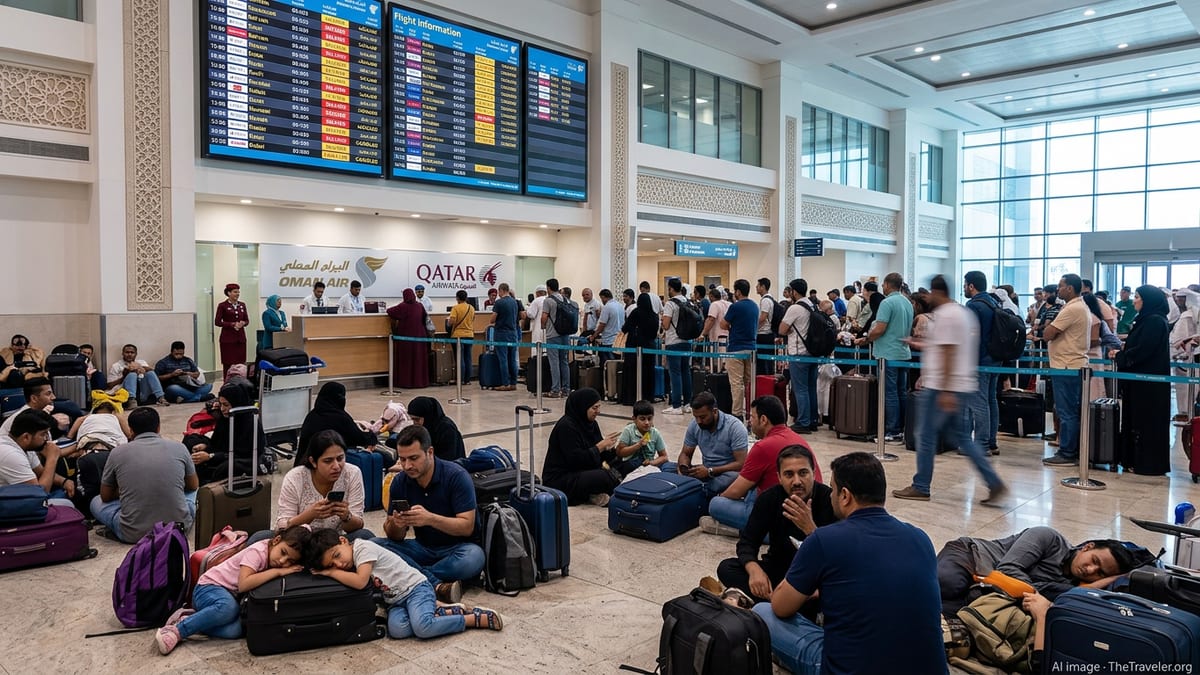
Fresh Wave of Cancellations Hits Oman’s Key Gateways
Oman’s two main international gateways, Muscat International Airport and Salalah Airport, are again under pressure as Oman Air and Qatar Airways scrubbed at least a dozen additional departures and arrivals, according to airport information screens and passenger accounts. The latest wave of cancellations comes on top of a week of rolling disruptions triggered by intermittent airspace closures and severe congestion across the Gulf.
Flights linking Muscat and Salalah to Bahrain, Doha and several Indian cities including Kochi and other Kerala and south Indian hubs were among the hardest hit. Travelers reported abrupt gate changes followed by last minute cancellations, with some aircraft re-routed to alternative airports or held on the ground awaiting revised clearances.
While Omani authorities stress that the country’s airspace remains formally open, aviation analysts note that Muscat has become a major overflow hub as airlines divert around restricted corridors in neighboring states. That surge in traffic has tightened runway slots, crew availability and aircraft rotations, making short-notice cancellations more likely.
Regional carriers have been juggling limited safe routing options and patchy air traffic control capacity. In practice, that has left airlines prioritizing a narrow band of long haul services while trimming secondary Gulf and South Asia connections such as Muscat to Bahrain and Salalah to Doha, even on heavily booked departures.
Stranded Passengers Face Long Waits and Patchy Support
For many travelers, the operational explanations are little comfort. Passengers arriving in Muscat on diverted or delayed services describe crowded transfer halls and long queues at rebooking desks, with limited information on when they might move again. Families attempting to reach Kochi and other Indian cities report being offered rebookings several days later or alternative routings through third country hubs.
In Salalah, a smaller facility with fewer hotel and transport options, the impact is particularly acute. Passengers on grounded Oman Air and Qatar Airways flights say they were handed meal vouchers but struggled to secure accommodation as local hotels quickly sold out. Others opted to sleep in terminal seating areas in the hope of catching relief flights announced at short notice.
Social media posts and traveler forums are filled with accounts of inconsistent communication. Some passengers say they received cancellation emails or app notifications only after reaching the airport, while others claim their bookings continued to show "on time" even as departure boards turned red. Several travelers reported that call centers were overwhelmed, with hour long wait times or dropped lines.
Consumer advocates in the region argue that while safety and regulatory compliance must come first, airlines still have a responsibility to provide clear, proactive communication and adequate care. They are urging affected passengers to keep receipts for food, transport and hotels in case reimbursement policies are later expanded.
Knock On Effects for Bahrain, Doha, Kochi and Other Hubs
The grounding of additional services from Muscat and Salalah is rippling outward to some of the Gulf and Indian Ocean’s busiest transit points. Bahrain and Doha, both heavily reliant on seamless regional feeds, are seeing gaps in their usual banks of connecting flights as Oman Air and Qatar Airways juggle reduced schedules.
Travel agents in the region report that itineraries involving Muscat or Salalah connections are now among the hardest to guarantee. Routes from Europe and North America into the Gulf that once relied on onward links to Kochi, Mumbai and other Indian cities via Oman are frequently being rebooked through alternative hubs in the United Arab Emirates, Saudi Arabia or direct into India where capacity allows.
In India, airports in Kerala and along the southwest coast are bracing for uneven arrival flows. One day may see a cluster of delayed services landing within hours of each other, while the next features gaps as flights from Oman are consolidated or canceled. Local ground handlers say this on off pattern is straining baggage handling and immigration staffing, which were calibrated for steadier traffic.
Industry observers warn that the disruption is also complicating cargo movements, particularly time sensitive shipments that rely on belly hold space in passenger aircraft. With aircraft grounded or rerouted, exporters and logistics firms are scrambling for space on remaining flights or shifting some commodities to slower sea freight.
Airlines Add Relief Flights but Capacity Lags Demand
Oman Air and Qatar Airways both say they are operating limited relief services to clear backlogs of stranded passengers from Muscat and Salalah. Airline statements and internal bulletins shared with travel agents point to ad hoc departures to major hubs such as Doha, Bahrain, London and key Indian cities when airspace windows and crew rosters allow.
However, the number of available seats still falls far short of demand. Many of the relief flights are departing nearly full with passengers who have already spent days in transit. Travelers newly affected by the latest cancellations are often being told that the first available rebooking falls several days out, particularly if they are traveling as a family group and need seats together.
To maximize flexibility, some carriers are relaxing fare rules, allowing one time date and routing changes without penalty and encouraging passengers with nonessential travel to postpone their trips. Nonetheless, check in areas at Muscat and Salalah remain crowded at peak times, as hopeful travelers arrive early in the day seeking standby seats or last minute re-routing through any open corridor.
Airport staff and airline ground handlers describe an all hands effort to move passengers whenever a viable flight can be mounted. That often means late night or early morning departures, short boarding windows and last minute gate announcements, further complicating plans for those traveling with small children or elderly relatives.
What Travelers Should Do If They Are Booked via Oman
With conditions changing daily, travel experts recommend that anyone holding tickets involving Muscat or Salalah in the coming days build extra flexibility into their plans. Passengers are urged to monitor their booking directly on the airline’s website or app, rather than relying solely on third party agents, and to ensure that contact details and notification preferences are up to date.
Those with essential travel to Bahrain, Doha or Indian destinations such as Kochi should, where possible, consider routings that avoid multiple connections in the most affected hubs. In practice, that may mean accepting longer journeys via alternative Gulf or South Asian gateways, or shifting to carriers that still have more stable schedules on specific point to point routes.
Travel insurers say policyholders should review the fine print on coverage for airspace closures and security related disruptions. Some comprehensive policies may offer compensation for extended delays, additional accommodation and missed connections, while basic products may not. Experts also recommend keeping a written record of all airline communications and photographing departure boards or cancellation notices.
While aviation authorities in Oman and neighboring states continue to work on restoring more predictable traffic patterns, there is broad consensus that disruption will persist in the short term. For now, passengers transiting Muscat and Salalah are being advised to prepare for the possibility of unexpected overnight stays, to travel with essential medications and valuables in their hand luggage, and to remain alert to rapid schedule changes as airlines respond to a fluid regional situation.