

More news on this day
Oman Air has suspended flights to nine destinations across the Gulf, Levant and Europe as widening security concerns and airspace restrictions reshape travel across the Middle East in March 2026.
Get the latest news straight to your inbox!
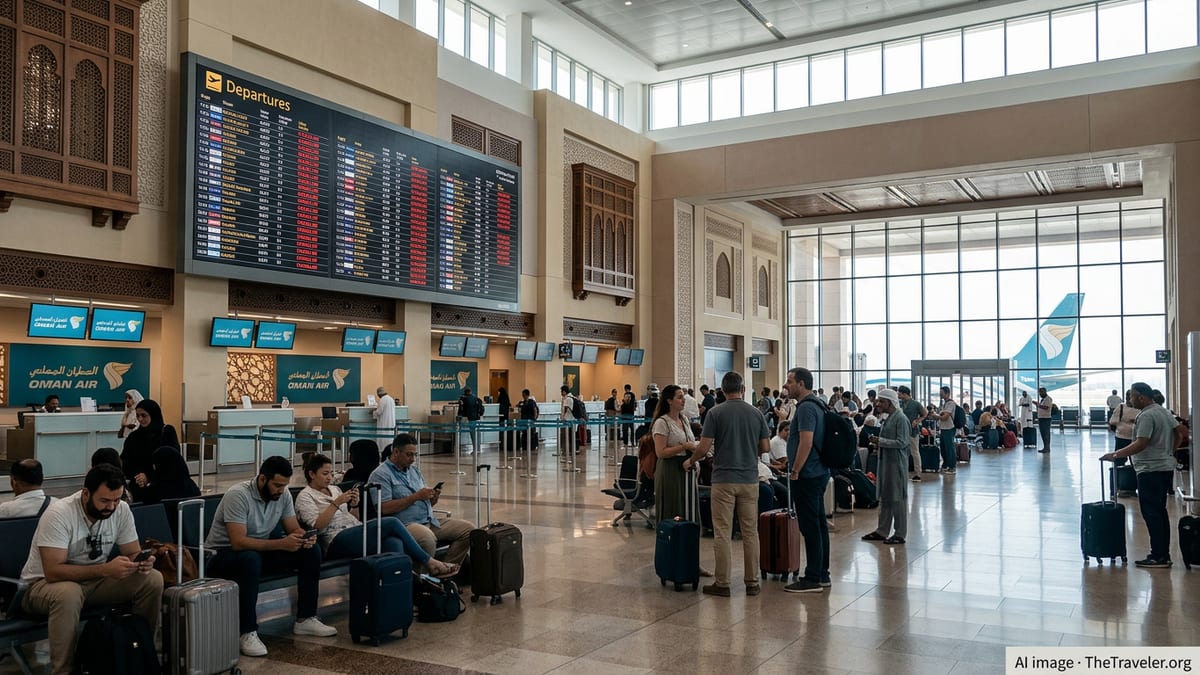
Temporary Halt Covers Key Gulf and Regional Gateways
According to published coverage from regional and international outlets, Oman Air has introduced a temporary suspension of services to nine destinations: Amman, Dubai, Manama, Doha, Dammam, Kuwait City, Baghdad, Khasab and Copenhagen. The interruption affects flights scheduled to operate between 9 March and 15 March 2026, with the carrier citing ongoing regional airspace restrictions and security risks as the primary triggers.
Reports indicate that the pause spans several of Oman Air’s most important short- and medium-haul routes, including dense shuttle sectors within the Gulf and strategic links to Iraq and northern Europe. While the affected period is defined as a one-week window, coverage suggests that further adjustments are possible if security conditions or overflight permissions change.
Oman Air has stated in public advisories that passengers booked on the suspended routes are being offered rebooking options or refunds in line with the airline’s disruption policy. Travellers are being urged, via publicly available information, to monitor airline channels and airport information screens frequently, as timetables remain fluid across the region.
Industry analysts quoted in open reports note that the breadth of destinations involved underlines the volatility facing carriers headquartered near the Strait of Hormuz, where routes intersect multiple national airspaces currently subject to heightened risk assessments.
Regional Security Crisis Ripples Through Middle East Skies
The suspensions come against the backdrop of a broader security crisis in the Gulf of Oman and the wider Middle East. Open-source reporting describes an escalation of hostilities involving Iran and several regional and Western actors since late February, including drone and missile incidents near key maritime and energy corridors.
Publicly available information shows that, in response, authorities in several states have imposed temporary airspace closures or restrictions over parts of Iran, Iraq and neighbouring countries. These measures have narrowed the available corridors for civilian aviation, forcing airlines to divert, lengthen or in some cases cancel flights that would normally traverse contested zones.
Aviation bulletins and risk advisories circulated to corporate and government travellers highlight concerns about potential spillover into commercial aviation, especially at cruising altitudes typically used by long-haul traffic. Insurers and security consultants have recommended avoiding specific flight information regions where threat levels are considered elevated, which in practice leaves carriers with fewer viable routings in and out of the Gulf.
For Oman, situated at the mouth of the Strait of Hormuz, this evolving security picture has direct implications for Muscat’s role as a connecting hub. Even when Omani airspace itself remains technically open, regional closures can render certain routings uneconomical or operationally complex, prompting targeted route suspensions such as those now affecting Oman Air’s nine destinations.
Oman Airports Stay Open as Muscat Adapts Operations
Despite the airline suspensions, publicly available statements from Oman Airports indicate that Muscat International Airport, Salalah Airport and Sohar Airport remain fully operational. Airport operators describe normal runway availability and no slot restrictions, noting that terminal operations continue while airlines adjust schedules around regional constraints.
Travel-industry briefings suggest that Muscat has been attempting to function as a resilience hub during previous phases of the crisis, accommodating rerouted services when neighbouring hubs faced more stringent closures. The latest Oman Air suspensions, however, highlight the limits of what a single hub can absorb when overflight restrictions extend across multiple states and airways.
Reports from aviation tracking services show a mixed picture: some long-haul flights continue to overfly Oman on adjusted routings that add extra flight time, while shorter regional sectors are more likely to be dropped entirely due to the relative inefficiency of lengthy detours. This pattern has contributed to a patchwork of cancellations, schedule changes and one-off “rescue” flights across carriers operating in and around the Gulf.
Airport-focused coverage notes that ground operations teams in Muscat and Salalah have been managing intermittent spikes in passenger numbers as travellers affected by cancellations seek alternative routings or wait out disruption at hotels and in transit areas. Crowd levels and processing times are reported to vary widely from day to day, depending on how different airlines respond to evolving airspace notices.
Impact on Travellers and Booking Trends
The suspension of nine routes has immediate consequences for travellers who rely on Muscat as a connecting point between Europe, the Gulf, the Levant and South Asia. Passenger-rights platforms tracking the disruption report increased demand for rebooking assistance, compensation assessments and itinerary overhauls as customers scramble to replace cancelled Oman Air sectors with alternatives on other carriers.
Corporate travel managers and tour operators quoted in regional business media describe a rapid shift in booking patterns, with some organisations temporarily diverting traffic away from the most affected hubs and destinations. There are indications that point-to-point services bypassing traditional Gulf hubs are gaining short-term appeal among risk-averse travellers, despite longer journey times or higher fares.
At the consumer level, travel forums and social media posts suggest heightened anxiety around near-term trips involving Muscat or other Gulf airports. Passengers report checking flight status multiple times before departure, keeping flexible accommodation plans, and favouring tickets with generous change and refund conditions. Some airlines across the region have introduced temporary waiver policies, allowing date changes without additional fees for journeys booked before the latest escalation.
Travel-insurance providers are also in the spotlight, with advisers noting that coverage for security-related disruption can vary significantly between policies. Public guidance available from insurers and regulators encourages travellers to read fine print carefully, especially regarding exclusions tied to war, terrorism and government airspace closures.
What Passengers Using Oman as a Hub Should Know Now
For travellers currently booked to or through Muscat, the most immediate priority is to verify whether their itinerary includes any of the nine suspended destinations. Publicly available Oman Air advisories recommend that affected passengers avoid going to the airport until they have received confirmation of new travel arrangements or alternative flights.
Travel industry experts writing in open advisories recommend that passengers keep contact details up to date in airline profiles and booking records so that automated alerts about cancellations or schedule changes reach them promptly. They also suggest monitoring airport arrivals and departures boards online, where possible, to cross-check airline notifications against real-time operations.
For those yet to book, analysts commenting in regional travel media advise considering routing flexibility as a key planning factor in the weeks ahead. Options may include choosing tickets with free date changes, allowing extra connection time, or selecting itineraries that avoid currently congested or restricted airspace where suitable alternatives exist.
While there are no firm timelines for a full normalisation of Middle East airspace, risk consultants and aviation observers broadly expect some level of disruption to persist as long as the underlying security tensions remain unresolved. Travellers using Oman as a gateway are therefore likely to face a more dynamic, less predictable flight environment through at least the second half of March 2026.