

More news on this day
Plans for a new regional airline in Oman are sharpening the spotlight on four strategically placed destinations – Khasab, Al Jabal Al Akhdhar, Masirah and Suhar – that authorities are positioning as the next wave of growth hubs for tourism and domestic connectivity.
Get the latest news straight to your inbox!
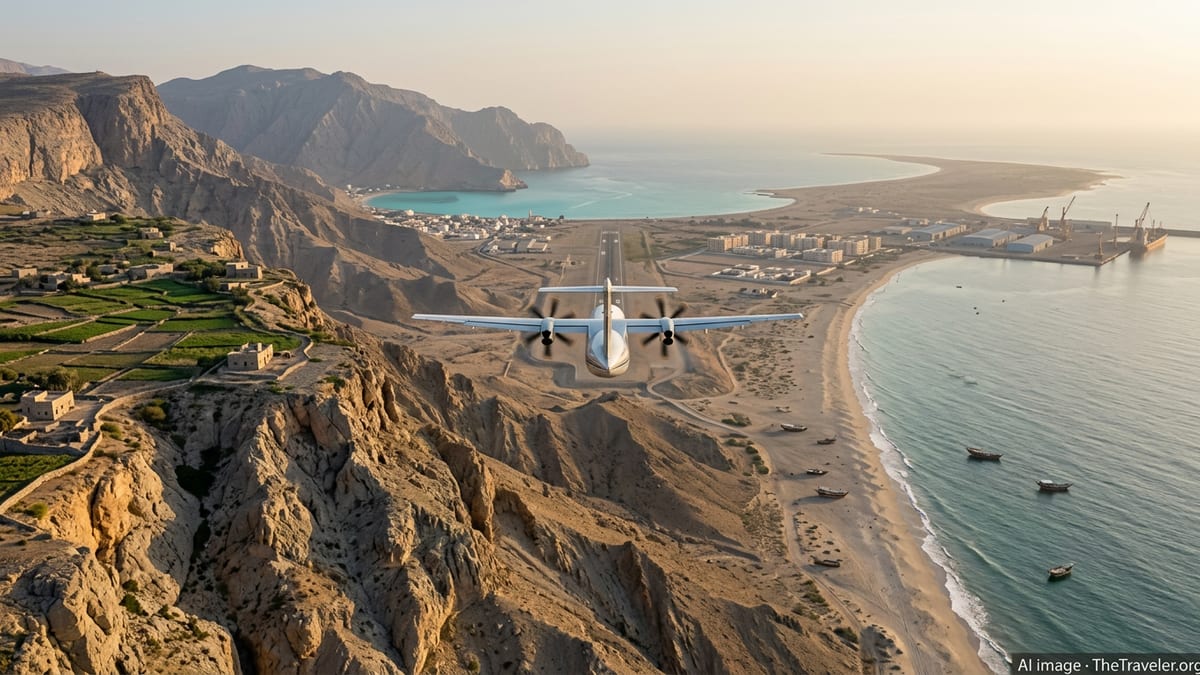
Regional Airline Vision Tied to Airport Development Wave
Publicly available aviation and infrastructure documents indicate that Oman is moving ahead with a strategy to expand regional air connectivity through a new carrier focused on domestic and short-haul routes. The concept is closely linked to the country’s ongoing programme to develop and upgrade a network of regional airports beyond Muscat and Salalah, including facilities serving Khasab, Masirah and Suhar, as well as a high-altitude airfield for the Al Jabal Al Akhdhar area.
Notices issued in recent months for the development of airports at Jabal Akhdar, Masirah and Sohar highlight an intention to build or enhance civil infrastructure capable of handling scheduled passenger services. Industry coverage of Oman’s aviation sector describes these projects as part of a long-term plan to disperse traffic away from the capital, encourage domestic tourism and improve access to more remote governorates.
While full operational details of the planned regional airline have yet to be published, analysts following Oman’s transport policy note that a dedicated carrier would fit with the country’s broader Vision 2040 diversification agenda. Under that framework, air connectivity is viewed as a tool to stimulate investment in hospitality, logistics and outdoor tourism across secondary cities and nature-focused destinations.
The new airline is widely expected to complement, rather than compete with, existing operations at Muscat International Airport. By focusing on thinner domestic routes and short hops across the Gulf, it would likely act as a feeder to long-haul services while giving under-served regions more frequent and reliable access to the national network.
Khasab and Musandam Poised for Stronger Links
Khasab, on the northern tip of the Musandam Peninsula overlooking the Strait of Hormuz, is seen as one of the principal beneficiaries of enhanced regional air services. The city is already accessible via Khasab Airport, which handles limited scheduled flights from Muscat and charter movements for tour operators serving the fjord-like khors and coastal resorts.
Tourism development plans published for Musandam, including an integrated tourism complex in Khasab and upgrades at the port, point to an expectation of rising visitor numbers in the coming years. A regional airline with more frequent connections to Muscat and potentially to other Gulf gateways could support that trajectory by making short-break and cruise-linked itineraries easier to package.
Travel industry observers note that Khasab’s proximity to the United Arab Emirates border and its dramatic landscape give it strong potential as a short-haul escape for residents of Dubai and the northern Emirates. Improved domestic frequencies would also benefit local residents, who currently rely heavily on road links through the UAE to access the rest of Oman.
With Musandam positioned as a showcase for coastal scenery, marine excursions and boutique resorts, a stronger aviation offering anchored by a regional carrier could help shift Khasab from a niche adventure stop to a more mainstream high-end destination within Oman’s portfolio.
Al Jabal Al Akhdhar and the Rise of High-Altitude Tourism
Al Jabal Al Akhdhar, part of the Al Hajar mountain range, has emerged over the past decade as one of Oman’s flagship luxury and eco-tourism destinations, known for its terraced villages, cooler climate and panoramic viewpoints. Road access to the plateau has been steadily improved, with recent reports highlighting completed internal road projects designed to ease movement within the area and support new hospitality investments.
The development of a dedicated regional airline sits alongside discussions about high-altitude air access, often linked to an existing military airfield in the broader Jabal Akhdar region. Infrastructure plans referencing a Jabal Akhdar airport signal that civil aviation authorities are exploring ways to formalise or expand facilities that could, in time, enable scheduled services by a regional carrier.
Such connectivity would be highly significant for hotel operators who currently depend on three to four-hour drives from Muscat to bring in guests. Direct or near-direct air links to the highlands could shorten travel times, encourage weekend stays from within the Gulf and support the positioning of Al Jabal Al Akhdhar as a year-round wellness and adventure escape.
Tourism analysts argue that if air services are paired with careful environmental management, Al Jabal Al Akhdhar could become a benchmark for low-density, high-value mountain tourism in the region. A regional airline would be a critical piece of that puzzle, offering controlled capacity while keeping the destination within convenient reach of regional source markets.
Masirah Island Targeted for Coastal and Nature Tourism
Masirah Island off Oman’s eastern coast has long been associated with its air base and relatively low-profile tourism, despite extensive beaches and recognised wildlife value, including turtle nesting sites. Existing aviation references list Masirah among Oman’s regional airports, but scheduled civil services have historically been limited and subject to operational constraints.
Plans for a regional airline, combined with development notices mentioning Masirah Airport, suggest that decision-makers see an opportunity to bring the island more firmly into the national tourism narrative. More regular and predictable air links could underpin small-scale resort developments, kite-surfing and diving operations, and specialist wildlife tours focused on the island’s coastal ecosystems.
Improved connectivity would also support residents, who currently depend heavily on ferries and intermittent flights for access to mainland services. For the airline itself, Masirah offers a niche coastal route that could be operated with smaller regional aircraft, fitting the profile of the thinner point-to-point markets the new carrier is expected to serve.
Industry commentary points out that, if developed carefully, Masirah could complement Oman’s more established coastal destinations by offering a quieter, nature-focused alternative. A regional airline with tailored schedules for weekend visitors and domestic holiday periods would be central to unlocking that potential.
Suhar Positioned as Industrial and Tourism Gateway
Suhar, a major industrial and logistics hub on Oman’s Batinah coast, is another focal point in the country’s regional aviation plans. Sohar Airport is already in operation with limited commercial services, but official presentations on airport development and connectivity strategies indicate an ambition to grow its role as both a cargo and passenger gateway.
The city’s port, free zone and proximity to the UAE border make Suhar strategically important for trade and manufacturing. A regional airline basing part of its network strategy on Suhar could provide frequent shuttles to Muscat and Salalah, as well as short regional sectors across the Gulf, linking industrial clients, business travellers and visiting technicians to the national grid of routes.
From a tourism perspective, Suhar also serves as a northern access point to heritage sites, coastal resorts and inland wadis. Enhanced passenger frequencies could encourage stopover tourism and short domestic breaks, particularly if coordinated with marketing campaigns highlighting Batinah’s beaches and historical forts.
A stronger Suhar presence in the route map of a new regional airline would align with broader efforts to balance economic activity across Oman’s regions. By deepening air links from Suhar to other Omani cities, planners aim to support both industrial diversification and emerging visitor demand, reinforcing the city’s dual identity as a production centre and a coastal gateway.