

More news on this day
As airlines race to differentiate their premium cabins, a niche but eye-catching amenity has survived cost cuts and menu simplification: the onboard chef. Once touted widely before the pandemic, the concept has since retreated to a handful of carriers that still see value in white coats and toques moving through the aisle, shaping how their top passengers dine at 35,000 feet.
Get the latest news straight to your inbox!
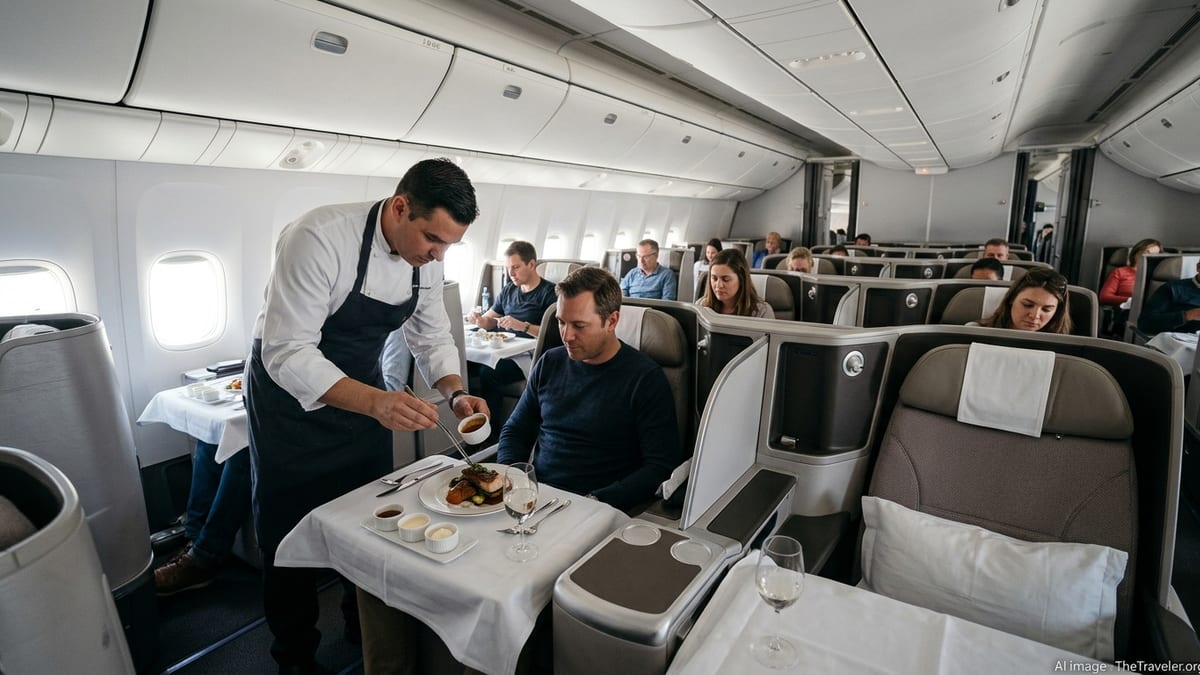
From Marketing Gimmick to Signature Service
The idea of a professional chef working in the cabin emerged in the late 2000s and early 2010s, at the height of the premium travel boom. Carriers in the Middle East and Europe experimented with chefs who would introduce menus, plate dishes and sometimes customize orders, hoping to turn a tray-table meal into something closer to a fine-dining experience. The visual impact of a chef’s jacket in the aisle quickly became a marketing tool on billboards and in inflight videos.
Over time, economic pressures, changing fleets and the shock of the pandemic forced many airlines to scale back or quietly drop the role. Several high-profile programs effectively shifted back to conventional cabin crew service, even when menus continued to bear the names of celebrity restaurateurs. Against this backdrop, the airlines that maintained or rebuilt onboard chef concepts now use them as clear brand signatures in a crowded premium market.
Today, onboard chefs are most commonly found on long-haul routes and in the upper cabins, where ticket prices can support the added staffing and training costs. Industry observers note that the programs tend to survive where carriers position themselves strongly on food and hospitality, and where their home hubs already lean heavily on culinary tourism as part of national branding.
Turkish Airlines and the "Flying Chef" Model
Turkish Airlines has become the most visible standard-bearer for the onboard chef concept. The carrier’s "Flying Chefs" work primarily in business class on long-haul services, presenting menus that highlight both Turkish specialties and international dishes. Publicly available information from the airline and recent independent reviews indicate that chefs introduce the meal service, take orders for main courses and oversee final preparation and plating in the galley, with a focus on presentation and timing.
Reports from frequent-flyer and aviation analysis sites describe chefs discussing choices with passengers, explaining ingredients and offering recommendations, particularly on flights departing from Istanbul where the full catering offering is available. The chefs do not cook from scratch in a traditional sense, since inflight food safety rules require dishes to be prepared and partially cooked in catering facilities on the ground. Instead, they manage reheating, finishing sauces, garnishing plates and coordinating the pace of service with the rest of the cabin crew.
Over the years, the program has evolved from an eye-catching novelty into a central part of how the airline markets its long-haul business class. Travel writers often single out the flying chef as a differentiator, especially in a competitive field where many carriers now offer similar flat-bed seats and large screens. Passenger feedback published online suggests that consistency can vary by route and crew, but the presence of a dedicated culinary professional remains central to the airline’s premium identity.
Other Airlines Still Putting Chefs in the Aisle
Beyond Turkey, only a small circle of airlines still advertise an explicit onboard chef presence. Gulf Air has promoted inflight chefs in its premium cabins, especially on long-haul routes linking Bahrain with Europe and Asia, with an emphasis on tailoring dishes to individual preferences within the limits of galley equipment. Publicly available descriptions indicate that these chefs, like their peers elsewhere, focus on finishing and presentation rather than full-scale cooking in the air.
Austrian Airlines has also been associated with an onboard chef-style service on select long-haul flights, particularly in business class, where staff in chef attire plate meals and offer a more restaurant-style sequence of courses. Scandinavian carrier SAS has previously highlighted inflight chefs on long-haul routes in connection with its focus on New Nordic cuisine, though the exact scope of the program has shifted alongside the airline’s broader restructuring and cabin changes.
Some Asian and Middle Eastern carriers, including Asiana Airlines and Thai Airways, have historically showcased chefs in first or business class on specific aircraft types such as the Airbus A380. In many cases, the role is closely tied to a particular cabin product and may be limited to flagship routes. Industry reports indicate that as fleets are renewed and first class cabins are reduced or retired, these programs are being reassessed, leaving fewer flights where passengers will see a chef’s jacket in person.
What Onboard Chefs Actually Do
Despite the job title, inflight chefs operate under strict constraints that distinguish their work from that of a restaurant kitchen on the ground. Airline catering regulations require meals to be prepared, chilled and transported according to precise safety standards, then reheated on board. As a result, onboard chefs rarely cook raw ingredients from scratch. Instead, they are responsible for bringing pre-prepared dishes to an appealing, restaurant-quality finish within the limits of galley ovens and space.
Tasks typically include supervising the sequence of service, managing oven capacity, monitoring temperatures and adjusting plating to keep components at the right texture and appearance. Chefs often handle final touches such as sauces, garnishes and dessert presentations, aiming to offset the sensory challenges of high-altitude dining, where dry cabin air and lower cabin pressure can dull flavors and aromas. This attention to detail is designed to make the food feel fresher and more tailored than a standard tray meal.
Another core function is customer interaction. Onboard chefs may circulate before takeoff or early in the flight to explain menu options, answer dietary questions and suggest pairings or portion adjustments. They can sometimes accommodate small tweaks, such as combining elements from different dishes or adjusting cooking time for certain proteins within safety limits. Aviation analysts note that this personal contact is as important as the food itself, reinforcing a sense of care and exclusivity that many premium passengers now expect.
Ground-Based Chefs vs. Chefs on Board
The presence of onboard chefs sits alongside a broader shift toward collaboration with celebrity and Michelin-starred chefs on the ground. Many airlines now emphasize signature dishes or seasonal menus created by well-known restaurateurs in partnership with catering companies. In these cases, the chef’s influence is strongest in the design and testing phase, while regular cabin crew carry out the service in flight.
Recent announcements from major carriers in North America and Europe highlight rotating chef partnerships and regionally inspired tasting menus, particularly in long-haul business class. These initiatives often come without a dedicated chef on board, relying instead on detailed preparation instructions, training and simplified plating so that flight attendants can reproduce the intended presentation at scale. For airlines, this approach delivers a culinary story and marketing impact without the staffing complexities of a separate chef position in the cabin.
By contrast, airlines that continue to employ onboard chefs are effectively layering two models: menus that may be designed with outside culinary talent, and in-cabin professionals who interpret and execute those dishes in real time. Industry observers suggest that as competition in premium cabins intensifies, carriers will keep weighing the visibility and perceived value of a chef in the aisle against the costs. For now, the white coat at the galley door remains a rare sight, reserved for a select group of airlines positioning food as a central pillar of their brand.