

Austria rewards even a short trip with an impressive mix of imperial cities, mirror-still lakes and snug Alpine villages. In just one week you can wander grand Habsburg boulevards, listen to Mozart in baroque concert halls, ride funiculars into the high mountains and wake up to church bells echoing across a glassy lake. This itinerary is designed for a first-time visit of seven days, balancing Vienna and Salzburg with the lakes of the Salzkammergut and the Tyrolean Alps, using current transport patterns and practical travel timings.
How to Use This One Week Austria Itinerary
This seven day route focuses on three classic regions: Vienna for imperial architecture and museums, Salzburg and the Salzkammergut for lakes and Alpine villages, and Innsbruck for Tyrolean mountain scenery. It assumes you will arrive and depart from Vienna, which remains the most common entry point thanks to its well connected international airport and frequent long distance rail services.
The itinerary works well by public transport, using Austria’s reliable rail network and regional buses to reach lakeside towns. Trains between Vienna, Salzburg and Innsbruck generally run at least hourly during the day, and advance booking can secure lower fares on the main intercity routes. If you prefer more flexibility for detours and photo stops, renting a car for the middle section between Salzburg and Innsbruck is straightforward, but be aware of parking restrictions in historic centers and villages.
You can follow the route as written for a compact overview, or treat it as a framework. If you travel in summer and want more swimming and hiking time, you may shift a night from Vienna to the lakes. In winter, especially around December, you may wish to linger in the cities for their Christmas markets and indoor attractions, and visit the lakes as day trips.
Austria has four distinct seasons, and this affects how you experience each stop. Spring and early autumn tend to offer milder temperatures, fewer crowds and lower prices, with lakes open for boating and mountain cable cars running on regular schedules. High summer is warmer and livelier but sees more tour groups in Hallstatt and central Salzburg. In winter you find shorter days, Christmas markets and full ski operations in Tyrolean resorts, with some high Alpine roads and minor hiking trails closed.
Day 1 and 2: Vienna’s Imperial Grandeur and Everyday Life
Begin your week in Vienna, where wide boulevards circle an old town of ornate palaces, coffee houses and concert halls. On your first afternoon, focus on getting oriented around the historic center. Walking from the Gothic spire of St. Stephen’s Cathedral, you can trace remnants of medieval streets before emerging on the grand Ringstrasse, lined with the State Opera, Parliament building and museums. Spending time on foot here helps you adjust to the city’s scale and rhythm, with frequent trams as a back-up when your energy flags.
Dedicate part of a day to the former imperial residences that still shape Vienna’s skyline. Schönbrunn Palace, a short metro ride from the center, combines baroque state rooms, formal gardens and views across the city from the Gloriette hill. Closer in, the Hofburg complex once served as the main Habsburg winter palace and now houses museums, a chapel and the seat of the Austrian presidency. Even if you do not tour every interior, walking the courtyards and garden edges gives a sense of the empire that once ruled much of Central Europe.
Vienna’s cultural life extends beyond palaces. Art lovers might spend hours in the Kunsthistorisches Museum or the Belvedere, while others gravitate toward the city’s long established coffeehouse culture. Traditional cafes still serve strong coffee with glassware and silver trays, inviting you to slow down your sightseeing. Exploring neighborhoods like the Naschmarkt area introduces a more contemporary side of the city, with outdoor food stalls, small design shops and casual wine bars sitting alongside older storefronts.
In the evening, consider a concert or opera performance if your budget and schedule allow. Major venues tend to release standing room tickets at modest prices on the day, though popular dates in peak season can sell out. Booking at least a few weeks in advance for marquee performances is sensible, especially if your visit coincides with holidays or major events. Even without a formal ticketed event, walking the city after dark, when domes and facades are illuminated, can be a highlight in itself.
Day 3: From Vienna to Salzburg, Gateway to the Alps
On your third morning, travel west from Vienna to Salzburg. High speed and intercity trains typically take around two and a half to three hours, crossing eastern Austria’s plains before reaching more rugged scenery near the foothills of the Alps. If you prefer to drive, motorways connect the cities in roughly the same amount of time without major mountain passes, though you should account for urban traffic at either end and required vignettes for using Austrian highways.
After checking into your accommodation in Salzburg, start with the compact historic center that lines both banks of the Salzach River. The baroque skyline of domes and spires is framed by green hills, and much of the old town is pedestrian focused, so you can comfortably explore on foot. The Hohensalzburg Fortress, reached by funicular or a relatively steep walk, offers wide views over the city and surrounding peaks and helps you understand Salzburg’s strategic position between Alpine valleys.
Back down in the old town, you can visit Salzburg Cathedral, wander the narrow Getreidegasse with its wrought iron shop signs, and see the exterior of Mozart’s birthplace. While this central area can be busy in the middle of the day, especially when tour groups arrive, early morning and evening bring a calmer atmosphere. Crossing one of the footbridges over the river lets you view the city’s pastel buildings reflected in the water, particularly atmospheric at sunset in clear weather.
Salzburg is also known for its music heritage and frequent concerts. Classical performances take place year round, with the famous Salzburg Festival expanding the schedule in summer. If you are interested in attending a performance, checking dates and reserving tickets ahead of time is advisable, as popular evenings can sell out weeks or months in advance. For a more informal experience, you can often find smaller chamber music or choral concerts advertised locally in churches and smaller halls.
Day 4: Lakes and Villages of the Salzkammergut
Day four is devoted to the Salzkammergut, the lake and mountain region east of Salzburg that many visitors consider the scenic heart of Austria. Within relatively short travel distances, you can combine glassy lakes, steep forested slopes and multi colored villages that seem pressed between water and rock. Good public transport connections make it possible to visit even without a car, though you gain flexibility with your own vehicle for spontaneous stops and lesser known viewpoints.
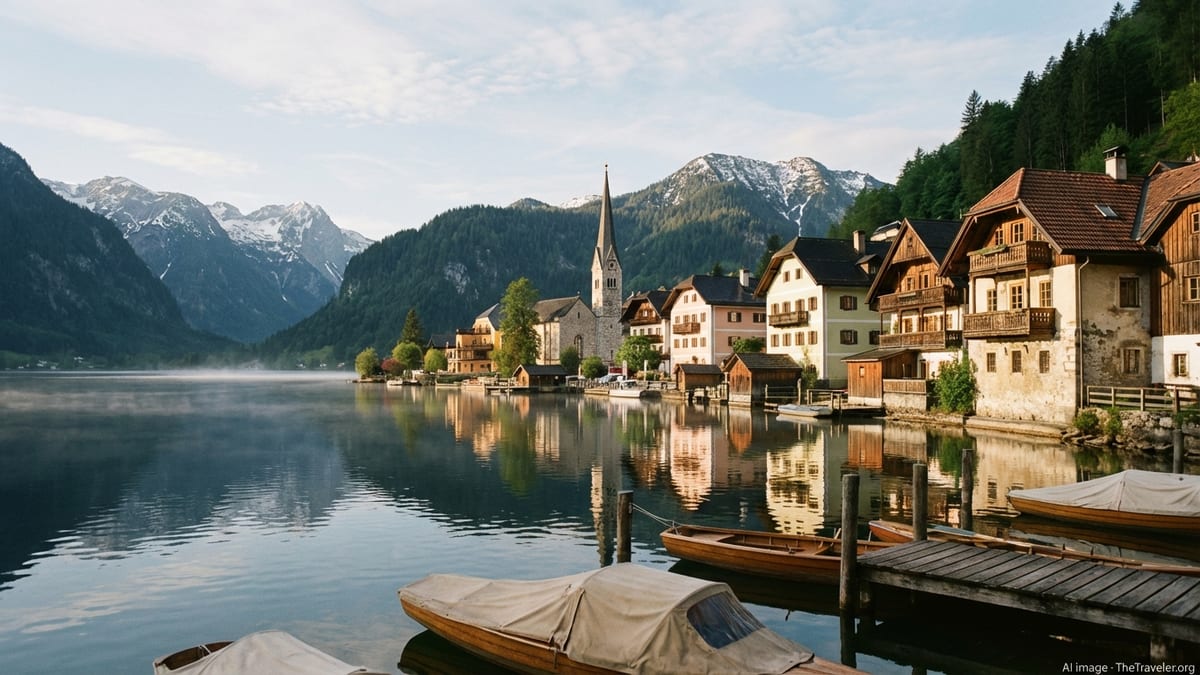
Hallstatt, set on the shore of Lake Hallstätter See beneath dramatic cliffs, is one of Austria’s most photographed villages. Regular trains from Salzburg connect with a small ferry that crosses directly to the waterfront, creating a memorable arrival as the church spire and wooden houses come into view. Visitor numbers have risen steadily in recent years, especially during mid day in peak season, so arriving early in the morning or later in the afternoon can make the narrow lanes feel more peaceful. A lakeside promenade and viewpoints just beyond the center provide the classic postcard perspective.
Beyond walking the village itself, you can ride the funicular up the slope to a viewing platform suspended above the lake, or take a guided tour into the historic salt mine that gave Hallstatt its long lasting importance. Boats on the lake range from simple rental rowboats and electric craft to scheduled services connecting small settlements along the shore. Weather in this region can change quickly, with mist and low cloud often clearing by mid morning to reveal blue skies, so building some flexibility into your day helps.
If you wish to see more of the Salzkammergut, consider adding nearby lakes such as Wolfgangsee or Gosausee to your route. St. Wolfgang and St. Gilgen, villages on Lake Wolfgangsee, offer waterfront promenades, small historic centers and seasonal boat services. Gosausee, ringed by steep rock walls and views to the Dachstein glacier, feels wilder and often sees fewer crowds than Hallstatt. Many visitors find that spending one night in the lake district, rather than returning to Salzburg immediately, allows for quieter early and late hours on the shore and easier access to hiking trails.
Day 5: From Salzburg to Innsbruck via Alpine Landscapes
On day five you continue deeper into the Alps toward Innsbruck, the capital of the Tyrol region. Direct trains usually take around two hours, following valleys and passing beneath peaks that grow more jagged as you head west. From the windows you may glimpse traditional farmhouses, church towers and ski lifts on distant slopes, giving a sense of how closely everyday life and mountain terrain intertwine in this part of Austria.
Innsbruck’s historic core is smaller than Vienna’s or Salzburg’s but has a distinct personality shaped by its role as a Tyrolean trading city and winter sports hub. Begin around the central square with its arcaded buildings and the Golden Roof, a late medieval oriel window with a gilded copper roof that has become the city’s emblem. Narrow lanes branch off into quarters lined with pastel townhouses, many with painted facades or carved details that reward an unhurried stroll.
One of Innsbruck’s key advantages is how quickly you can transition from city streets to high Alpine viewpoints. A series of modern funicular and cable car segments climbs from the center to the Nordkette ridge in roughly half an hour when operating, offering far reaching views along the Inn Valley and toward the higher peaks beyond. On clear days this makes an impressive afternoon or sunset excursion. In winter, parts of this network serve ski runs, while in summer they provide access to hiking trails of varying difficulty.
Within the valley itself, you can visit museums that cover local history and winter sports, walk along the Inn River embankments or ride trams out to residential districts that retain a village feel. If you are driving, several scenic routes branch from Innsbruck into side valleys filled with smaller Tyrolean villages, though you should always check local road and weather reports, particularly outside the summer months when snow and ice are possible.
Day 6: Alpine Villages and High Mountain Excursions
With Innsbruck as a base, devote day six to exploring Alpine villages and higher mountain landscapes. Depending on your interests and the season, options range from short train or bus rides to nearby towns to full day excursions into high valleys reached by mountain roads or cable cars. The key is to balance travel time with enough hours on the ground so that you can absorb the slower rhythm of village life or complete at least one satisfying walk.
Close to Innsbruck, villages in the Stubai or Zillertal valleys offer typical Tyrolean chalet style architecture, small parish churches and easy access to meadows and forest paths. Public buses and regional trains connect many of these communities, though schedules can be less frequent on weekends and outside summer. In winter they serve as gateways to ski areas, while from late spring through early autumn you find well marked hiking trails suitable for a variety of fitness levels, often with family run mountain huts offering simple meals.
For a more dramatic high mountain experience, you might follow a popular panoramic road or cable car route into the higher Alps, keeping in mind that some high passes close in late autumn and reopen only in late spring or early summer. Weather at altitude can be very different from conditions in the valley on the same day, with sudden temperature drops, strong sun or fast moving cloud all possible. Packing layers, sun protection and sturdy footwear makes it easier to adapt to shifts in conditions without cutting your visit short.
Whichever specific valley or viewpoint you choose, aim to spend some unstructured time simply observing the surroundings. Listen for cowbells from high pastures, notice how villages cluster around their churches and farms, and watch how the light changes along the slopes during the afternoon. These quieter hours in lesser known villages often become as memorable as the headline sights, grounding the trip in everyday Alpine life instead of only famous landmarks.
Day 7: Return to Vienna and Departure
On your final day, return from Innsbruck to Vienna for your onward journey. Direct trains typically take around four and a half to five hours and cross varied landscapes, from tight Alpine valleys to broader lowland plains as you approach the capital. If you are driving, the motorway route is broadly similar in duration, though traffic peaks around holiday periods and Sunday evenings can add time as residents return to larger cities.
To minimize stress, it is wise to allow a time buffer between your planned arrival in Vienna and any long haul flight or onward rail connection. Delays are not especially common on major Austrian rail routes, but infrastructure works or weather events can occasionally disrupt timetables. Scheduling an earlier train gives you a margin of safety and, if everything runs on time, an extra hour or two in Vienna for a final walk or meal.
If your departure is late in the day or the following morning, you might revisit a favorite spot from your first days or explore a district you missed. A relaxed walk through one of the city parks, a final stop at a coffee house or a simple stroll along the Danube Canal can offer a gentle transition from intensive sightseeing back to everyday routine. Using luggage storage at stations or hotels makes it easier to fit this in without backtracking.
As you leave Austria, you have experienced a compressed but representative cross section of the country: its imperial capital, a baroque city shaped by music, glittering lakes, UNESCO listed villages and mountain framed valleys. Many travelers find that one week is enough to spark an interest in returning, perhaps in a different season, to focus more deeply on hiking, winter sports or lesser known wine and spa regions.
The Takeaway
This one week itinerary shows that you do not need unlimited time to appreciate Austria’s variety. By linking Vienna, Salzburg, the Salzkammergut and Innsbruck, you move through landscapes and cityscapes with distinct personalities, all within manageable travel distances. Careful planning of train times or driving segments keeps transit to reasonable chunks of two to five hours, leaving full afternoons and evenings in each location.
The route is flexible enough to adapt to different travel styles. Culture enthusiasts can add more museums and performances in Vienna and Salzburg, while outdoors focused travelers might build in extra nights among the lakes or in Tyrolean valleys. Seasonality matters, but each time of year offers compensations, from summer lake swims and high pasture hikes to Advent markets and snow covered peaks.
By approaching the week as a connected journey instead of isolated city breaks, you gain a better sense of how Austria’s regions fit together. Imperial boulevards give way to river gorges, lakeside promenades lead on to Alpine passes, and small villages reveal how long standing traditions sit alongside a modern, well organized transport network. It is this interplay between past and present, nature and architecture, that makes a short trip through Austria feel rich and complete.
FAQ
Q1. Is this one week Austria itinerary possible using only public transport?
Yes. Trains link Vienna, Salzburg and Innsbruck frequently, and regional buses and local trains reach major lakes and villages. You may need to check seasonal schedules for certain mountain cable cars and remote valleys, but the core route works well without a car.
Q2. In which season is this itinerary most enjoyable?
Late spring and early autumn often provide a good balance of mild temperatures, open mountain infrastructure and lighter crowds at lakes and in Hallstatt. Summer brings warmer weather and longer days but also more visitors, while winter emphasizes city sights and skiing rather than swimming or higher hiking trails.
Q3. Should I stay overnight in Hallstatt or visit as a day trip?
Both options are viable. A day trip from Salzburg let you see the main sights efficiently, but staying one night in Hallstatt or a nearby village such as Obertraun or Gosau allows you to experience early morning and evening hours when the village is quieter.
Q4. How far in advance should I book train tickets in Austria?
For regional trains, advance booking is usually not essential, although it can be convenient. For long distance intercity trains between Vienna, Salzburg and Innsbruck, purchasing tickets several weeks ahead often provides access to lower priced fares, especially during busy holiday periods.
Q5. Is driving in Austria recommended for this route?
Driving gives extra flexibility for reaching smaller lakeside villages and scenic viewpoints between Salzburg and Innsbruck. Roads are generally well maintained, but you must display a valid motorway vignette, follow local speed limits and be prepared for mountain driving conditions, particularly outside summer.
Q6. Will I encounter many crowds in Hallstatt and Salzburg?
Hallstatt and central Salzburg can be busy, particularly from late morning to mid afternoon in summer and on weekends. Arriving early in the day, visiting during shoulder seasons, or staying overnight near the lakes can help you experience these places in a calmer atmosphere.
Q7. Can this itinerary be adapted for winter travel?
Yes, but you would focus more on city visits, Christmas markets and winter sports. Some high Alpine roads close in colder months, and certain lake activities may be reduced, but ski resorts near Innsbruck and Salzburg operate fully when snow conditions allow.
Q8. How expensive is food and accommodation along this route?
Costs vary by season and location, with Vienna and popular lake villages generally pricier than smaller towns. You can manage your budget by choosing mid range hotels or guesthouses, eating at local inns or casual cafes, and reserving highly sought after lake and city stays well in advance.
Q9. Do I need to speak German to travel this itinerary comfortably?
Basic German phrases are appreciated, especially in smaller villages, but staff in hotels, transport hubs and many restaurants along this route usually speak some English. Clear signage and organized public transport systems also make independent travel manageable for non German speakers.
Q10. Is travel insurance important for a one week trip in Austria?
Travel insurance is strongly recommended. Even on a short itinerary, it can provide protection for medical emergencies, trip interruptions, lost luggage and other unexpected events, which is particularly valuable if you plan mountain activities or travel during periods of weather related disruption.