

More news on this day
Aviation regtech company OneReg has reached a female majority across its workforce during the week of International Women’s Day, a notable milestone in an industry where women remain significantly underrepresented in both technology and aviation roles.
Get the latest news straight to your inbox!
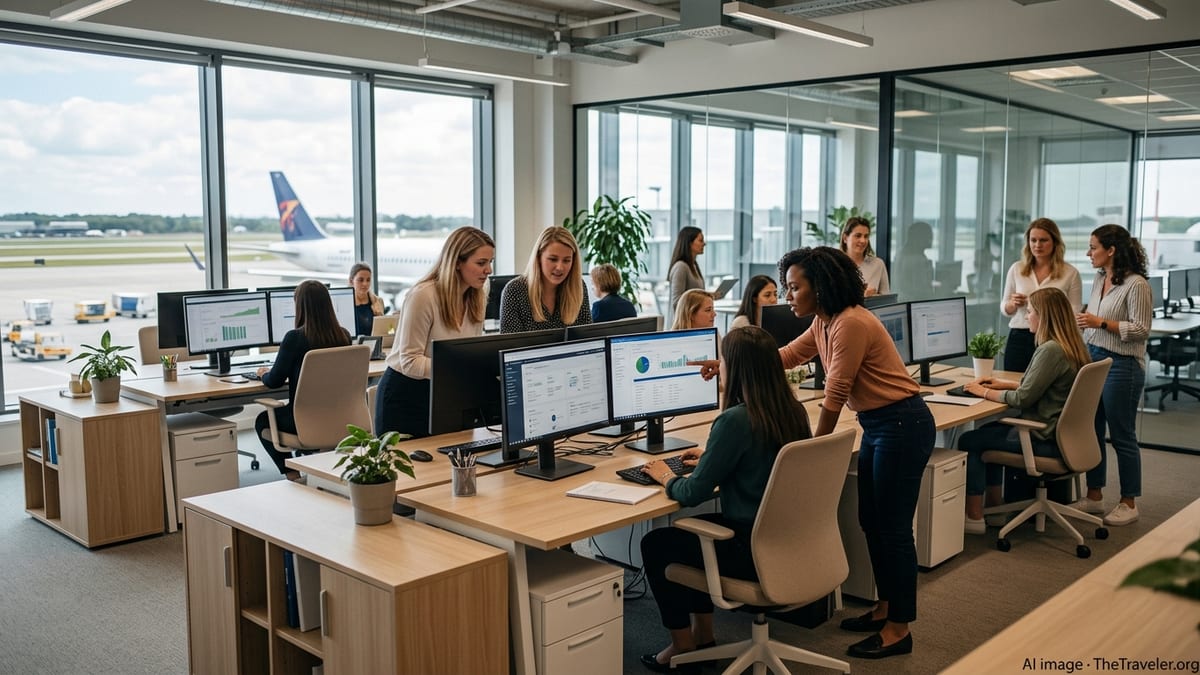
A Milestone Week for Gender Balance in Aviation Tech
Publicly available information indicates that OneReg, a specialist in digital compliance and safety management for airlines and regulators, has announced that women now represent more than half of its global workforce. The transition to a female majority was confirmed in the days surrounding International Women’s Day, turning a symbolic date on the calendar into an operational benchmark for the young aviation technology firm.
According to the company’s own diversity disclosures and recent profile coverage, women are present not only across support and commercial roles but also within highly technical and leadership positions. The shift places OneReg among a relatively small group of aviation and aerospace technology businesses that can claim female majority status at a time when broader sector data still shows pronounced gender gaps.
The timing, coinciding with global campaigns around International Women’s Day in early March, has given OneReg’s progress added visibility. While many aviation and tech firms used the week to spotlight individual role models or announce new inclusion pledges, OneReg was able to point to a structural change in the composition of its workforce as evidence of longstanding hiring and promotion strategies.
Context: A Sector Still Far from Parity
Industry research shows that, despite years of focus on diversity, women remain a minority across both aviation and technology. Data compiled by international aviation organizations indicates that women hold only a small fraction of licensed technical roles such as pilots, aircraft maintenance engineers, and air traffic controllers, and that senior leadership positions continue to skew heavily male.
In parallel, technology workforce statistics point to women comprising roughly one third of employees in tech roles, with representation falling further at executive level and in specialized fields such as artificial intelligence and software engineering. Reports covering aviation-adjacent software and aerospace technology suggest that these niches often mirror the broader pattern, with women underrepresented precisely in the most technical and revenue-critical functions.
OneReg’s announcement therefore sits against a backdrop of slow but measurable progress. Initiatives such as industry gender targets, scholarship programs, and targeted recruitment campaigns have nudged female representation upward in recent years, yet the overall picture remains one of gradual change rather than rapid transformation. That is part of what makes the emergence of a female majority at a growing aviation tech firm stand out.
Inside OneReg’s Workforce Shift
While detailed headcount figures are not widely disclosed, available company information indicates that OneReg’s female majority is not confined to entry-level or administrative roles. Women are reported to occupy positions across software product development, regulatory technology, customer success, and operational leadership, as well as on the senior management team.
The company, founded to digitize and streamline regulatory compliance and safety oversight for airlines, business aviation operators, and national authorities, has grown alongside renewed regulatory and safety pressures in global air transport. As this growth continued, OneReg appears to have prioritized hiring from a broad talent pool that includes career switchers from airlines, safety agencies, and other tech sectors, many of them women with subject-matter expertise that directly informs the platform’s design.
Observers of the regtech segment note that the interplay between domain knowledge and software engineering can create opportunities for professionals who may not have followed a traditional computer science route into technology roles. OneReg’s workforce composition suggests that this dynamic has enabled the company to bring in experienced women from aviation operations, safety management, and regulatory compliance and position them in product and strategy roles alongside software developers.
Significance for Aviation, Travel and Regulation
The emergence of a female majority at OneReg is attracting attention beyond the corporate diversity lens because of the company’s role in the regulatory backbone of commercial aviation. The firm’s technology is designed to help airlines and civil aviation authorities manage complex compliance obligations, safety risk assessments, and document workflows that underpin everyday air travel.
Analysts covering travel technology note that diverse teams can have a direct impact on the usability and robustness of safety and compliance software. A workforce that includes a high proportion of women, and especially women who have worked inside airlines, regulators, or maintenance organizations, may be more likely to surface a range of use cases, communication styles, and operational scenarios during product design and testing.
As air traffic continues to grow and regulators introduce new frameworks around sustainability, safety, and data governance, digital tools like those produced by OneReg are becoming more central to how airlines plan capacity and manage risk. The visibility of women in designing and deploying these systems offers a different model of influence in aviation, one that is less tied to the traditional cockpit or engineering pathways and more aligned with software and systems decision making.
International Women’s Day and the Momentum for Change
The week of International Women’s Day has become a focal point for aviation and aerospace organizations to spotlight gender diversity, with events ranging from airport-based outreach to girls and students to high-level conferences on inclusive leadership. Against this landscape, OneReg’s milestone illustrates how the annual observance can coincide with substantive organizational change rather than simply communications campaigns.
Reports on this year’s International Women’s Day programming show a continued emphasis on bringing more women and girls into science, technology, engineering, and mathematics, as well as into aviation-specific careers. Activities such as Girls in Aviation Day events, scholarship announcements, and mentorship programs are part of a wider effort to expand the pipeline of future pilots, engineers, and aerospace technologists.
By reaching a female majority at the same time, OneReg offers a real-time example of what can happen when that pipeline begins to translate into workforce representation. The company’s profile suggests that this shift is the outcome of several years of intentional hiring, flexible work practices, and an emphasis on remote-friendly, skills-based recruitment that can draw from a global pool of candidates.
What OneReg’s Milestone Signals for the Future
While a single company’s experience cannot resolve systemic imbalances, OneReg’s new status as a female majority aviation tech firm provides a case study of how niche players in the travel and aviation ecosystem can move faster on gender balance than the industry at large. The development may also increase expectations among regulators, airline partners, and investors that similar companies articulate and track their own diversity goals.
For aspiring female professionals and students, the example broadens the range of visible career paths linked to aviation. Rather than focusing solely on piloting or aeronautical engineering, OneReg’s workforce suggests that roles in aviation-focused software development, data analysis, regulatory technology, and digital safety systems can offer meaningful entry points into the sector.
Ultimately, the timing of OneReg’s transition to a female majority during the week of International Women’s Day underscores a broader shift in how influence is exercised in aviation and travel. As software-led companies play an ever larger role in how airlines operate and regulators oversee the system, the gender balance inside those firms will help shape the future of air transport as much as the composition of flight decks or engineering hangars.