

More news on this day
Ontario International Airport in Southern California is setting an early benchmark for U.S. airports in 2026, with passenger volumes climbing an estimated 6 percent and international traffic reaching record levels as new long-haul and cross-border routes take hold.
Get the latest news straight to your inbox!
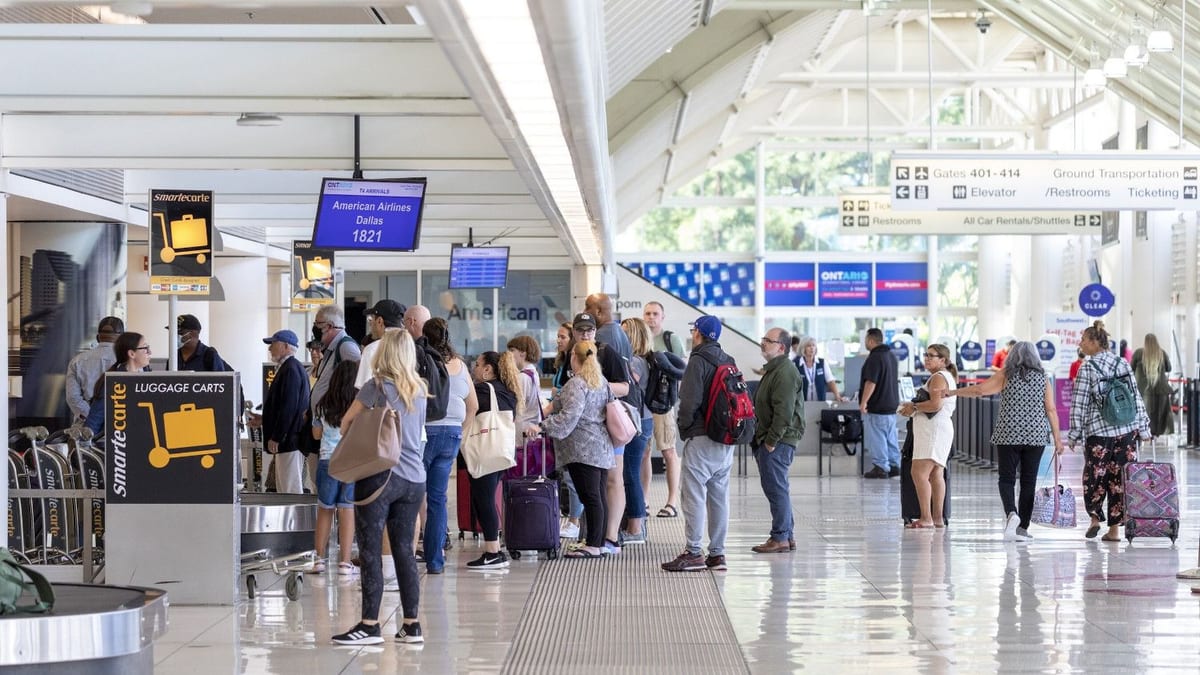
Image by Travel and Tour World – Tourism, Airline, Destination, MICE, Gobal Travel Market, Hotel news that you will find only over here.
Early 2026 Numbers Extend a Multi‑Year Growth Streak
Publicly available traffic updates show that Ontario International Airport entered 2026 from a position of strength after handling more than 7.1 million passengers in 2025, itself a record year for the regional hub. January reporting already points to a fresh acceleration, with total volumes up several percentage points compared with the same month a year earlier.
Airport statistics released for January indicate a 3.7 percent gain in combined domestic and international passengers at the start of the new year, driven largely by demand on routes to Latin America and Asia. Based on recent month‑over‑month trends, analysts following the Inland Empire airport say a year‑to‑date increase on the order of 6 percent is plausible if current momentum holds into the spring and summer travel peaks.
The latest growth builds on an extended expansion phase that began well before the pandemic recovery. Ontario International has booked dozens of consecutive months of year‑over‑year passenger gains in recent years, making it one of California’s fastest‑rising commercial airports by percentage growth.
That trajectory has been fueled by a mix of new destinations, added frequencies on popular domestic routes and a deliberate shift toward capturing long‑haul leisure and visiting‑friends‑and‑relatives traffic that previously defaulted to Los Angeles International Airport.
Record International Traffic Redefines Ontario’s Role
International travel is emerging as the standout story in Ontario’s latest performance. Data for 2025 showed nearly 567,000 international passengers, a jump of more than a quarter from the prior year and the highest figure in the airport’s history. Early 2026 passenger tallies point to another record‑setting year for overseas and cross‑border trips.
Reports indicate that the airport’s January 2026 international throughput reached a new monthly high, outpacing previous records set during the post‑pandemic rebound. Industry coverage connects that performance directly to expanded nonstop service to key leisure destinations in Mexico and new links into Asia, which have broadened the catchment area well beyond the Inland Empire.
Ontario International’s international growth is significant in the context of the wider Southern California market. Greater Los Angeles remains one of the largest air travel regions in the world, and Ontario’s rising share of long‑haul and near‑international traffic is shifting some demand away from the traditional coastal hubs.
By cementing its position as an alternative global gateway, Ontario International is drawing travelers who value shorter drive times, less congestion and quicker processing on arrival or departure, particularly for family and leisure trips that are less tied to legacy loyalty programs.
New Routes, Lounges and Retail Underpin the Surge
Ontario International’s recent gains are closely linked to targeted route development. Over the past two years, airlines have added service to multiple cities in Mexico alongside new long‑haul options into Asia, while domestic capacity has been bolstered with additional flights to major U.S. hubs. Each new route has helped diversify the airport’s network and made it more attractive as a starting point for international itineraries.
Published coverage also highlights a wave of terminal upgrades designed to support sustained growth. These include new passenger lounges, expanded dining options and a duty‑free store catering to outbound international travelers. The improvements aim to match rising expectations for amenities while keeping overall passenger processing times competitive with larger airports in the region.
Infrastructure enhancements on the airfield and landside have moved in parallel. Investments in gate capacity, aircraft parking and roadway access are intended to ensure that peak‑period surges tied to holiday and summer travel can be handled without eroding the convenience that has become part of Ontario’s appeal.
Market observers note that this combination of additional routes and upgraded facilities has helped the airport convert one‑time trial users into repeat customers, particularly among travelers in the Inland Empire who previously routed their long‑haul trips through Los Angeles or Orange County airports.
Competitive Dynamics in the Southern California Aviation Market
The upswing at Ontario International is reshaping competitive dynamics across Southern California’s fragmented airport system. While the region’s legacy hub remains the primary intercontinental gateway, Ontario’s steady expansion is giving airlines and passengers a credible secondary option for both domestic and international journeys.
For carriers, Ontario offers a relatively uncongested operating environment and access to a large, growing local population base east of downtown Los Angeles. That has been a persuasive argument for low‑cost and hybrid airlines looking to add capacity without the slot and airspace constraints that define some coastal airports.
For travelers, the tradeoff between a wider menu of flights at the larger hub and Ontario’s convenience is increasingly nuanced. As international frequencies build and more one‑stop options become available via partner hubs, the need to trek across the region for long‑haul departures is diminishing for many Inland Empire residents.
Regional planners and tourism organizations are watching the trend closely, citing potential spillover benefits for hotels, attractions and logistics businesses that cluster around busy airports. Higher international arrival numbers in particular tend to correlate with longer stays and higher per‑trip spending compared with purely domestic traffic.
What a 6 Percent Jump Signals for the Rest of 2026
A 6 percent rise in passenger volumes in early 2026, layered on top of record traffic in 2025, points to another year of expansion if macroeconomic conditions remain stable and fuel prices do not spike dramatically. Industry analysts suggest that sustained mid‑single‑digit growth would keep Ontario International among the more dynamic mid‑sized airports in the United States.
Looking ahead to the peak summer season, several recently launched routes will have their first full travel cycles, giving airlines and airport planners a clearer view of demand patterns. Strong performance on those services could justify additional capacity, new destinations or upgauged aircraft, reinforcing the airport’s emerging status as a global connector.
At the same time, the rapid growth trajectory raises familiar challenges around capacity, noise and surface access. Local observers note that maintaining community support will likely depend on how effectively the airport and its partners manage congestion, emissions and land use as operations scale up.
For now, Ontario International’s early 2026 benchmark, highlighted by a notable overall jump in passengers and record international traveler numbers, underscores a broader shift in how Southern California’s air travelers choose to begin and end their journeys.