

Few travel debates in Canada are as enduring as Ontario versus British Columbia. Both provinces are powerhouses for tourism, drawing millions of visitors to vibrant cities, dramatic scenery and a wide mix of cultural and outdoor experiences. Yet they deliver that variety in very different ways. If you are choosing where to spend limited vacation time, understanding how their landscapes, seasons, food scenes and travel logistics compare can help you decide which offers more variety for your style of trip.
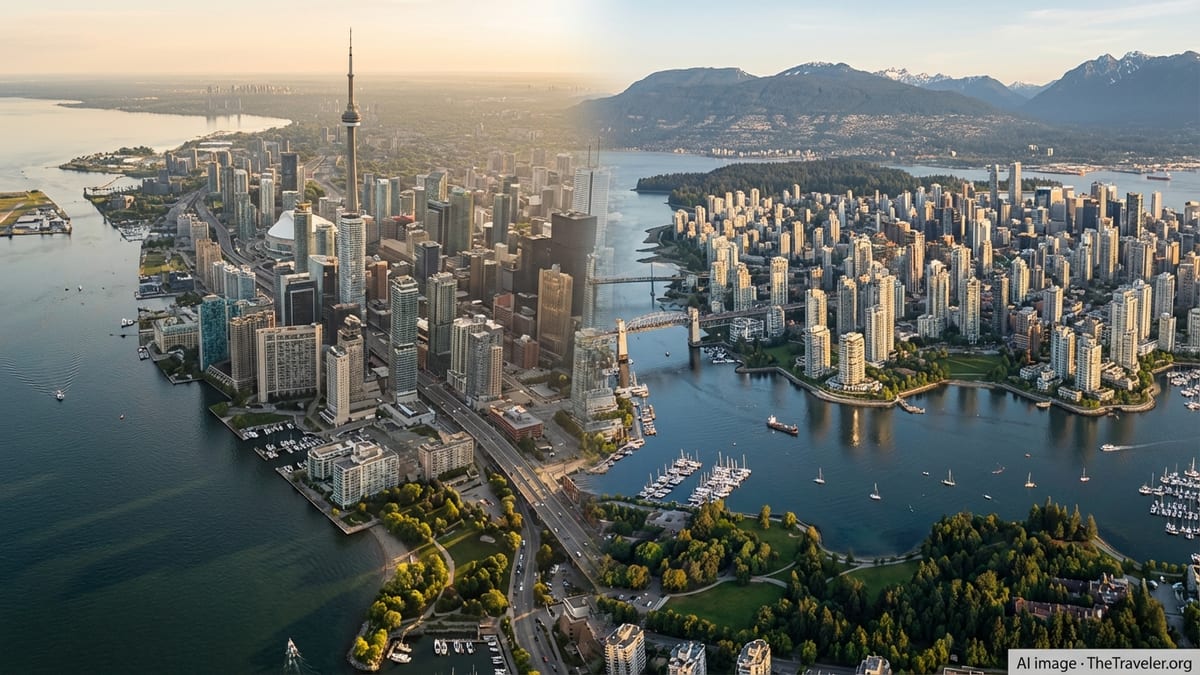
Big Picture: Two Tourism Giants With Different Personalities
Ontario and British Columbia are among Canada’s most visited provinces, but they attract visitors for slightly different reasons. Ontario consistently records the highest share of both Canadian and international visitors, thanks largely to Toronto, Niagara Falls and its position on key land borders with the United States. British Columbia, meanwhile, receives a smaller share of domestic travelers but a notably high proportion of overseas visitors who come for its coastal scenery, mountains and temperate climate.
That split hints at the contrast in character. Ontario balances major urban centers with freshwater coasts, cottage country and historic towns spread across a huge interior. British Columbia leans into its dramatic topography, where ocean, rainforest and mountain ranges sit within a few hours of one another, particularly in and around Vancouver and Vancouver Island. Both offer variety, but they package it differently: Ontario’s breadth is horizontal, across long distances, while British Columbia’s is vertical, stacking ecosystems on top of each other.
Recent tourism trends across Canada show domestic travelers increasingly exploring beyond their home regions and seeking multi-activity trips that might include city experiences, nature, culture and food in a single itinerary. In that context, both Ontario and British Columbia have doubled down on emphasizing diversity, from Indigenous-led travel experiences to culinary tourism and soft adventure. For travelers, that means more choice than ever, but also more decisions to make about where to focus within each province.
When weighing variety, it helps to think in terms of how many different types of trip you can design in one province without repeating yourself. In Ontario, that might mean pairing Toronto’s neighborhoods with Niagara wine country, a Great Lakes island and a national or provincial park. In British Columbia, you could combine an urban base in Vancouver with coastal hiking, wine touring in the Okanagan and alpine adventures in the same vacation window. Each province can support several distinct itineraries, but the feel on the ground is very different.
Landscapes and Outdoor Experiences
British Columbia has built a global reputation for landscapes that look almost unreal in photographs: snow-topped Coast Mountains rising straight from the sea, islands draped in temperate rainforest and fjord-like inlets cutting deep into the coastline. Within a few hours of Vancouver you can ski or snowboard in winter, walk old-growth forest boardwalks, go whale watching, paddle calm bays or tackle backcountry trails in rugged provincial and national parks. The proximity of these contrasting environments is one of British Columbia’s biggest advantages for variety-minded visitors.
Ontario’s beauty is different but no less varied. Rather than dramatic peaks and Pacific fjords, it offers long horizons of freshwater, shield-country rock and boreal forest. The province borders four of the five Great Lakes, and the shorelines alone provide a huge range of experiences: sandy beaches, windswept dunes, island archipelagos, lighthouses and working port towns. Inland, vast lake networks and rivers define classic Canadian cottage country, where paddling, fishing and backcountry camping are major draws. For hikers, Ontario’s long-distance trails and cliff-lined escarpments provide views that can feel surprisingly wild just a short drive from major cities.
One key difference lies in altitude and relief. British Columbia’s mountains enable world-class downhill sports, alpine hiking and glacier viewing. Resorts like Whistler and regional ski areas in the interior mean that a winter trip can easily combine city breaks with serious skiing or boarding. Ontario has ski hills and winter sports infrastructure, but they are generally smaller in vertical drop and scale. Instead, Ontario shines in flatwater paddling, lakefront cycling routes and accessible family-friendly trails that open nature to a broad range of fitness levels.
If your idea of variety centers on dramatic shifts in terrain and the chance to move quickly between sea level and alpine zones, British Columbia will likely feel richer. If you value miles of shoreline, island hopping, waterfalls and rugged rock-and-lake scenery, Ontario offers more than enough diversity to fill repeated trips. Both provinces provide extensive park networks and protected areas, though distances between marquee landscapes in Ontario can be longer, meaning more planning if you hope to sample several regions in one visit.
Cities, Culture and Urban Variety
Ontario’s urban experiences are anchored by Toronto, Canada’s largest city and one of North America’s most diverse metropolitan areas. Visitors can move from historic districts to cutting-edge contemporary architecture, from bustling food markets to quiet lakeside parks within a compact urban footprint. Toronto’s neighborhoods each feel distinct, offering a kind of micro-variety that could easily occupy several days on its own. Ottawa and smaller cities such as Hamilton, Kingston and London add layers of history, politics and university-town culture to any provincial itinerary.
British Columbia’s urban variety is led by Vancouver and Victoria. Vancouver edges between mountains and sea, its downtown framed by a famous waterfront park and scenic seawall paths. Neighborhoods spill from glassy towers into historic quarters and diverse immigrant communities, giving visitors a wide choice of food, nightlife and cultural venues. Victoria provides a different flavor on Vancouver Island, blending a walkable harbor city feel with heritage architecture, gardens and a slower pace. Together, they deliver a strong one-two punch for travelers who enjoy city breaks.
Where Ontario arguably pulls ahead is in the sheer number and character of its mid-sized cities and towns. Historic canal towns along the Rideau, university communities in southern Ontario and industrial-turned-creative centers like Hamilton offer a spectrum of urban experiences between big-city Toronto and small rural hubs. Many visitors build road trips that link several of these centers with natural attractions, creating a patchwork of museum visits, live music, local markets and waterfront promenades along the way.
British Columbia’s smaller communities are fewer in number but often strikingly located. Mountain towns in the interior, wine-country hubs and coastal villages add character and give travelers reasons to move beyond Vancouver and Victoria. The variety comes as much from setting as from built environment: a main street framed by vineyard slopes or a harbor dotted with fishing boats naturally feels different from an inland prairie town. For visitors who prioritize photogenic backdrops in their urban experiences, British Columbia’s towns can feel particularly rewarding.
Climate, Seasons and When Variety Peaks
Climate has a big influence on how much variety you can realistically experience in one trip. British Columbia’s southwest enjoys some of the mildest weather in Canada, with relatively cool, damp winters and warm, dry summers. That temperate climate means you can hike coastal trails or stroll city parks almost year-round, and snow sports are just a drive away in higher elevations during winter and early spring. For travelers who dislike extreme cold, this can make British Columbia feel more accessible across more months of the year.
Ontario’s climate swings are more pronounced. Winters can be cold and snowy, particularly away from the Great Lakes, while summers often bring hot, humid days and strong thunderstorms. Shoulder seasons in spring and autumn can be spectacular, with vibrant foliage, crisp air and fewer crowds. The same seasonal extremes that might deter some travelers also create distinctive experiences: skating trails through forests, ice fishing, maple syrup seasons, and fall color drives that define Ontario’s tourism calendar in ways that look and feel very different from high summer on the beach.
From a variety standpoint, Ontario’s seasonal contrasts arguably offer more distinct “personalities” across the year. A July trip of lakeside cottages, patios and festivals will feel completely different from a February escape focused on winter sports and cozy cabin stays, or a late-September itinerary built around harvest markets and fall foliage. You could return in three different seasons and essentially feel like you are visiting three different destinations.
British Columbia also changes character with the seasons, particularly between rainy coastal winters, bright spring blossoms and high summer in the mountains. However, the climate in its most visited regions can feel less extreme, which some travelers see as an advantage rather than a limitation. For those who prefer shoulder-season travel and hope to enjoy both city exploration and outdoor time without deep snow or high heat, British Columbia’s milder weather can broaden the window for varied activities.
Culinary, Wine and Cultural Experiences
Food is a reliable lens for judging variety, and here both provinces make strong cases. Ontario’s population size and mix of communities support a vast culinary scene, with Toronto at the forefront. Visitors can sample regional specialties, global street food, fine dining and experimental kitchens in a single day. Smaller cities contribute their own flavors, from farm-to-table menus in agricultural regions to lakeside fish-focused joints near the shores of the Great Lakes. The province’s multicultural mix is reflected in its grocery stores, neighborhood festivals and everyday restaurant options, giving travelers a chance to taste cuisines from around the world in authentic settings.
British Columbia’s culinary identity leans into its coastal and agricultural strengths. Seafood is a standout, with salmon, shellfish and sushi culture particularly strong around Vancouver and Vancouver Island. The province’s interior wine regions, including sun-soaked valleys where vineyards line lake shores, have matured into destinations in their own right. Tasting rooms, farm stands and chef-led bistros give visitors reasons to linger beyond standard sightseeing. This mix of ocean-to-table and vineyard-to-table experiences provides a distinctive and memorable flavor of place.
Both Ontario and British Columbia are hubs for arts and culture. Major museums, galleries, music venues and performing arts centers offer year-round programming that reflects both local and international influences. Indigenous cultures are central to the story in both provinces, with growing numbers of Indigenous-owned tours, cultural centers and art spaces inviting visitors to engage more deeply with the land’s original caretakers. Storytelling, guided walks, culinary experiences and craft markets add layers of meaning to everything from city strolls to wilderness excursions.
Travelers who measure variety by how many different taste experiences, performances and cultural encounters they can pack into a short stay may find Ontario has an edge in pure scale, particularly in and around Toronto. However, British Columbia counters with a strong sense of terroir: the combination of Pacific seafood, local wines, coastal First Nations culture and mountain-town creativity delivers a very cohesive, place-specific mix that is difficult to replicate elsewhere.
Accessibility, Distances and Trip Planning
When evaluating which province offers more usable variety, logistics matter. Ontario’s main tourism hubs are well connected by air and road, with Toronto Pearson International Airport serving as a major gateway for both domestic and international flights. From there, travelers can reach Niagara Falls, Ottawa, cottage country and many southern Ontario towns in just a few hours by car or rail. However, Ontario is vast, and reaching its more remote northern parks, communities and coastlines can involve long drives or additional flights.
British Columbia’s primary entry points are Vancouver and, to a lesser extent, Victoria and interior cities serviced by regional airports. The majority of the province’s population and tourism infrastructure is concentrated in the southwest corner and along popular corridors such as the Sea-to-Sky Highway. That concentration can make it easier to sample multiple experiences within a smaller geographic area: urban exploration, island day trips and mountain outings can all be achieved on a single multi-day stay centered on Vancouver.
Public transportation options shape how easily travelers can access variety without renting a car. Ontario offers intercity rail links between major cities and some regional centers, while bus services and seasonal shuttles connect popular tourist areas. Within Toronto and Ottawa, local transit networks help visitors move between neighborhoods and attractions. British Columbia, by contrast, relies more heavily on road and ferry connections. While there is public transit within cities and limited intercity rail, many of its most scenic drives, mountain towns and coastal enclaves are best explored by private vehicle or organized tour.
From a planning perspective, Ontario may suit travelers who enjoy stitching together city breaks, short rail journeys and road segments into complex itineraries spanning several regions. British Columbia tends to favor hub-and-spoke planning, with visitors basing themselves in one or two cities and radiating out to different landscapes on day or overnight trips. Each model offers variety, but the way it unfolds on the ground will appeal to different travel styles.
Cost, Crowds and Sustainability Considerations
Costs can shape how much variety you are able to access. Ontario’s major cities, particularly Toronto, are not inexpensive, but accommodation and dining options range from budget to luxury, and travelers often find value in mid-sized cities and rural areas where prices are more moderate. Attractions such as provincial parks, public festivals and waterfront promenades provide low-cost or free activities that make it easier to build a diverse itinerary without overspending.
British Columbia’s tourism hotspots, especially Vancouver, mountain resorts and peak-season coastal communities, can command high prices for lodging and activities. That said, travelers willing to visit in shoulder seasons, explore lesser-known interior regions or stay in smaller towns often find more affordable options. Free outdoor experiences, including beaches, parks and hiking trails, help balance the budget, though reaching some of these areas can require renting a vehicle or booking ferries, which adds to overall costs.
Crowding patterns differ between the provinces. Ontario’s most famous attractions, like Niagara Falls and central Toronto landmarks, can be extremely busy in peak summer months and during major events. Yet it is usually possible to find quieter lakes, trails and small towns without traveling prohibitively far. British Columbia’s combination of geography and popularity can funnel visitors into a smaller number of accessible hotspots, meaning some mountain towns, ferry routes and coastal destinations feel pressured in high season.
Both provinces are increasingly emphasizing sustainable tourism. Initiatives range from encouraging off-season and off-the-beaten-path travel to promoting low-impact outdoor practices and supporting Indigenous-led conservation tourism. For visitors, this shift can expand opportunities to discover lesser-known areas and experiences while helping distribute tourism benefits more evenly. If your definition of variety includes the chance to explore beyond the usual circuits, watching for these emerging sustainable travel offers in both provinces can significantly broaden your options.
The Takeaway
Ontario and British Columbia each deliver impressive variety, but they do so through different combinations of landscapes, cities, seasons and cultural experiences. British Columbia excels in compact, high-impact diversity: coastal cities, islands, rainforest and mountains cluster close together, allowing travelers to transition from urban waterfronts to alpine viewpoints in a single day. Its milder coastal climate, strong seafood and wine culture, and abundance of outdoor adventure opportunities give a trip there a distinct, cohesive flavor.
Ontario’s variety is more diffuse but equally compelling. It stretches along Great Lakes shorelines, across cottage country and into northern forests, with a dense network of cities and towns layered in between. Seasonal contrasts are sharper, which means a winter escape, a fall road trip and a summer lakeside holiday can feel like entirely different destinations within the same province. The breadth of urban experiences, particularly in and around Toronto, adds another dimension for culture and food-focused travelers.
Choosing which province offers “more” variety ultimately depends on how you like to travel. If you prefer dramatic scenery in a relatively compact radius, with easy access to both ocean and mountains, British Columbia may feel richer. If you favor road trips through varied towns, major city culture, freshwater coasts and strongly defined seasons, Ontario will likely deliver more of the diversity you seek. For many travelers, the best answer is not either-or but when: experiencing both provinces at different times of year can reveal just how many versions of Canada fit within their borders.
FAQ
Q1. Which province offers more varied landscapes, Ontario or British Columbia?
Both offer significant variety, but in different ways. British Columbia compresses ocean, rainforest and mountains into a relatively small area, while Ontario spreads lakes, forests, escarpments and farmland over a much larger territory.
Q2. Where will I find more diverse city experiences?
Ontario generally offers more urban variety, led by Toronto and supported by cities like Ottawa, Hamilton, Kingston and several mid-sized centers that each have distinct character.
Q3. Which province is better if I want a mix of city life and easy access to nature?
Both work well, but British Columbia’s Vancouver stands out for fast access to beaches, mountains and islands, while Toronto in Ontario pairs city life with drives to wine regions, waterfalls and lake country.
Q4. How do the seasons affect variety in each province?
Ontario’s seasons are more extreme, creating very different experiences between winter, summer and fall. British Columbia’s coastal areas are milder, allowing more year-round outdoor variety but with less dramatic seasonal change.
Q5. Which province is better for skiing and snowboarding?
British Columbia generally offers more extensive and higher-elevation ski terrain, with well-known mountain resorts and deep snowpacks, while Ontario’s hills tend to be smaller and more suited to relaxed or family outings.
Q6. Where will I find better opportunities for lake-based activities?
Ontario has an edge for lake-focused trips, thanks to its Great Lakes shorelines and countless inland lakes, which support boating, paddling, fishing and cottage stays.
Q7. Is British Columbia more expensive to explore than Ontario?
Key destinations in British Columbia, such as Vancouver and major mountain resorts, can be costly, especially in peak season. Ontario’s prices vary widely, with some major cities expensive but many smaller towns and regions more moderate.
Q8. Which province is easier to explore without a car?
Ontario can be somewhat easier for car-free travelers, especially along corridors served by intercity trains and buses between major cities. In British Columbia, many scenic areas are best reached by car or organized tour.
Q9. Where can I experience more Indigenous-led tourism?
Both provinces have growing Indigenous tourism offerings, including guided cultural experiences, art and culinary events. Availability varies by region, so checking current local options is important when planning.
Q10. If I only have one week, which province should I choose for maximum variety?
For a compact trip with dramatic scenery changes, British Columbia may offer more impact in a week. For a road-trip style vacation mixing big-city culture, historic towns and lake country, Ontario is a strong choice.