

More news on this day
More than a decade after the Northlander’s last run, a wave of new rail spending, modern trainsets and station upgrades across Ontario suggests the long-awaited passenger service between Toronto, Timmins and Cochrane is finally approaching the station.
Get the latest news straight to your inbox!
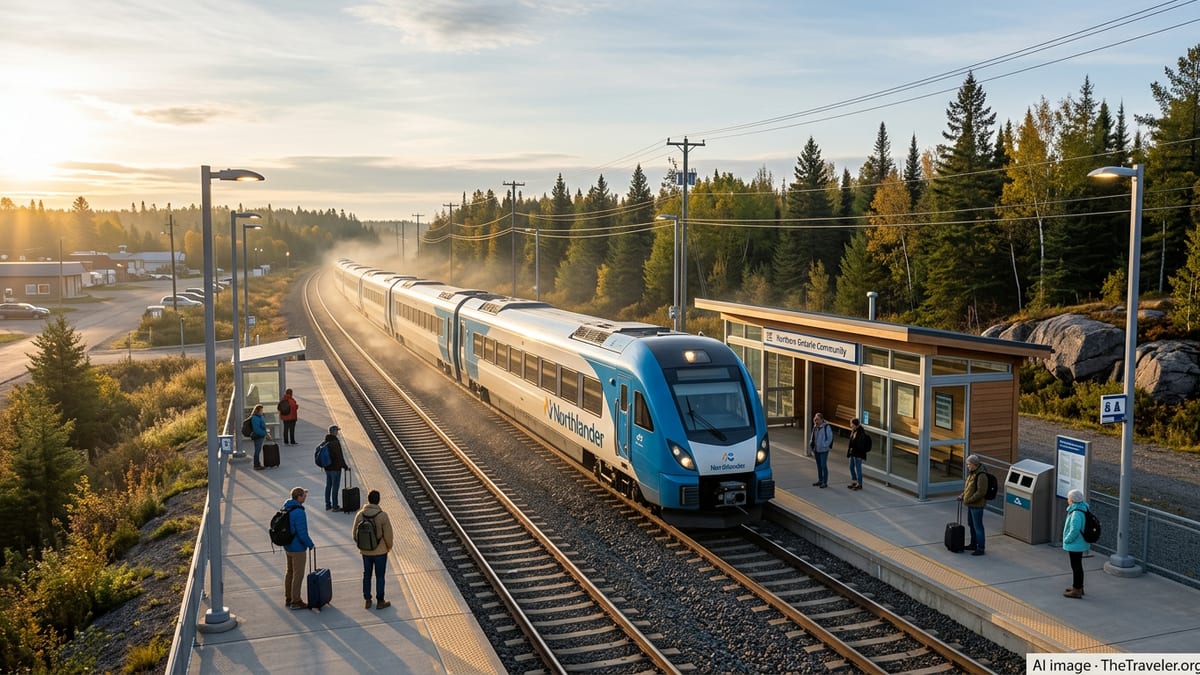
A Major Rail Purchase Signals a Turning Point
Publicly available information shows that Ontario’s purchase of three new Siemens Charger and Venture trainsets for the Northlander has moved from announcement to visible progress, with manufacturing well underway and at least one trainset already delivered for testing. Each consist is expected to feature a modern locomotive, two economy coaches and one business-class coach, offering a level of comfort and accessibility far beyond what existed when the service was cancelled in 2012.
Government and agency reports indicate that the province has committed more than 100 million dollars in recent track and infrastructure upgrades tied directly to the restoration of the 740 kilometre Toronto to Timmins corridor, with a rail connection on to Cochrane. The scale of the rolling-stock order and associated works is being widely interpreted as a clear signal that the return of northern passenger rail is no longer theoretical but entering its final delivery phase.
According to published coverage in industry and regional outlets, the new equipment shares a common platform with the latest fleets used by VIA Rail and GO Transit, a move intended to streamline maintenance and training while giving passengers in northern Ontario the same contemporary on-board experience now seen on key southern corridors. For travellers in communities such as Timmins and Cochrane, that translates into accessible cars, modern seating, Wi-Fi and better ride quality on a route that has long depended on buses and personal vehicles.
Planning documents describe service operating four to seven days per week depending on the season, linking Toronto’s Union Station to Timmins with 16 intermediate stops and a dedicated rail connection northward to Cochrane. That structure is designed both to reconnect remote communities and to plug northern residents directly into the country’s busiest transport hub in downtown Toronto.
Timmins and Cochrane Prepare for Passenger Rail’s Return
Timmins, which has not seen regular Northlander service in decades, is emerging as the symbolic heart of the project. Ontario Northland materials describe a new Timmins Porcupine station being built along the historic Porcupine rail branch, with environmental assessments and engineering plans now being translated into active construction. Local economic reports highlight the future station as a cornerstone for tourism growth, labour mobility and access to services in the wider mining region.
Farther north, Cochrane is being positioned as a key junction rather than the southern terminus it once was. The restored Northlander is expected to continue beyond Timmins to connect with Cochrane’s existing rail hub, where passengers transfer to the Polar Bear Express service toward Moosonee on James Bay. This through rail option is seen by regional observers as a significant improvement for residents and visitors who today must bridge the gap by road.
Recent service updates show that Cochrane’s station is already undergoing accessibility and platform enhancements aimed at handling a new wave of passengers. While exact opening day timetables have not yet been published, officials have repeatedly framed these projects as necessary steps to be completed ahead of the Northlander’s relaunch.
The combination of a new-build station at Timmins Porcupine, upgrades at Cochrane and the promise of a one-seat ride from northeastern Ontario into Toronto is reshaping expectations for how people in the region will travel for work, education and health care in the coming years.
Track Upgrades Between Toronto and the North
For passengers boarding in Toronto, the most visible change may eventually be the sleek new train pulling into Union Station. Behind the scenes, however, the route’s revival has been driven by extensive work on the rails themselves between the Greater Toronto Area, Muskoka cottage country and the northeast.
Ontario Northland and provincial releases describe a program of curve straightening, rail replacement and crossing enhancements aimed at boosting safety and trimming journey times on key stretches between North Bay and Cochrane, and more recently between North Bay and the junctions south of Washago. A newly completed bypass around North Bay, designed to avoid slower freight trackage, is projected to shave roughly 15 minutes off the schedule on its own.
The reinstated train is planned to follow a path that will be familiar to long-time riders: departing Toronto and serving Langstaff and Gormley in York Region before swinging north through Washago, Gravenhurst, Bracebridge, Huntsville and South River. From there it continues into the traditional Northlander territory of North Bay, Temagami, Temiskaming Shores, Englehart, Kirkland Lake, Matheson, Timmins and Cochrane, with several of these communities receiving new heated shelters or rebuilt platforms.
Transport planners argue that these incremental improvements, combined with the performance of the new locomotives and coaches, will not transform the Northlander into a high-speed line, but should deliver a faster and more reliable trip than the service that last ran in 2012. For tourists, that means a more comfortable rail journey to cottage country and beyond, while for residents it promises a viable alternative to long winter drives on Highway 11.
Toronto, Muskoka and Northeastern Towns Eye Tourism Gains
The return of the Northlander is being closely watched in Toronto, Muskoka and across northeastern Ontario as a potential catalyst for renewed tourism and investment. Travel analysts point out that a direct rail link from Union Station opens up weekend and holiday options for visitors who prefer not to drive, especially during peak summer and winter seasons when highways are congested or weather affected.
Communities such as Gravenhurst, Bracebridge and Huntsville are expected to benefit from easier access for visitors carrying bikes, kayaks or camping gear, particularly if the final train interior includes flexible storage spaces similar to those on other Siemens Venture fleets. Local tourism boards have already identified rail as a way to diversify how guests arrive at lakeside resorts, festivals and trail networks.
Farther north, reports from municipal economic agencies in Timmins highlight the rail project as an opportunity to attract conferences, sports tournaments and cultural events that rely on reliable transport from southern Ontario. The line also offers a more sustainable option for residents travelling to Toronto for shopping, entertainment or medical appointments, which could in turn support hotels and hospitality businesses at both ends of the route.
For Cochrane, the Northlander’s restoration represents a chance to expand its role as a gateway community. Easier rail connections could help draw more visitors to northern experiences such as polar bear viewing in Moosonee and winter adventures on the fringes of the James Bay coast, reinforcing the town’s position on the map for both domestic and international travellers.
Countdown to a 2026 Relaunch
After years of planning and political debate, the latest public statements and procurement filings now converge on a target of 2026 for the Northlander’s return to regular passenger service. Industry coverage notes that the timeline is closely tied to the delivery and commissioning of all three trainsets, along with the completion of station works and the final phases of track improvements.
In early 2026, the province highlighted a fresh round of investment for the corridor, reinforcing that detailed testing, crew training and operational readiness are the immediate priorities before passengers can board. Rail observers expect trial runs to ramp up along sections of the route once sufficient infrastructure and signalling upgrades are in place.
While an exact launch date has not been announced, the alignment of capital spending, visible construction in Timmins and Cochrane, and the arrival of modern rolling stock has given long-sceptical riders new reason to believe the Northlander will soon be back in northern skies and forests. For many in Toronto, Muskoka and northeastern Ontario, the coming year now feels less like a waiting game and more like a countdown.