

More news on this day
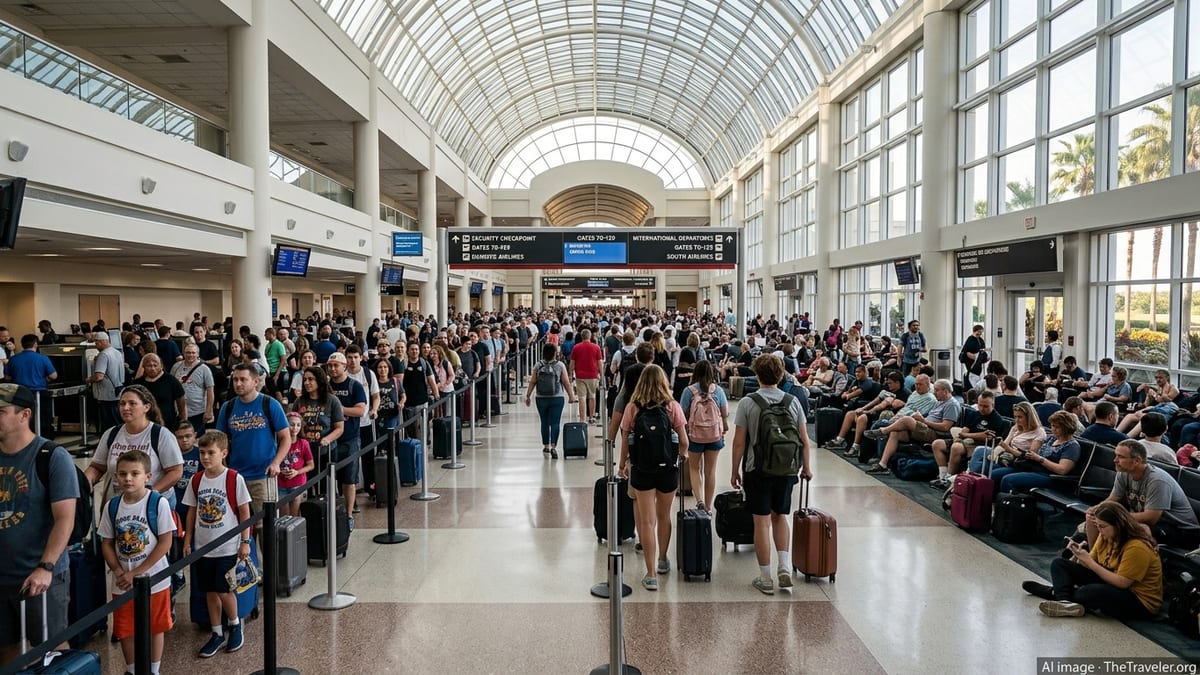
Orlando International Airport is entering one of its most challenging spring break periods on record, as a surge in domestic and international travel, security staffing strains and recent nationwide flight disruptions converge to create longer lines and tighter connections for passengers moving through one of the country’s busiest hubs.
Get the latest news straight to your inbox!
Record Volumes at Florida’s Busiest Airport
Orlando International Airport has solidified its position as Florida’s busiest airport and one of the top ten busiest hubs in the United States, and current indicators suggest that spring break 2026 will push those numbers even higher. Recent data compiled for the Orlando metro market shows that total passengers at the airport in December 2025 rose more than 13 percent from the previous month and climbed above year‑earlier levels, underscoring a sustained upward trend that is feeding into this season’s crowds.
Nationally, airlines are forecasting a record spring travel season, with industry groups projecting tens of millions more passengers than last year across March and April. Orlando, with its theme parks, cruise connections and growing roster of international routes, remains one of the primary gateways feeding that demand. Aviation data services report that the airport is now handling hundreds of daily departures to nearly 200 destinations, including more than 50 international cities, putting additional strain on runway, gate and terminal capacity during peak periods.
Local projections for the current spring break window point to several days in mid March where total passenger volumes are expected to exceed prior records. Discussions on public forums referencing internal forecasts for March 15 indicated that the airport anticipated roughly 212,000 passengers in a single day, an increase of about 8 percent compared with the busiest day of last year’s spring break period. Travelers on site in recent days have described consistently full checkpoints and crowded gate areas, even outside traditional morning and evening rush hours.
The airport’s strong growth trajectory has been recognized within the aviation industry. A recent regional route development conference named Orlando International the top large airport in the Americas, citing its post‑pandemic recovery, double‑digit passenger growth over 2019, and dozens of new and expanded routes. That recognition highlights how rapidly operations and traveler volumes have scaled up, but it also underlines why routine holiday and school break peaks are now translating into more noticeable delays for passengers.
Security Screening Strains Under Shutdown and Surge
The spring break rush is coinciding with a partial federal government shutdown that is affecting airport security across the United States. Travel and aviation outlets report that the disruption has contributed to staffing challenges and longer Transportation Security Administration checkpoint waits at major Florida airports, including Orlando International. These pressures are particularly acute during early morning and late afternoon waves, when large clusters of departures are scheduled within short time frames.
Recent national coverage notes that security lines at several Florida hubs have stretched far beyond their usual boundaries on some days, with travelers warned to expect significantly longer processing times. At Orlando, posts from passengers over the past week describe security queues spilling back toward the main terminal’s food court on busier mornings and afternoons, with standard screening lanes moving slowly as inexperienced or infrequent travelers navigate bag checks and personal screening requirements.
Despite these strains, some tools appear to be softening the impact for travelers who plan ahead. Real‑time checkpoint wait estimates provided by third‑party tracking services show highly variable conditions at Orlando International, with wait times dropping sharply for those using programs such as TSA PreCheck, CLEAR, or the airport’s reservation‑style lane access system often referred to by travelers as a “reserve” option. Several passengers posting on public forums this week reported clearing security in roughly five minutes by using reserved‑time access, even as standard lanes remained lengthy.
On March 9, a separate round of disruptions hit U.S. aviation when severe weather and operational issues triggered nearly 5,000 flight delays and cancellations nationwide. Analyses of that day’s impact list Orlando among the airports experiencing significant knock‑on effects as airlines attempted to reposition aircraft and crews. While those problems were not unique to Central Florida, they added another layer of unpredictability for travelers already contending with heavy security lines and congested terminals.
Parking, Drop Off and Ground Transport Under Pressure
As passenger counts rise, Orlando International’s roadways and parking facilities are also experiencing seasonal pressure. Travel advisories and anecdotal reports from recent days point to slow‑moving traffic on approach roads during peak departure periods, as well as parking garages nearing or reaching capacity on busy weekends. Travelers arriving without reserved parking or backup plans have reported being redirected between garages and remote lots as spaces filled faster than usual.
Public comments from local travelers suggest that ride‑hail pickups, hotel shuttles and private car drop offs are all contending with the same congestion at key choke points around the terminal curbs. Drivers describe long queues to access the main terminal and extended waits to enter or exit parking structures. Some passengers have noted that it can take nearly as long to navigate the airport road system and secure a parking spot as it does to clear security once inside.
The presence of the Brightline intercity rail station within the airport complex is providing an alternative for some travelers heading to or from South Florida during this busy period. Discussions among rail passengers indicate that Brightline uses its own security screening process separate from TSA, which means rail users are not directly affected by the federal checkpoint staffing challenges. However, they remain subject to the same roadway congestion and parking limitations around the shared terminal facilities.
Airport information tools continue to play a key role in helping travelers adapt. Third‑party services that aggregate live security wait times and parking availability encourage passengers to check conditions before leaving home, allowing them to choose between on‑site garages, remote economy lots, or off‑airport commercial facilities. For spring break travelers with early flights, reports indicate that overnight hotel stays near the airport or prebooked off‑site parking are increasingly popular strategies to avoid last‑minute surprises.
What Spring Break Travelers Can Expect at MCO
For passengers using Orlando International Airport in the second half of March, the emerging picture is one of a busy but functioning hub under acute seasonal strain. Publicly available data on airline schedules show that daily departures and seat capacity from Orlando remain elevated compared with pre‑pandemic levels, while national forecasts point to another record season for U.S. air travel overall. The result is that even minor disruptions, whether from weather or staffing constraints, can ripple quickly through the system.
Recent traveler accounts describe relatively smooth experiences for those who arrive several hours before departure, use trusted traveler programs, and check security lines via airport or third‑party tools in real time. By contrast, passengers arriving closer to departure, especially in the mid morning and late afternoon peaks, are more likely to encounter extended queues at ticket counters, bag drops and checkpoints, particularly in the main terminal serving gates 1 through 59.
Inside the concourses, crowding is visible at popular food outlets, restrooms and boarding areas. With spring break bringing a high concentration of families and infrequent flyers, boarding processes have been slower on many flights as gate agents work through a greater number of stroller checks, bag size issues and seat changes. Some passengers have reported tighter overhead bin space and more frequent gate‑checked bags on full flights, a common side effect of high load factors during holiday periods.
At the same time, the airport’s expanded international and domestic route network is allowing some travelers to choose off‑peak times and less crowded itineraries, especially those with flexible schedules. Analysts note that midweek midday flights and routes that bypass the busiest connecting hubs tend to be less susceptible to cascading delays, although that pattern can shift quickly during major weather events. Travelers planning connections through Orlando during the current spring break window are being advised, through public coverage and travel forums, to leave generous layover buffers where possible.
Longer Term Outlook for Orlando’s Peak Travel Periods
The challenges emerging at Orlando International Airport this spring break are part of a broader story of rapid growth in Central Florida air travel. Recent statistics compiled for the region show that total passenger counts at the airport have surpassed pre‑pandemic records, with year‑over‑year gains driven by both domestic tourism and international expansion. Industry analysts suggest that these trends are likely to continue as new attractions open, cruise capacity increases at nearby ports and more foreign carriers add nonstop links to Orlando.
Infrastructure investments completed in recent years, including the opening of the South Terminal complex, have expanded the airport’s theoretical capacity, but real‑world performance during peak periods continues to be shaped by national air traffic control staffing, airline scheduling decisions and federal security resources. The current partial government shutdown, which is constraining TSA operations, has drawn particular scrutiny in recent travel coverage as a factor amplifying spring break delays at Orlando and other high‑volume airports.
Looking ahead to the rest of 2026, transportation researchers and aviation trade groups anticipate that airports like Orlando will remain under pressure during every major holiday and school vacation period. Forecasts released by airline industry associations indicate that U.S. carriers are planning to operate more flights with higher average load factors throughout the spring and summer, leaving less slack in the system to absorb unexpected disruptions.
For travelers, that reality means that spring break experiences at Orlando International this year may foreshadow conditions during upcoming peak periods such as summer vacation and the end‑of‑year holidays. Publicly available guidance from travel analysts continues to emphasize early arrival, flexible planning and careful monitoring of security and flight status tools as the most reliable strategies for navigating record crowds at one of the nation’s busiest leisure gateways.