

More news on this day
Orlando International Airport is facing severe disruption as airlines cancel hundreds of flights, with rising jet fuel costs and a fast-escalating global crisis combining to snarl one of the nation’s busiest tourism gateways.
Get the latest news straight to your inbox!
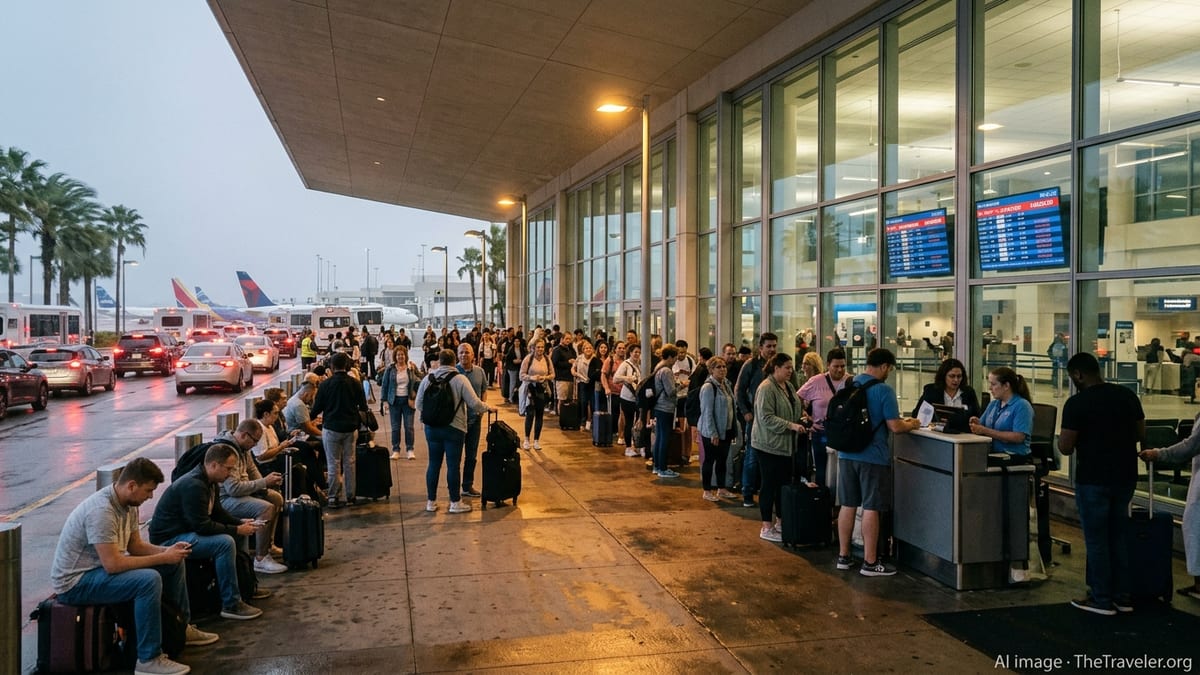
Wave of Cancellations Hits Major Leisure Hub
Orlando International Airport, one of the primary entry points for domestic and international leisure travelers in the United States, has seen a sharp spike in cancellations and delays this week. Publicly available flight tracking data and social media reports from passengers indicate that hundreds of departures and arrivals have been scrubbed or pushed back, producing long lines, crowded concourses and extended waits at baggage carousels.
The pattern of disruption appears most acute among low cost and leisure focused carriers, many of which rely on tightly scheduled aircraft rotations and higher sensitivity to operating costs. Passengers have described evenings in which departure boards filled with red cancellation markers, particularly on routes with lower load factors or thinner profit margins.
While severe weather and operational bottlenecks have contributed to problems across the national network in recent days, analysts note that Orlando’s role as a spring break and theme park hub magnifies the impact. Families traveling on fixed holiday windows and visitors connecting to cruises or onward vacations are facing especially limited rebooking options as remaining flights fill quickly.
The result has been a visible strain on airport infrastructure, from security checkpoints to concessions. Travelers report terminal crowds stretching late into the night as they wait for rebooked departures, hotel vouchers or alternative ground transportation to nearby cities.
Jet Fuel Shock Raises Pressure on Airline Schedules
The disruptions in Orlando are unfolding against a backdrop of sharply rising jet fuel prices, driven by a war in the Middle East that has rattled global energy markets. Industry coverage describes fuel costs climbing as oil exports from key producing countries are constrained and shipping routes near the Strait of Hormuz become more hazardous, prompting insurers and shippers to reassess risk.
Jet fuel is typically one of the largest single expenses for airlines, and sudden spikes can quickly render marginal routes unprofitable. Aviation analysts cited in recent trade and business reports have warned that sustained price increases may push carriers to trim frequencies, consolidate flights or cancel services that are not close to full, especially in competitive leisure markets.
Orlando’s heavy dependence on price sensitive travelers makes it particularly vulnerable to such cost driven decisions. When fuel prices surge, airlines face a choice between raising fares, imposing surcharges or quietly reducing capacity by canceling less lucrative departures. The current pattern of scattered cancellations across multiple carriers at Orlando suggests that cost management is becoming a more significant factor in schedule planning.
Some carriers are also grappling with the added burden of longer flight routings around conflict zones, which further increase fuel burn and crew costs on international services. Those pressures can ripple into domestic operations as aircraft and crew are repositioned, leaving fewer resources to cover routine disruptions at high volume airports like Orlando.
Global Crisis Ripples Through U.S. Airports
The immediate trigger for the latest fuel shock is a widening conflict involving Iran and regional powers, which has disrupted airspace and shipping patterns across parts of the Middle East. According to widely cited international coverage, airspace closures, missile and drone activity and damage to key hubs such as Dubai and Abu Dhabi have forced airlines to reroute or suspend thousands of flights on some of the world’s busiest corridors.
These changes have far reaching consequences. Longer routings around restricted airspace add hours to certain long haul flights, consuming more fuel and tying up aircraft and crews for extended periods. Cargo capacity has also been reduced as some widebody passenger jets are redeployed to repatriation and contingency missions, tightening logistics for industries that rely on air freight.
Although Orlando is geographically distant from the conflict zone, the airport is enmeshed in the same global aviation ecosystem. When carriers absorb higher fuel bills and operational complexity on their intercontinental networks, they may seek savings elsewhere by thinning domestic schedules, consolidating lightly booked flights or delaying planned capacity increases. U.S. carriers and international airlines serving Orlando are therefore indirectly exposed to the same strategic pressures shaping operations in Europe, the Gulf and Asia.
The broader context also includes uncertainty in other regions, from cartel related unrest in parts of Mexico to severe winter storms and a partial government shutdown affecting airport security staffing in the United States. Together, these factors have produced one of the most turbulent periods for global aviation since the height of the pandemic, with Orlando’s current difficulties reflecting a much wider pattern.
Spring Break Travelers Face Difficult Choices
The timing of the disruptions could hardly be worse for Orlando bound travelers. The March calendar combines peak spring break demand, major sporting events and a steady stream of visitors to theme parks and resorts, all of which rely heavily on the reliability of flights into and out of Orlando International Airport.
Reports from passenger forums and local discussion boards describe travelers arriving at the airport to find their flights canceled within hours of departure, sometimes after overnight delays or multiple schedule changes. In some cases, airlines have rebooked customers on flights several days later, while others have encouraged travelers to accept refunds and make their own alternative arrangements.
As seats on remaining flights sell out, stranded passengers are turning to secondary airports in the region, including Tampa and smaller Florida fields, as well as long distance bus and car rental options. However, higher fuel prices are also feeding into ground transport costs, making last minute one way rentals and rideshare journeys more expensive than in previous years.
Consumer advocates cited in recent coverage are urging travelers to monitor their flight status frequently, keep documentation of cancellations and delays and familiarize themselves with airline policies on refunds and rebooking. In the current environment, travelers with flexible dates or routes may have an easier time securing new itineraries than those locked into fixed hotel or theme park reservations.
What Passengers Can Expect in the Coming Days
Aviation industry briefings and economic analyses suggest that the situation is unlikely to resolve immediately. As long as oil markets remain volatile and key air corridors are constrained by military activity and security concerns, airlines will face continued uncertainty over fuel costs and operational planning.
For Orlando, industry observers anticipate an uneven pattern of disruption rather than a single, clearly defined shutdown. Periods of relative normalcy may be punctuated by sudden clusters of cancellations as carriers adjust to daily shifts in demand, fuel prices and network constraints. Travelers may experience relatively smooth departures one day and widespread disruption the next, even on similar routes.
In response, some airlines are expanding travel waiver policies, allowing passengers to change dates or destinations without fees on affected itineraries. Public advisories from travel organizations and airport partners encourage passengers to arrive early, build additional time into connections and consider travel insurance products that specifically cover schedule disruption.
For now, Orlando’s experience illustrates how quickly a distant geopolitical crisis can translate into concrete impacts at a single airport security line or baggage carousel. As fuel prices remain elevated and the global crisis continues to evolve, both airlines and travelers using Orlando International Airport are bracing for a prolonged period of uncertainty.