

More news on this day
Passengers at Orlando International Airport faced renewed travel disruption today as a fresh round of flight cancellations rippled across major carriers including Delta Air Lines, American Airlines, JetBlue and Southwest, cutting into key routes to and from cities in the United States, Europe and the Middle East.
Get the latest news straight to your inbox!
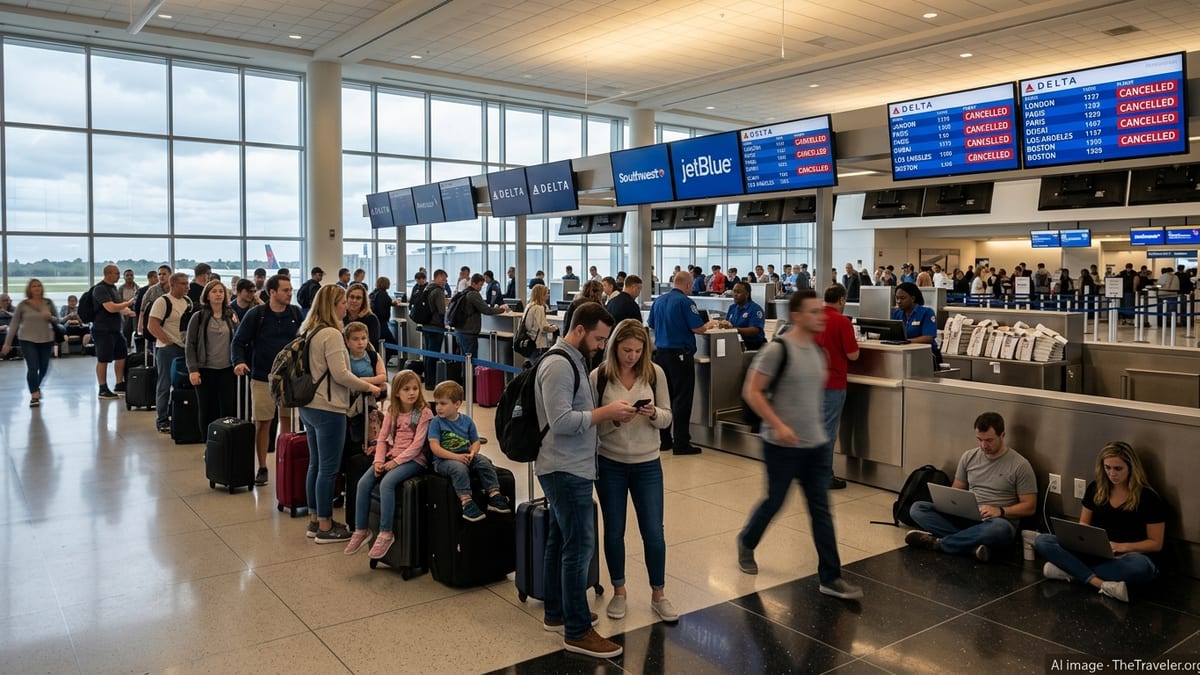
Fresh Disruptions Hit Major Carriers at Orlando
Operational data and live tracking services on March 23 indicate that at least 14 additional departures and arrivals linked to Orlando International Airport were cancelled across multiple airlines, compounding a week of irregular operations. The latest wave affects flights operated by Delta Air Lines, American Airlines, JetBlue, Southwest and several smaller carriers, creating long queues at ticket counters and rebooking desks as spring break travel peaks.
Publicly available information shows that cancellations are concentrated on high-demand routes, including services to Los Angeles, Boston and other East Coast hubs that feed long-haul connections. Travelers arriving in Orlando have reported missed onward flights and unexpectedly long layovers as crews and aircraft fail to arrive on schedule from other disrupted airports.
The disruption comes on top of already elevated congestion at Orlando, one of the busiest leisure gateways in the United States. Recent airport statistics highlight sustained growth in long-haul links to Europe and the Middle East, meaning a relatively small number of cancellations can cascade across multiple continents when aircraft and crews are out of position.
Although weather along parts of the East Coast has improved compared with earlier in the week, recovery efforts from prior storms and regional ground stops continue to limit schedule flexibility. According to airline status boards, some carriers are proactively cancelling rotations in order to reset their networks and avoid even larger knock-on delays.
Routes to London, Paris and Dubai Among Those Affected
Published coverage and flight-monitoring platforms show that transatlantic and connecting itineraries linking Orlando to London and Paris are experiencing renewed strain. While many of these journeys operate via airline hubs such as New York, Atlanta or Boston rather than as nonstop services, cancellations on feeder flights out of Orlando have forced passengers to abandon or rebook onward segments to Europe.
Recent geopolitical tensions and airspace restrictions over parts of the Middle East have further complicated routings to destinations such as Dubai. Long-haul flights that normally pass through affected regions have faced rerouting, extended flight times and schedule adjustments, reducing the number of available aircraft and crews for some carriers that also serve Orlando. Industry observers note that even when Orlando is not the origin of a Middle East flight, cancellations elsewhere can pull aircraft away from US leisure markets to shore up core long-haul operations.
Travelers heading from Orlando to European gateways such as London and Paris report tight seat availability on remaining services, especially in the days immediately following a cancellation. With school holidays underway in parts of the United States and Europe, many departures are already near capacity, limiting options for same-day or next-day rebooking.
Airlines have been encouraging passengers connecting through Orlando on complex itineraries to monitor their journeys segment by segment. When a domestic leg to a hub is cancelled, entire tickets can unravel, even if the long-haul portion of the trip is still scheduled to operate on time.
Domestic Links to Los Angeles and Boston Under Pressure
Within the United States, flights between Orlando and major coastal markets such as Los Angeles and Boston have been among the most disrupted during this period. Recent schedule overviews from Orlando International Airport show strong competition on the Los Angeles route from Delta, American, Southwest and ultra-low-cost carriers, meaning a cancellation by one airline can quickly spill demand onto others, leaving little spare capacity.
Travel forums and social media posts describe families and business travelers in Orlando facing multi-hour waits to secure alternative flights to the West Coast after services to Los Angeles were cancelled or heavily delayed. Some report accepting connections through secondary hubs or overnight stops in order to reach California, while others have given up on flying and chosen to drive to alternative airports.
Boston, a key point for both domestic and transatlantic connections, has also seen turbulence. Recent storms and strong winds in New England earlier in the week contributed to lengthy delays and cancellations at Boston Logan International Airport, and the effects continue to ripple into Orlando-bound schedules. Travelers on JetBlue and other carriers have reported spending long stretches in terminals as rolling delays turned into outright cancellations on Orlando–Boston services.
Current operations indicate that some airlines are trimming frequencies on these busy domestic routes for several days, favoring reliability on a reduced schedule over attempting to operate every planned flight. That strategy may help stabilize on-time performance but leaves limited options for passengers whose original flights disappear from the timetable.
Weather, Airspace Restrictions and Crew Logistics Drive Chaos
The immediate causes of the latest 14 cancellations at Orlando appear to be intertwined with broader challenges that have built up over March. Earlier in the month, winter weather systems along the US East Coast led to repeated ground stops and runway closures at key connecting airports. Even after skies cleared, the process of repositioning aircraft and crews has proven difficult, especially for airlines already operating near peak capacity for spring break.
At the same time, published industry analyses highlight the impact of airspace restrictions related to conflict zones in parts of the Middle East. Flights between North America, Europe and the Gulf region have been rerouted to avoid affected areas, increasing flying times and sometimes necessitating additional fuel stops. Those changes ripple through airline networks, forcing schedule adjustments that can show up as cancellations far from the conflict itself, including at leisure-heavy gateways like Orlando.
Airlines are also contending with crew duty-time limits that cap how long pilots and flight attendants can legally remain on shift. When storms, congestion or reroutings push flights beyond those limits, cancellations or diversions may be required, reducing schedule resilience further. Publicly shared accounts from travelers this week describe last-minute cancellations at gates in Orlando after crews reached their maximum duty hours while waiting out upstream delays.
Operational experts note that these factors tend to compound late in the day, when minor delays accumulate across multiple rotations. As evening banks of flights depart Orlando for cities such as Los Angeles, Boston, London and Paris, a single inbound aircraft arriving significantly late can disrupt several subsequent segments and trigger short-notice cancellations.
What Travelers Through Orlando Should Expect Now
For passengers scheduled to travel through Orlando in the coming days, publicly available advisories from airlines emphasize the importance of checking flight status repeatedly on the day of departure. Same-day schedule changes remain possible as carriers continue to rebalance their networks following this latest round of cancellations.
Many airlines serving Orlando have issued flexible travel options during recent disruption periods, including waivers on change fees or fare differences for customers willing to adjust travel dates or routings. Policies vary by carrier and ticket type, and travelers are being urged through official channels to review the latest conditions before making changes or heading to the airport.
Airport congestion is likely to remain elevated, especially at check-in and security during peak morning and evening waves. Travelers connecting to long-haul flights to Europe or the Middle East may benefit from building additional time into their itineraries, given the heightened risk that an initial domestic leg could be delayed or cancelled.
While operations at Orlando typically recover quickly once weather systems pass and airspace patterns stabilize, March 2026 has shown how global events can rapidly unsettle even the most familiar leisure routes. With airlines continuing to fine-tune their schedules in response to shifting conditions, passengers are being encouraged through public updates to stay flexible and prepare for potential last-minute changes as the busy spring travel period continues.