

More news on this day
Orlando’s peak Easter getaway turned chaotic on March 30 as more than two hundred flight disruptions rippled through Orlando International Airport, stranding families bound for Walt Disney World Resort and Universal Orlando and forcing last minute changes to holiday plans.
Get the latest news straight to your inbox!
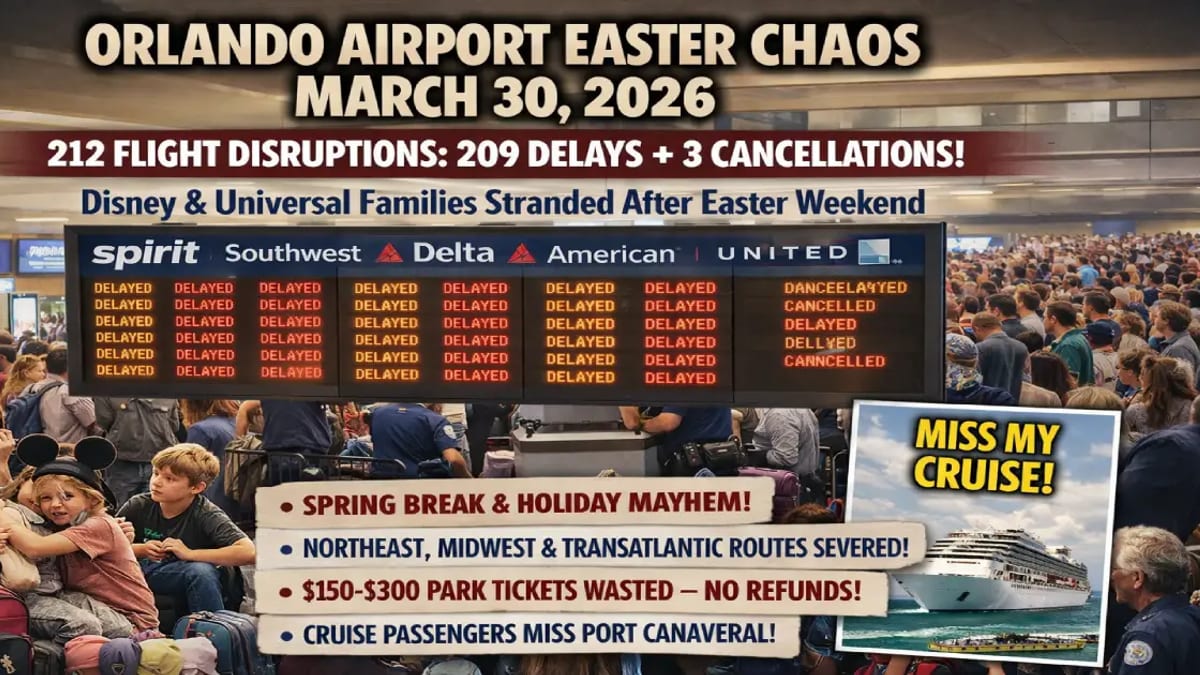
Image by Travel Tourister
Easter Peak Collides With Nationwide Aviation Strains
The March 30 disruption unfolded at the height of Orlando’s Easter and spring break rush, one of the busiest periods of the year for Central Florida’s tourism industry. Passenger volumes had already been elevated for weeks as schools across the United States staggered spring holidays and theme parks rolled out seasonal events.
Industry trackers indicated that roughly 200 flights connected to Orlando were delayed or canceled on Monday, part of a wider pattern of nationwide disruption that has persisted through March. Operational bottlenecks, staffing gaps in critical roles and knock on effects from recent severe weather systems across other parts of the country all contributed to extended waits and missed connections.
Publicly available airport and airline data suggest that Orlando International, already known for long queues at security and busy curbside traffic during peak seasons, struggled to absorb the pressure once delays began to accumulate. Families arriving for tightly planned theme park stays reported extended time on the tarmac, rebookings onto late night departures and, in some cases, being pushed into next day travel windows.
Travel media coverage over the weekend highlighted similar patterns at other major US hubs, with thousands of delays recorded nationwide as carriers attempted to reposition aircraft and crews. That wider instability set the stage for Orlando’s Easter Monday troubles once volume peaked at one of the country’s most tourism dependent airports.
Theme Park Vacations Upended for Disney and Universal Guests
The timing of the disruption proved particularly painful for travelers whose itineraries were built around nonrefundable theme park tickets, hard to secure dining reservations and special Easter programming at area attractions. Reports from travel forums and social media show families missing first day park entries, premium character breakfasts and early morning ride reservations at both Walt Disney World and Universal Orlando.
Many visitors had planned tightly choreographed long weekend or three night stays, aiming to maximize ride time before schools resumed the following week. When flights arriving into Orlando were pushed back by several hours or canceled outright, those compressed itineraries left little room to recover, turning what was meant to be a high energy holiday escape into a logistical race.
Travel planners noted that even travelers who purchased early morning flights were not fully insulated, as rolling delays at origin airports and crew availability issues forced schedule changes throughout the day. For guests staying at on site resorts that bundle park access with room nights, late arrivals reduced already limited park time and sometimes required rearranging shuttle transfers and luggage delivery.
Some families opted to salvage portions of their trips by shifting park reservations to later in the week or by focusing on attractions closer to their hotels. Others, facing overnight delays and young children exhausted by hours in terminals, chose to shorten their stays or cancel planned park days entirely.
Underlying Causes: Volume, Weather Ripples and Staffing Gaps
While weather conditions in Central Florida on March 30 were generally manageable, aviation coverage throughout March has documented repeated storms, fronts and even blizzard conditions across other regions of the United States. These events disrupted aircraft positioning and crew rotations, leaving network schedules vulnerable as the Easter peak approached.
Analysts point to a convergence of factors rather than a single trigger. High national demand around Easter, ongoing staffing challenges in some airline and air traffic control operations, and the lingering effects of earlier severe weather across the Midwest and Northeast all played a part in Monday’s delays.
Publicly available data from flight tracking services showed Orlando listed among several US airports with elevated disruption levels over the Easter period. Travel industry reports have also emphasized that even when Florida skies remain relatively clear, storms at hub airports in the Northeast or Midwest can easily cascade into late arrivals and departures in Orlando, particularly on tightly timed spring break schedules.
Infrastructure constraints add another layer of complexity. Orlando International has expanded its facilities in recent years, but rapid growth in passenger volumes, especially from low cost carriers serving vacationers, continues to test terminal capacity. When a wave of delayed flights arrives close together, gate availability, baggage handling and security screening all come under strain.
Knock On Effects Across Central Florida’s Tourism Economy
The immediate impact of Monday’s disruptions was felt most acutely by travelers, but the consequences ripple across Central Florida’s broader tourism economy. Hotels near the airport and along the main tourism corridors reported increased late night check ins as guests were rebooked onto later flights, while some properties saw unexpected same day cancellations from families unable to depart home airports.
Local transportation providers, including shuttle operators and rideshare drivers, also experienced uneven demand patterns as arrival times shifted. Instead of steady afternoon flows, clusters of flights reached Orlando in compressed windows, creating short bursts of intense demand followed by lulls.
Theme parks themselves may see a subtle redistribution of crowd patterns over the week as guests who arrived late shift planned park days. Travel analysts suggest that midweek attendance could temporarily spike if a significant number of families defer their first visits from Monday to Tuesday or Wednesday, while Monday’s in park crowd levels may have been slightly lighter than anticipated despite the holiday.
For Central Florida’s tourism planners, the episode underscores the region’s dependence on a single major gateway airport. Any extended operational difficulty at Orlando International can quickly translate into lost visitor spending, reduced length of stay and added pressure on already tight staffing rosters at hotels, restaurants and attractions.
What Travelers Can Learn for Future Holiday Trips
Although Monday’s disruption was driven by broader structural issues in the aviation system, travel advisors argue that individual travelers can take steps to reduce their exposure during peak periods. Booking first wave departures from origin airports, allowing buffer days before nonrefundable park reservations and considering flexible park ticket options can create more room to adjust when delays occur.
Publicly available airline policies show that many carriers provide limited meal or accommodation support when disruptions are linked to weather or system wide operational constraints. As a result, families heading to high cost destinations such as Orlando often benefit from travel insurance that specifically covers trip interruption and additional lodging expenses.
Experts also recommend closely monitoring flight status beginning 24 to 48 hours before departure, particularly around holiday weekends when national demand is high. Early awareness of rolling delays or schedule changes can help travelers rebook proactively or adjust ground transportation and hotel plans rather than reacting at the last minute in crowded terminals.
For Orlando, the Easter Monday paralysis fits into a longer pattern of volatility during peak travel windows. With spring break, summer vacation and winter holiday periods all drawing heavy traffic to Central Florida’s attractions, travelers and the local tourism industry alike are likely to treat the March 30 disruptions as a reminder that even a single day of instability can reshape hundreds of carefully planned theme park vacations.