

More news on this day
Spring travel plans across the United States were thrown off course in early April 2026 as a fresh wave of disruption centered on Orlando contributed to more than 198 flight cancellations and delays across the national air network.
Get the latest news straight to your inbox!
Stormy Spring Peaks in Orlando and Beyond
Orlando International Airport has emerged as one of the flashpoints in a turbulent start to April, as severe weather systems, heavy holiday demand and operational bottlenecks converged on already crowded terminals. Publicly available tracking data for the first week of April 2026 shows Orlando repeatedly ranking among the country’s most disrupted hubs, alongside Atlanta, Chicago, New York and Los Angeles.
Reports from aviation analytics platforms and travel-industry coverage indicate that April’s problems did not start in isolation. A succession of late March storm systems had already strained airline schedules, leaving crews and aircraft out of position as travelers headed into the Easter period. By the time early April arrivals and departures ramped up at Orlando, the network was carrying little spare capacity to absorb new delays.
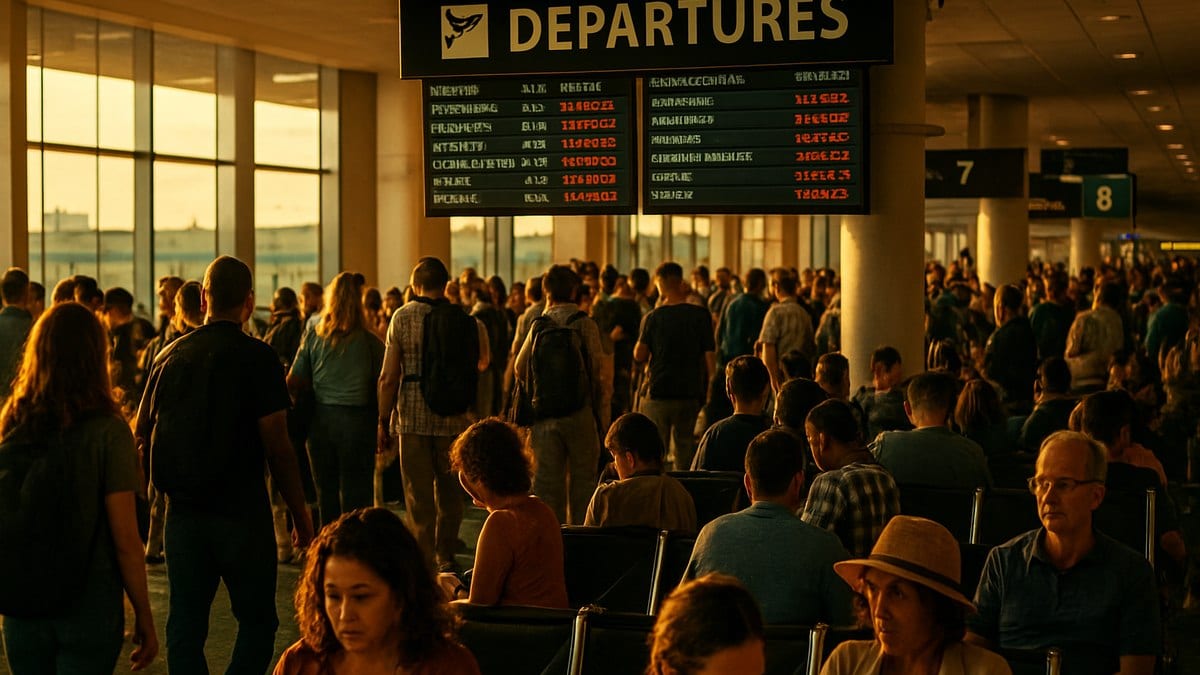
Travel-focused outlets describe scenes of crowded concourses and long lines at Orlando as airlines attempted to re-time departures and secure replacement aircraft. With Orlando serving as a major leisure gateway during spring break and Easter, even modest schedule changes at the airport sent knock-on effects through connecting routes across the United States.
At the same time, other Florida airports including Miami and Fort Lauderdale were also reporting elevated disruption, amplifying the pressure on carriers using Orlando as part of wider regional networks. The combination of weather constraints and high passenger volumes left many flights operating with little margin for further slowdown.
Nationwide Impact: Nearly 200 Flights Hit in a Single Day
By April 7, published disruption tallies pointed to a particularly acute nationwide spike, with data showing more than 4,000 delays and over 200 cancellations across the United States in a single day. Within that total, Orlando accounted for a meaningful share of the problems, registering double-digit cancellations and hundreds of delays as storms and congestion rippled through national traffic flows.
Operational summaries highlight how quickly localized disruption at a few major hubs can propagate. On the same day that Orlando recorded 11 cancellations and more than 200 delays, airports such as Atlanta, Chicago O’Hare, New York LaGuardia and Newark also reported high numbers of affected flights. That combination translated into at least 198 individual flights across the domestic network either scrubbed outright or forced significantly off schedule in connection with Orlando-linked routings.
Publicly accessible flight-tracking dashboards show a diverse mix of airlines bearing the brunt of the turmoil. Large network carriers, low-cost operators and ultra-low-cost airlines all appear in the disruption statistics, both on routes directly touching Orlando and on connecting services relying on aircraft and crews that pass through the airport earlier in the day.
Because many of the cancellations involved aircraft that were scheduled to fly multiple legs, each decision to ground a plane tended to affect several subsequent departures. Industry observers note that this compounding effect is a key reason relatively modest-seeming events at a single airport can contribute to nationwide tallies approaching or exceeding the 200-flight mark.
Easter Weekend Congestion Sets the Stage
The early April chaos around Orlando did not arise in a vacuum. Easter weekend had already produced heavy disruption across the United States, with publicly available data showing thousands of delays and hundreds of cancellations during the preceding days. Severe thunderstorms, shifting wind patterns and crowded holiday schedules combined to slow traffic at multiple hubs just as leisure demand peaked.
Coverage from travel and aviation outlets points to Easter Saturday as a particular pressure point, with more than 5,000 delays recorded nationwide and extensive problems at key connecting airports. Orlando featured prominently in these statistics, reflecting its role as a major destination for theme park visitors and cruise passengers returning home at the end of the holiday period.
Those Easter disruptions left carriers and airports entering the first full week of April on the back foot. Crew rest requirements, ongoing weather reroutes and lingering aircraft maintenance backlogs meant that many April 6 and April 7 schedules were already fragile before new storms and operational issues struck. In that context, Orlando’s latest wave of delays and cancellations functioned as a trigger for a broader network-wide unraveling.
Travel analysts observing the spring 2026 patterns have suggested that the U.S. system remains particularly vulnerable when high seasonal demand coincides with adverse weather at multiple hubs. Orlando’s status as both a destination and a connecting point for domestic and international flights adds complexity when timely recoveries are needed.
Passengers Face Cascading Disruptions Across Routes
For passengers, the statistics translated into missed connections, airport overnights and last-minute scrambles to rebook. Trip reports and consumer-focused coverage describe travelers at Orlando and other large hubs confronting rolling departure estimates, gate changes and extended waits as airlines adjusted their operations in real time.
Many of the affected itineraries involved multi-leg journeys linking Orlando with cities such as New York, Boston, Chicago, Toronto, Cancun and London. When an Orlando departure ran late or was canceled, onward flights at connecting airports were often already close to capacity, limiting same-day rebooking options. In some cases, travelers reported being shifted to flights one or two days later as carriers tried to match limited seats with growing backlogs.
Additional pressure came from the fact that disruptions were not limited to a single operator. Publicly available schedules and disruption tallies show American, Delta, United, Southwest, JetBlue, Spirit, Frontier and other airlines all experiencing delays or cancellations on Orlando-linked routes during the first week of April. That spread made it more difficult for travelers to switch to alternative carriers when their initial plans collapsed.
Airport amenities and local transport networks also felt the strain. Reporting from travel outlets notes crowded rental car counters, busy hotel booking channels and long lines at customer-service desks in and around Orlando as stranded passengers sought short-term solutions while waiting for new flights.
Why Orlando Keeps Appearing in Spring Disruption Maps
The April 2026 turmoil reinforces a pattern seen in recent years, with Orlando frequently appearing in national disruption tallies during key travel periods. Industry data shows that the airport routinely handles very high volumes of leisure traffic during spring break and Easter, with many families and tour groups fitting trips into limited school holidays.
That volume interacts with weather patterns that often bring thunderstorms and strong winds to Florida and the Southeast in late March and early April. When those systems coincide with busy weekends, Orlando’s departure and arrival banks can quickly become congested, triggering ground holds, gate shortages and longer taxi times that ripple through the schedule.
A further complicating factor is the mix of airlines using Orlando as a base or focus city. Several low-cost and ultra-low-cost carriers rely on tight aircraft utilization and short turnarounds to keep fares low. Public analyses of disruption data suggest that such models can be particularly vulnerable to cascading delays when a single early-morning flight is affected by weather or technical issues.
Looking ahead through the rest of April 2026, travel commentators indicate that much will depend on how quickly airlines can realign crews and equipment while weather patterns stabilize. With Orlando playing a central role in domestic and international leisure networks, any renewed bout of storms or operational hiccups could once again send disruption totals climbing across the broader U.S. system.