

More news on this day
Fresh turbulence in the U.S. aviation system is converging on Orlando this week, as mounting delays and cancellations at Orlando International Airport spill into nearly 200 flights across the wider domestic network in early April 2026.
Get the latest news straight to your inbox!
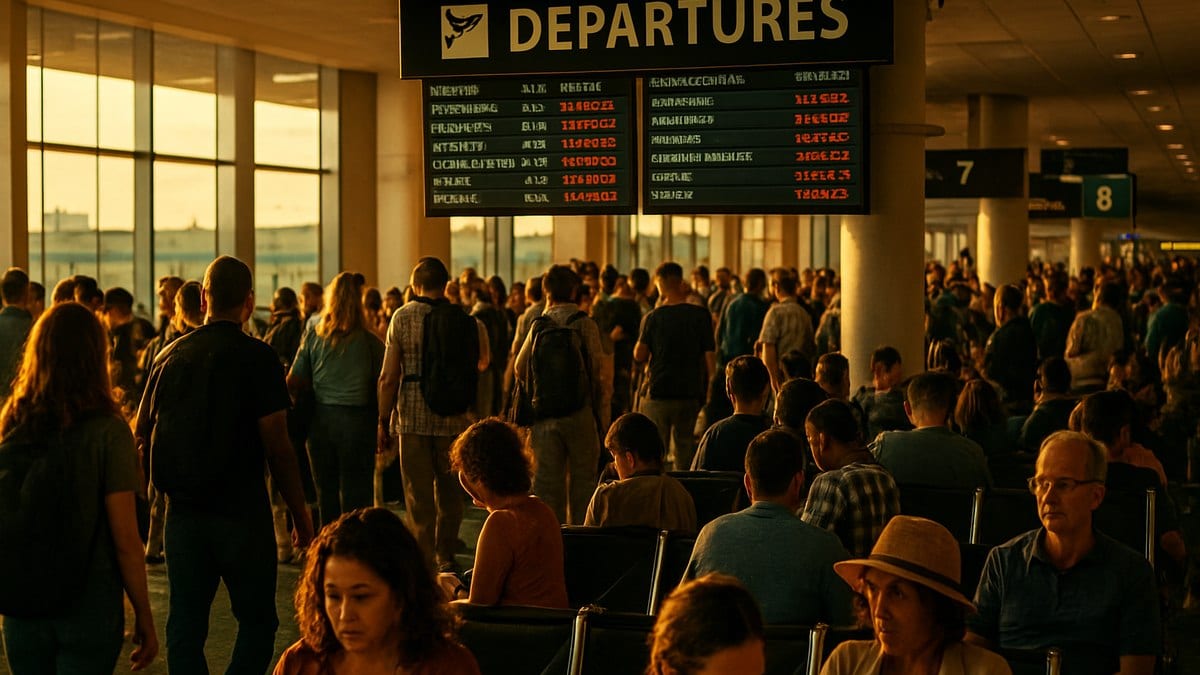
Stormy Spring and Surging Demand Collide at Orlando
Orlando International Airport has been under intense pressure since mid March, when powerful storms triggered ground stops and hundreds of delays and cancellations on some of the busiest spring break travel days. Local broadcast coverage described thunderstorms, hail and lightning forcing aircraft and ground crews to pause operations, creating long backlogs at gates and security as travelers attempted to return home at the end of peak holiday periods.
Those weather shocks arrived just as Easter and spring break demand pushed passenger volumes toward seasonal highs. Publicly available flight tracking data for late March and the first days of April show national delay totals reaching several thousand flights per day, with Orlando consistently appearing among the top U.S. airports for disruption alongside hubs in Atlanta, Chicago and New York. Reports from aviation outlets indicate that Orlando’s role as a leisure gateway magnified the impact, because so many flights are tightly timed to cruise departures, resort check ins and theme park itineraries.
The result has been a rolling pattern of congestion at Orlando that has not fully cleared between successive weather systems. When fresh storms or operational constraints arise, they are hitting an airport and airline schedule already operating with little spare capacity, increasing the likelihood that a local problem will quickly become a nationwide one.
198 Plus Flights Affected Across the U.S. Network
In early April, the cumulative effect of Orlando specific disruption is increasingly visible in national statistics. Based on publicly available delay and cancellation tallies for April 1 through April 7, more than 198 flights linked to Orlando are estimated to have been significantly disrupted, either cancelled outright or delayed long enough to trigger missed connections and aircraft or crew imbalances at other airports.
Travel and aviation trackers reporting on April 1 highlighted more than 150 delays and a small number of cancellations at Orlando alone, mostly involving domestic services to major cities such as New York, Boston, Chicago and Toronto. By April 7, fresh nationwide data showed Orlando once again near the top of the U.S. disruption table, with more than 200 delays and over 10 cancellations logged in a single day as part of a broader surge that also affected Atlanta, Chicago, Houston, Boston, Los Angeles and New York area airports.
Because many of the affected flights operate as part of through routes or aircraft rotations, disruption tied to Orlando has radiated well beyond Florida. Aircraft that begin the day delayed out of Orlando often continue to operate late as they cycle through other hubs, while cancellations at Orlando can leave crews and planes out of position for later departures elsewhere in the country. This knock on effect helps explain why some smaller cities, far removed from severe weather, have still experienced abrupt schedule changes and rolling delays during the same period.
Major Carriers and Leisure Routes Under Strain
Published coverage of early April disruption underscores how broadly the Orlando situation is affecting both full service and low cost airlines. Aggregated data cited by travel industry outlets show that large network carriers such as Delta Air Lines and American Airlines are contending with hundreds of delays and dozens of same day cancellations across their U.S. networks, numbers that include significant Orlando related operations. Low cost and leisure focused airlines with a strong presence in central Florida, including Southwest, Spirit and JetBlue, are also bearing a heavy share of the operational strain.
Route maps from Orlando International Airport for the April schedule period illustrate how heavily the airport is tied into other busy hubs. Dozens of daily departures link Orlando with Atlanta, Dallas Fort Worth, Chicago O’Hare, New York area airports and major Canadian and European gateways. When a bank of flights on those routes is delayed, it not only interrupts family and holiday travel but also undermines the ability of airlines to reposition aircraft for subsequent services, particularly on popular transcontinental and transatlantic runs.
Leisure travelers are disproportionately exposed because so many Orlando itineraries are non flexible advance purchase tickets built around fixed resort stays and cruise sailings. Recent travel reporting has highlighted stories of passengers facing multi day rebooking horizons after cancellations, or being rerouted through multiple intermediate hubs to reach home. While these experiences are not unique to Orlando, the concentration of vacation oriented traffic there means the human impact of each wave of disruption can feel especially acute.
Infrastructure Upgrades Highlight Systemic Vulnerabilities
The latest turbulence is unfolding as Orlando moves ahead with long planned air traffic control upgrades. Regional news coverage at the start of April noted a federal funding package of roughly 40 million dollars directed toward new radar systems, updated controller communications equipment and a shift from paper to electronic flight strips at Orlando International over the coming year. The investment is intended to modernize how aircraft are sequenced and tracked in one of the country’s busiest tourism gateways.
These improvements, however, will not arrive in time to ease the immediate crunch. Aviation analysts quoted in recent commentary on spring 2026 disruptions have emphasized that even technologically advanced airports remain vulnerable when weather, peak demand and tight airline scheduling converge. Orlando’s recent experience fits that pattern, with storms and seasonal crowds exposing how quickly ground operations, gate availability and crew duty limits can become bottlenecks.
The situation also underscores the broader fragility of the U.S. air travel system. Earlier in the spring, separate coverage documented severe storms and airspace constraints in other regions that produced thousands of nationwide delays in a single day. The Orlando disruptions in April are interacting with those earlier events, as residual crew rotations, maintenance schedules and aircraft placements continue to ripple through the network weeks later.
What Travelers Can Expect in the Days Ahead
Travel focused outlets are signaling that passengers flying through Orlando and other major hubs in early to mid April should prepare for continued irregular operations. Forecasts indicate that while the most intense storms of late March have passed, additional unsettled weather is possible across parts of the Southeast and Midwest, and airlines remain in the process of rebalancing fleets and crews after repeated waves of disruption.
For travelers, that means the 198 plus Orlando linked disruptions recorded so far in April could grow if fresh operational challenges arise. Industry observers note that U.S. carriers have been trimming schedules and operating with slimmer spare capacity in response to cost pressures, leaving less room to absorb shocks. Even relatively modest ground delays at a key airport can therefore cascade into missed connections and last minute cancellations by late afternoon and evening.
Passenger advocates and travel analysts are encouraging flyers to build additional buffer time into itineraries involving Orlando, particularly when connecting to international long haul flights or time sensitive events. While most airlines are using automatic rebooking tools and flexible change policies to help customers navigate the latest wave of disruptions, the experience of the past several weeks suggests that personal contingency planning remains an important part of any spring 2026 trip through one of America’s busiest vacation gateways.