

More news on this day
Passengers across the United States faced fresh disruption after Orlando International Airport recorded 198 flight delays and 9 cancellations, snarling operations for JetBlue, Southwest, Spirit and other airlines on key routes to Atlanta, Dallas, Boston and additional domestic hubs.
Get the latest news straight to your inbox!
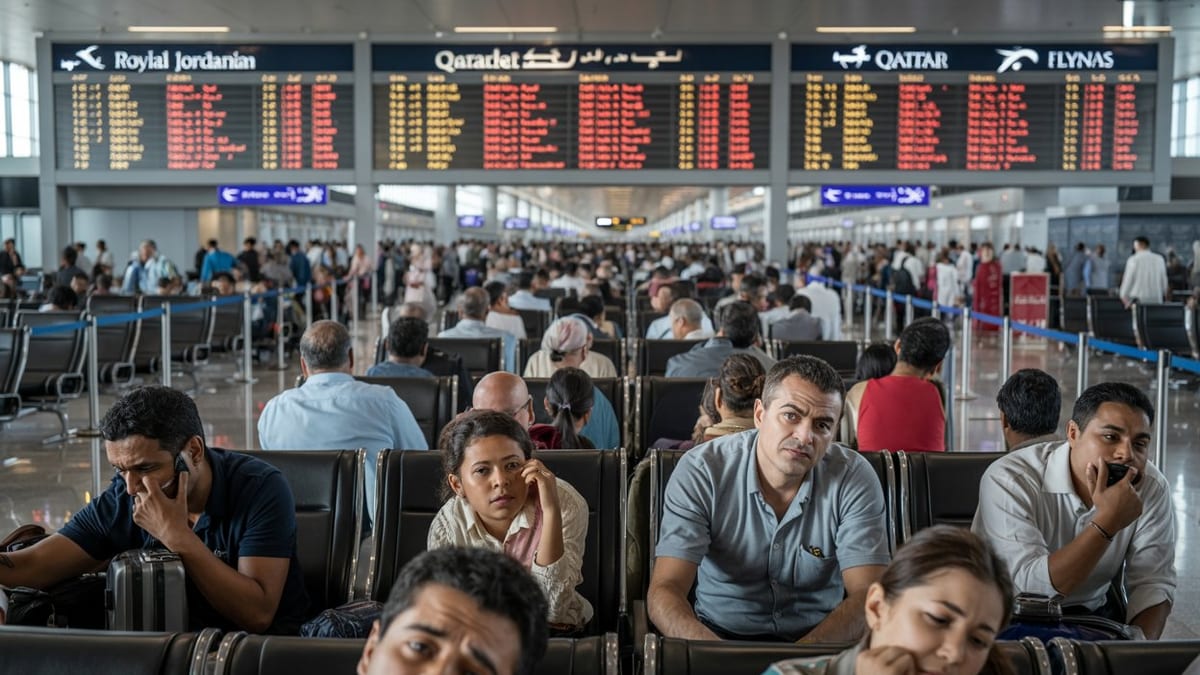
Severe Operational Strain At Orlando International Airport
Operational data and flight tracking snapshots from early April indicate that Orlando International Airport experienced a sharp spike in disruption, with 198 delayed departures and arrivals and 9 flights canceled in a single day. The figures place the central Florida hub among the most affected airports in the country, reflecting ongoing pressure on the U.S. aviation system at the tail end of the busy spring break period.
The disruption affected a mix of mainline and low cost operators, but JetBlue, Southwest Airlines and Spirit Airlines featured prominently among delayed services because of their sizable presence at Orlando. These carriers connect Orlando to a broad domestic network, so schedule problems at the Florida hub quickly translated into rolling delays on downline legs.
Reports from passenger advocacy sites and travel tracking platforms describe extended waits at departure gates, with some travelers held on aircraft awaiting takeoff slots as congestion built in the Orlando airspace. While overall safety was not in question, the operational strain translated into missed connections, late night arrivals and rebooked itineraries for hundreds of passengers.
Publicly available airport planning documents and carrier schedules underscore how exposed Orlando has become to such disruption. The airport has steadily grown as a focus city for low cost and hybrid airlines, which operate tight aircraft utilization patterns that leave little margin when weather or air traffic programs slow the system.
Ripple Effects For JetBlue, Southwest, Spirit And Other Carriers
The wave of delays in Orlando quickly spread through airline networks, particularly for JetBlue, Southwest and Spirit, whose Orlando flights often operate as through-services or feed into dense bank structures. When departures from Orlando pushed back late, arriving aircraft into other cities such as Atlanta, Dallas and Boston also fell behind schedule.
For JetBlue, which operates a mix of point to point leisure routes and business-focused services from Orlando, the disruption risk was amplified on routes connecting into its northeastern focus cities. Delayed turnarounds in Florida translated into later-than-planned departures from Boston and other East Coast airports, squeezing already busy evening schedules.
Southwest, with its high frequency operations and quick aircraft turns, faced its own cascade of operational challenges. Even modest delays at Orlando are enough to disrupt subsequent rotations to secondary markets in the Southeast and Texas, including Dallas area airports. Once those aircraft arrive behind schedule, the impact can extend deep into the daily timetable as crews approach duty limits and gate space tightens.
Spirit, which leans heavily on Orlando as a leisure gateway for domestic and Latin American traffic, similarly saw knock-on effects. Disruptions on Florida departures complicated connections for travelers heading to and from major inland markets, and reports from recent weeks highlight how full aircraft and limited spare capacity can make recovery from a bad operational day especially slow for ultra low cost carriers.
Impacted Routes Across Atlanta, Dallas, Boston And Beyond
The immediate impacts of Orlando’s 198 delays and 9 cancellations were felt most sharply on high demand corridors linking Florida with major hubs such as Atlanta, Dallas and Boston. These routes handle a blend of leisure and business travelers and are central to the networks of multiple carriers, increasing the likelihood of widespread passenger disruption when irregular operations occur.
Flights between Orlando and Atlanta, one of the busiest domestic corridors in the Southeast, experienced a mix of late departures and arrivals as air traffic control programs and volume-related constraints slowed traffic flow. Travelers reported longer than normal taxi times and compressed connection windows onward to Midwestern and Northeast destinations.
Services connecting Orlando with Dallas area airports also felt the strain. With Dallas functioning as both a major origin and a connecting hub, delays on Florida bound legs led to missed onward flights and forced rebookings. Evening departures, in particular, left limited room for same day recovery, leaving some passengers facing overnight stays or next day departures when Orlando cancellations occurred.
Boston bound routes from Orlando were similarly affected, with publicly available flight status data showing late evening arrivals and, in some cases, aircraft repositioning to restore the next day’s schedule. Because Boston also sits in a region recently impacted by strong weather systems and broader East Coast congestion, even minor schedule slips originating in Florida proved difficult to absorb.
Weather, Spring Travel Surge And Systemic Vulnerabilities
The disruption in Orlando did not occur in isolation. Recent weeks have seen repeated bouts of unsettled weather across portions of the eastern United States, including storms that triggered large numbers of delays and cancellations at multiple hubs. When those systems interact with peak seasonal demand, airports like Orlando are especially prone to operational gridlock.
Spring break and early April holidays drive substantial spikes in leisure travel to central Florida, filling flights to capacity and increasing the volume of aircraft movements at Orlando. Under such conditions, even short-lived thunderstorms, low clouds or strong winds can trigger ground delay programs or rerouting, quickly straining runway, gate and ramp capacity.
Industry analyses and consumer reports point to broader systemic vulnerabilities as well. Many carriers operate lean schedules with limited spare aircraft and tight crew rotations, an efficient model during normal conditions that becomes brittle when widespread delays occur. Once an airport logs close to two hundred delayed flights in a day, spare capacity to recover the operation diminishes fast.
Recent government and industry discussions have also highlighted infrastructure constraints at busy U.S. airports, including limitations in terminal space, airfield layout and air traffic control staffing. Orlando’s rapid passenger growth in recent years has outpaced some of its legacy infrastructure, and days with high delay counts underline the challenges of sustaining on time performance under stress.
What The Disruption Means For Travelers
For passengers moving through Orlando and its connected hubs, the episode underscores the importance of planning for irregular operations, especially during peak seasons. Travel experts consistently advise allowing extra connection time when routing through busy hubs, selecting earlier departures when possible and monitoring flight status closely via airline apps and airport information boards.
Consumer advocacy organizations note that travelers affected by long delays or cancellations may be entitled to certain forms of compensation or assistance depending on the cause of the disruption and the policies of the operating carrier. These can include meal vouchers, hotel accommodations or rebooking on alternative flights, although outcomes vary widely between airlines and circumstances.
Published comparisons of on time performance also suggest that passengers who are particularly schedule-sensitive may wish to review historical reliability trends for specific airlines and routes serving Orlando. While no carrier is immune from weather-related disruption, differences in operational resilience, fleet flexibility and crew planning can influence how quickly an airline recovers from a day marked by nearly 200 delays.
As Orlando continues to cement its role as one of the country’s busiest leisure gateways, episodes like the latest disruption highlight the growing stakes for both airlines and passengers. With traffic volumes projected to remain strong and weather volatility an ongoing concern, the balance between efficient operations and system resilience will remain a central issue for carriers serving the Florida hub and their customers nationwide.