

More news on this day
Spring storms and heavy passenger volumes around Orlando are contributing to a fresh wave of flight disruptions across the United States in early April 2026, snarling connections far beyond central Florida.
Get the latest news straight to your inbox!
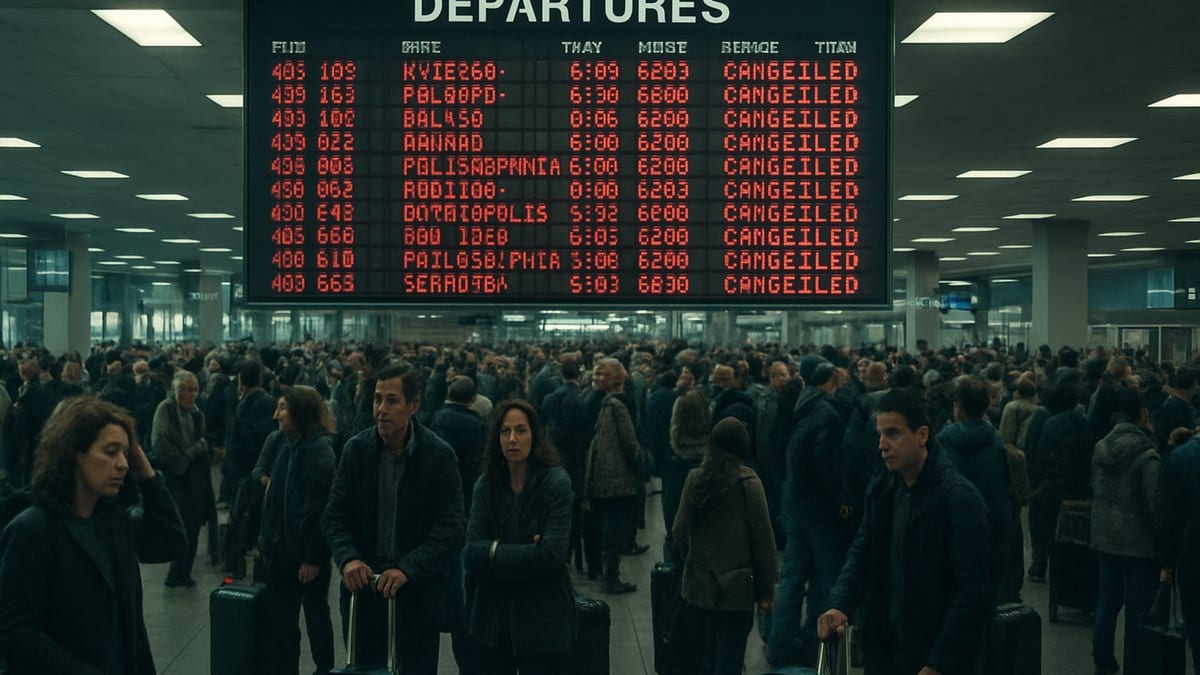
Stormy Start to April Around Central Florida
Orlando International Airport entered April amid unsettled weather and a busy holiday calendar that has amplified the impact of even routine thunderstorms. Forecasts for the first week of the month point to periods of heavy rain, gusty winds and lightning across parts of the Florida Peninsula, conditions that typically reduce arrival and departure rates at busy hubs such as Orlando.
Recent local forecasts indicate that a cold front moving through central Florida is capable of producing strong thunderstorms, downpours and temporary flooding, increasing the likelihood of ground stops or flow-control programs when storm cells sit near approach and departure corridors. Publicly available weather briefings for early April also highlight broader severe weather episodes in other regions of the country, which intersect with Orlando’s extensive domestic network and add further fragility to national schedules.
These patterns are unfolding as Orlando continues to function as one of the country’s most heavily trafficked leisure gateways. Spring break travel, large conventions and theme park demand have all combined to keep terminals and runways near capacity, leaving little slack when weather forces even short operational pauses.
Delays and Cancellations Mount at Orlando International
Operational data and media monitoring for April 1 indicate a noticeable spike in disruptions at Orlando International Airport, with more than 150 flights reported delayed and a smaller number cancelled as airlines worked through weather and congestion constraints. Travel industry coverage notes that the ripple effects were visible on routes linking Orlando with major domestic and international destinations, including New York, Boston, Chicago, Toronto, London and Cancun, among others.
These disruptions appear concentrated among carriers that operate dense leisure schedules from Orlando, including large low-cost and hybrid airlines, but legacy network airlines have also reported scattered delays. Late-arriving aircraft from weather-affected regions and temporarily restricted airspace around storm cells have contributed to rolling knock-on effects throughout the day, particularly in the late afternoon and evening peaks.
While the number of outright cancellations at Orlando has so far remained relatively limited, the volume of delayed departures and arrivals has been enough to trigger missed connections for passengers heading to or from other parts of the United States. The result is a pattern in which even modest weather episodes around central Florida generate outsized inconvenience for travelers spread across multiple time zones.
Record Spring Demand Tightens the System
The disruption picture is sharpened by record-setting demand expectations at Orlando International this spring. Local broadcast coverage ahead of the March to April travel window highlights projections of roughly 53,000 flights operating into and out of the airport during the broader spring break period, with daily passenger counts well above those recorded in 2025.
Industry analysis indicates that airlines across the United States are running fuller schedules in 2026 than at any point since before the pandemic, with aircraft flying high load factors and crews utilized close to legal duty-time limits. A report on recent Miami disruptions describes how carriers have leaned on longer delays and schedule adjustments to avoid cancellations, a strategy that can preserve overall completion rates but leaves limited buffer when storms or operational issues arise.
In this environment, Orlando’s role as a connecting point for both domestic and international leisure traffic increases the risk that a single day of intense storms or air traffic control restrictions will reverberate for several days. Aircraft and crews delayed in or out of central Florida can quickly fall out of position for rotations through the Midwest, Northeast and West Coast, forcing additional schedule changes far from the original weather hotspot.
National Network Feeling the Orlando Effect
Reports on spring 2026 flight performance across the United States show that Orlando’s early April weather and volume pressures are colliding with broader instability in the national network. Separate coverage of late March disruptions documented hundreds of cancellations and several thousand delays triggered by severe storms affecting large parts of the country, with key hubs in New York and the Midwest particularly strained.
Travel features examining these disruptions highlight how certain carriers have been especially exposed, with one analysis citing nearly 1,000 delays at a single airline across airports such as Chicago Midway, New York LaGuardia and Los Angeles International during a peak disruption event. When these same carriers operate dense schedules into Orlando, any delay wave originating elsewhere can quickly impact central Florida operations, which in turn feed additional delays back into the system.
The effect is most visible to passengers when a seemingly isolated thunderstorm over central Florida leads to missed connections in distant cities, or when a weather system in the Northeast cascades into rolling delays on Orlando-bound routes. With U.S. airlines expected to carry nearly three million passengers per day through the end of April, even localized interruptions centered on a major leisure hub like Orlando can generate widespread knock-on disruption.
What Travelers Can Expect Through April
Publicly available forecasts and aviation advisories suggest that bouts of unsettled weather will continue to affect portions of Florida and other key aviation regions through at least the middle of April, raising the prospect of additional delay clusters tied to Orlando. While not every storm system will produce a large disruption event, the combination of high demand, tight schedules and the region’s role in the national air network increases the chances that individual problem days will continue to ripple widely.
Travel experts and consumer guidance platforms consistently recommend that passengers flying to or through Orlando build extra time into their itineraries this month, especially when relying on connections in congested hubs. Monitoring flight status closely through airline apps and independent trackers, checking in early, and understanding rebooking and accommodation policies in advance can help travelers manage the effects of rolling schedule changes.
For now, the pattern emerging in early April 2026 underscores how sensitive the U.S. aviation system remains to storms around central Florida. As thunderstorms, heavy rain and isolated severe weather episodes intersect with record leisure demand, Orlando’s disruptions are likely to remain a prominent driver of network-wide delays well into the spring travel season.