

More news on this day
Spring travelers across the United States are facing a fresh wave of flight disruptions in early April 2026, as weather and congestion around Orlando International Airport help trigger a chain reaction of delays and cancellations throughout the national air network.
Get the latest news straight to your inbox!
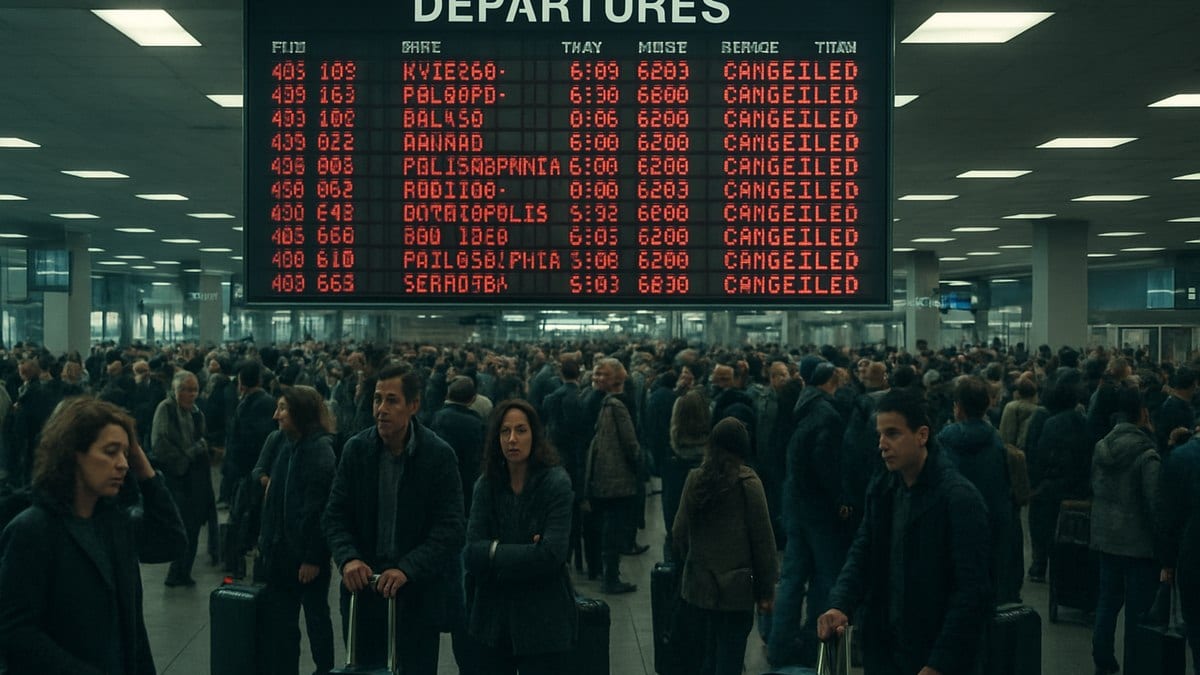
Stormy Spring and Holiday Crowds Collide Over Florida
The latest round of disruption comes on the heels of an already turbulent March for Central Florida, when severe thunderstorms and a ground stop at Orlando International Airport led to hundreds of cancellations and delays in a single day. Local broadcast coverage in mid-March reported more than 400 flights canceled and over 500 delayed at Orlando on one stormy weekend alone, leaving terminals crowded well into the night.
Those spring break disruptions have now given way to an Easter travel surge in early April, with the broader U.S. system again feeling the strain. Publicly available data from flight tracking platforms for Easter weekend show more than 5,500 delays and hundreds of cancellations nationwide on the Saturday of the holiday rush, with major hubs in Atlanta, Dallas Fort Worth, Chicago O Hare and Houston shouldering the heaviest loads.
Travel news coverage indicates that Orlando, one of the country’s busiest leisure gateways, has been an important pressure point in this pattern. Even when the airport’s runways are technically open, thunderstorms in Central and South Florida can force aircraft into holding patterns or prompt ground delay programs that sharply reduce the number of arrivals per hour, creating backups that spread well beyond the state.
Early April’s unsettled weather has coincided with peak holiday demand, meaning flights are operating with high load factors and limited spare seating. Once a departure from Orlando or another Florida airport is canceled, rebooking options across the country can quickly evaporate, prolonging the disruption for travelers far from the original storm zone.
How Orlando’s Problems Become a National Issue
Operational data and aviation analyses describe Orlando as a high volume, leisure focused hub that functions as a critical node in the domestic network. Heavy traffic from theme park visitors and cruise passengers feeds not only point to point routes, but also a complex web of connections through major hubs to the Midwest, Northeast and West Coast.
When weather, congestion or air traffic flow constraints limit operations at Orlando, the immediate effect is a buildup of delayed departures and arrivals at the airport itself. But the consequences are usually not contained within Central Florida. Aircraft and crews scheduled to move on to other cities often miss their planned rotations, setting off rolling delays that can surface hours later in distant markets such as Denver, Phoenix or Boston.
Transportation researchers and government review bodies have repeatedly highlighted this knock on effect in recent assessments of U.S. aviation performance. They note that modern airline schedules rely on tight aircraft utilization and precise crew assignments, leaving little slack when storms or airspace constraints disrupt a major node. As a result, even a localized ground stop or flow restriction in Florida can lead to missed connections, crew timing limits and late night cancellations across the country.
The dynamic has been visible again in April 2026. While some Florida airports have reported only intermittent weather holds, the resulting delays have propagated outward through hub and spoke networks. Travelers leaving or connecting through cities with clear skies have still encountered late arriving aircraft, rolling departure pushes and congestion at connecting hubs traced back in part to earlier slowdowns near Orlando.
Air Traffic Flow Measures Add to the Bottleneck
The Federal Aviation Administration uses a suite of traffic management initiatives to keep the national airspace system operating safely when weather or volume exceed normal capacity. These tools include ground delay programs, miles in trail restrictions and temporary flow constrained areas that limit how many aircraft can pass through busy stretches of airspace at once.
In recent weeks, public pilot and passenger reports have pointed to recurring constraints in the skies over Florida, including flow controlled corridors south of Orlando that can add significant waits for flights crossing the state. When storms, military activity or other factors narrow these corridors, flights bound for or departing from Orlando may be rerouted or held on the ground, further compressing already busy bank times at the airport.
Similar measures have been noted at other U.S. hubs this spring, as controllers balance severe weather in the central states with high demand on the coasts. Even when Orlando itself is not under a formal ground stop, restrictions on neighboring routes can ripple into its arrival and departure streams. The result is a pattern of stop and start operations that complicates airline efforts to reset schedules after each burst of disruption.
Aviation analysts observing these patterns argue that Florida’s dense traffic and exposure to spring and summer thunderstorms make it a recurring focal point for national delay chains. With Orlando carrying a mix of domestic, international and ultra low cost carrier operations, the impact of each constraint is magnified across different market segments and price points.
Passengers Confront Long Lines and Limited Options
For travelers, the operational story is playing out in the form of longer security lines, crowded gate areas and frustrating rebooking experiences at Orlando and beyond. Recent local coverage and traveler accounts describe shoulder to shoulder crowds in some Orlando terminals after late night cancellations, with passengers competing for scarce hotel rooms and next day seats.
In March, live updates from Central Florida media outlets showed triple digit daily tallies for delays and dozens of cancellations at Orlando on several occasions, particularly when storms intersected with peak spring break departures. Although conditions have varied by day in early April, the cumulative impact has left many travelers wary of tight connections through Florida and other busy hubs.
Across the national network, publicly accessible flight data indicate that disrupted passengers often face rebookings stretched over several days when storms hit on peak travel weekends. With Easter and spring break traffic still moving through the system, airlines have had less ability to accommodate displaced travelers on the same day, especially on popular leisure routes linked to Orlando.
Travel experts and consumer advocates are encouraging passengers to build in extra time, favor morning departures when possible and monitor flight status closely in the days leading up to travel. While such strategies cannot eliminate the risk of disruption, past performance data suggest that earlier flights and nonstop options tend to recover more quickly when weather or flow constraints strike Orlando and other key nodes.
Outlook for the Remainder of April 2026
Looking ahead through the rest of April, forecasters expect a typical mix of lingering frontal systems and early season thunderstorms across the eastern United States. That pattern keeps Central and South Florida in a zone where sudden convective storms and low cloud ceilings can recur, especially in the afternoons and evenings.
Industry analysts note that the heaviest holiday pressure may ease in the weeks immediately following Easter, but overall demand remains strong as theme park seasons ramp up and convention traffic returns to Central Florida. Orlando International Airport’s own statistics show sustained growth in daily departures compared with previous years, reinforcing its status as a high volume node that can amplify any operational strain.
Regulatory guidance on the reporting of flight disruption causes underscores that not all delays and cancellations fall under airline control. National aviation system and extreme weather categories account for a significant share of disruptions in periods like early April, when storms over Florida and other hubs interact with tight schedules.
For now, travelers planning to pass through Orlando or connect on routes that rely on Florida airspace can expect some continued volatility. Observers suggest that checking conditions across multiple airports, not just the origin and destination, may offer a clearer sense of risk, since a thunderstorm over Orlando or a flow restriction nearby can still disrupt flights hundreds or even thousands of miles away.