

More news on this day
Travelers moving through Orlando International Airport on March 18 are facing another day of major disruption, as publicly available tracking data shows at least 15 flight cancellations and around 85 delays, now affecting operations at Spirit Airlines alongside Delta, JetBlue, Southwest, United, Breeze, Frontier and Air Canada Rouge.
Get the latest news straight to your inbox!
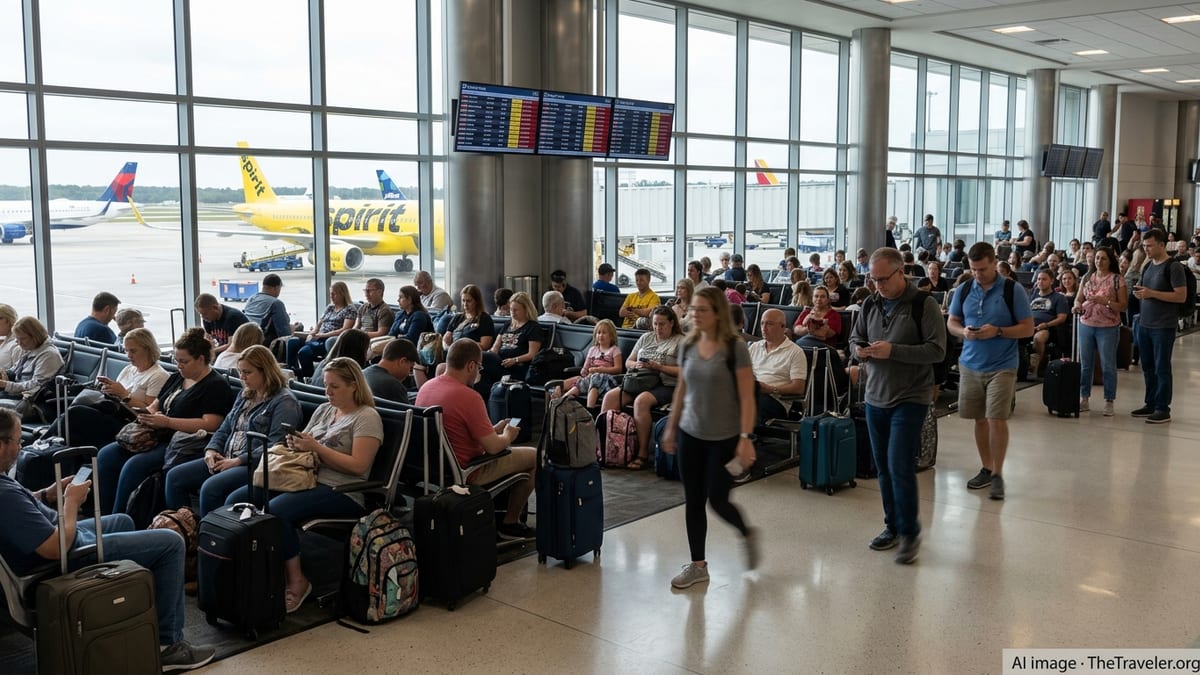
Wave of Cancellations and Delays Hits Major Carriers
Live flight-tracking boards for Orlando International Airport on Wednesday indicate a broad operational slowdown, with 15 flights cancelled and roughly 85 delayed across both arrivals and departures. The disruption now spans a wide mix of full-service and low-cost carriers, including Delta Air Lines, JetBlue, Southwest, United, Breeze, Frontier, Air Canada Rouge and, more recently, Spirit Airlines.
The expanding list of affected airlines suggests a system-wide strain rather than an isolated issue for a single carrier. While the number of cancellations remains modest compared with the airport’s typical daily schedule, the volume of delayed flights is enough to create significant congestion at gates, longer waits on the tarmac and knock-on impacts for connections throughout the domestic network.
Reports shared publicly by travelers describe crowded gate areas, long standby lists and rolling delay extensions across multiple airlines. Some passengers transiting through Orlando after earlier disruptions elsewhere in the country are finding their itineraries pushed further back, compounding delays that began days ago.
Delta, JetBlue and Southwest, which traditionally operate large schedules from Orlando, appear among the most visible on airport departure boards, with numerous flights showing late departures or revised arrival times. The addition of Spirit Airlines to the roster of carriers reporting cancellations and extensive delays underscores how widely the disruption has spread across Orlando’s airline mix.
Weather Domino Effect From Nationwide Storm System
The operational problems in Orlando are unfolding in the wake of a powerful storm system that moved across large portions of the United States between March 13 and March 17. Public meteorological summaries describe that system as a sprawling extratropical cyclone producing blizzard conditions in the Upper Midwest, severe thunderstorms in the Southeast and strong winds across multiple regions.
While central Florida did not bear the worst of the snow and ice, the same system disrupted key airline hubs and air traffic corridors that feed traffic into and out of Orlando. When aircraft and crews are stranded or heavily delayed in one part of the country, those ripple effects often reach popular leisure airports like MCO days later, as carriers work to reposition planes and restore normal schedules.
Travel discussion forums and flight-tracking snapshots from March 15 to March 17 highlight sizable cancellation percentages for several major airlines during the peak of the system, especially on routes touching storm-affected hubs. As those flights were scrubbed or delayed, aircraft and crews arrived late into Orlando or did not arrive at all, reducing flexibility for on-time departures and increasing vulnerability to even minor schedule disruptions.
By March 18, Orlando’s boards reflect this cascading impact. Even with improving weather conditions nationally, the lingering imbalance between available aircraft, rested crews and scheduled flights is leaving little room to absorb high passenger volumes at one of the country’s busiest vacation gateways.
On-the-Ground Experience: Crowded Gates and Long Queues
Real-time posts from travelers at Orlando International on Wednesday describe a strained terminal environment, particularly at peak morning and midday departure banks. Some accounts reference security queues stretching toward nearby shops, packed seating areas near popular domestic gates and large numbers of passengers waiting on standby lists after earlier cancellations.
Passengers on various airlines have reported multiple rounds of boarding and deplaning, extended waits onboard aircraft and delays of several hours beyond original departure times. In some cases, travelers arriving late into Orlando late Tuesday or early Wednesday found themselves facing missed connections or overnight stays as they attempted to rebook onto limited remaining seats.
The strain is especially noticeable at gates serving high-frequency domestic routes where several airlines compete on similar city pairs. When one or two flights are cancelled on a route already operating near capacity, remaining services quickly fill with displaced travelers, narrowing options for same-day rebooking and increasing the likelihood of multi-day disruptions for some passengers.
Despite the visible crowds, some traveler reports suggest that experiences can vary significantly by terminal and time of day. A number of early-morning flights reportedly departed close to schedule, while midday and late-afternoon services have borne the brunt of rolling knock-on delays as congestion builds.
Orlando’s Role as a High-Volume Leisure Gateway
Data published by the Greater Orlando Aviation Authority shows that Orlando International is consistently among the busiest airports in the United States, with a heavy concentration of leisure and family travel. Carriers such as Southwest, Delta, JetBlue, Frontier, Spirit, United, Breeze and Air Canada Rouge collectively operate a dense network of domestic and transborder routes that are especially popular during school breaks, long weekends and major event periods.
Because many of these flights depart full or close to full, Orlando is particularly sensitive to irregular operations. Even a relatively small number of cancellations, such as the 15 recorded on Wednesday, can rapidly strain the system when there are few empty seats available on later departures. Airlines then must rely on alternative routings, overnight accommodation and voluntary rebooking incentives to manage disrupted passengers.
Recent aviation performance analyses of U.S. domestic operations have also highlighted Florida airports, including Orlando, as frequent hotspots for delays relative to other major hubs. Factors cited in such analyses include volatile weather patterns, seasonal surges in demand, airspace congestion along the East Coast and the predominance of point-to-point leisure traffic, which can leave fewer backup options when flights do not operate as planned.
In this context, the current mix of 15 cancellations and 85 delays at MCO fits into a broader pattern in which even short-lived national weather events can have an outsized effect on Florida’s tourism gateways for several days afterward, particularly when they coincide with peak travel windows.
What Travelers Can Expect Through the Remainder of the Week
With Orlando’s Wednesday flight status already showing widespread disruption, travelers scheduled to fly through MCO over the next several days may continue to encounter residual delays as airlines work through backlogs. Experience from previous irregular operations suggests that it can take multiple days for carriers to fully rebalance aircraft and crew rotations, even after weather has improved.
Publicly available airline communications for the current disruption emphasize flexible rebooking policies on some routes, particularly where severe weather previously impacted operations. Travelers connecting through hubs hit hardest by the March 13 to March 17 storm system are likely to remain at elevated risk for schedule changes until fleets and crews are repositioned.
Those departing from Orlando may see periodic improvement during off-peak hours as airlines take advantage of lighter schedules to reset operations. However, published performance data and traveler accounts alike indicate that afternoon and evening waves can quickly become congested once delays begin to stack across multiple carriers.
For now, Orlando International’s boards show a patchwork of on-time departures mixed with protracted delays and scattered cancellations across Spirit, Delta, JetBlue, Southwest, United, Breeze, Frontier and Air Canada Rouge, underscoring the importance for passengers of monitoring flight status closely and allowing extra time at the airport as the region’s air travel system gradually recovers.