

More news on this day
Hundreds of passengers across Japan faced unexpected disruptions after Osaka’s Itami Airport cancelled 20 flights and delayed 67 more on Saturday, triggering a cascade of schedule changes for major carriers including ANA Wings, All Nippon Airways and Japan Airlines on routes linking cities such as Nagasaki, Tokyo, Sendai, Niigata and New Chitose.
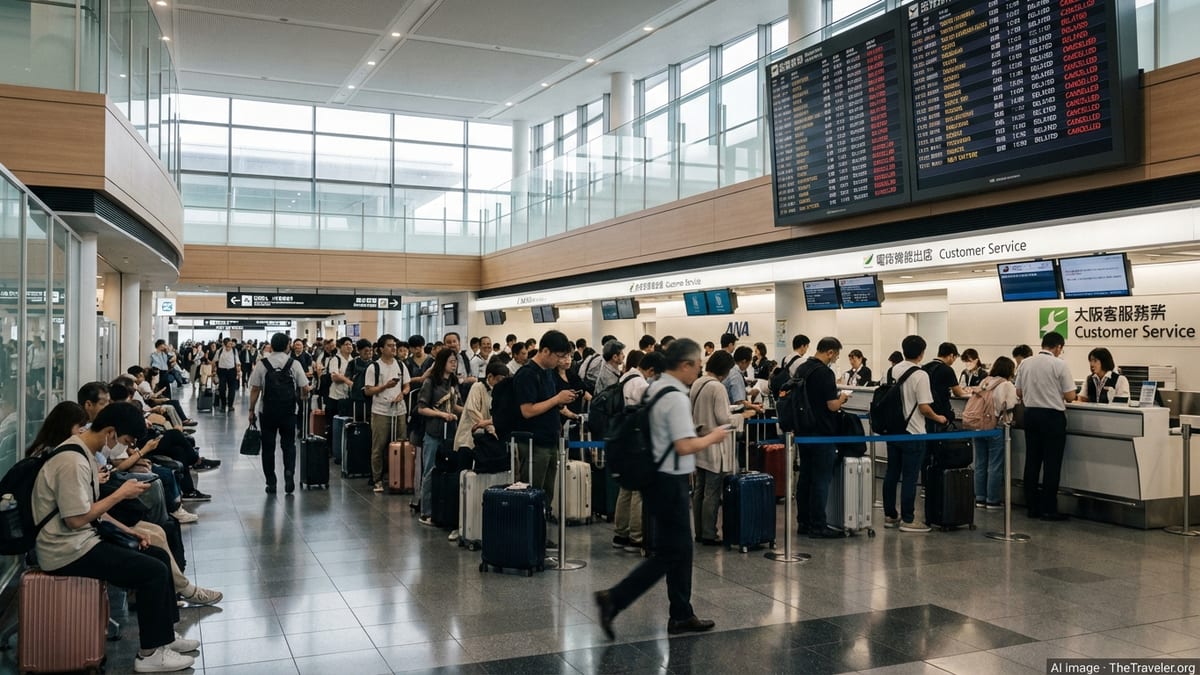
Operations Disrupted at Osaka’s Key Domestic Hub
The disruption centered on Osaka International Airport, commonly known as Itami, one of Japan’s busiest domestic hubs. Airport operations were stretched throughout the day as staff worked to reassign aircraft, rebook stranded passengers and manage mounting congestion in the terminal areas.
According to preliminary operational data from local aviation authorities, the 20 cancellations were concentrated on short-haul domestic sectors, while the 67 delayed flights rippled through the wider network. Ground handlers reported tight turnarounds and gate changes becoming increasingly common as airlines attempted to recover their schedules.
Passengers described long queues at check in and customer service counters, with some reporting waits of more than an hour to obtain alternative flights or hotel vouchers. Crowded departure lounges, limited seating and uncertainty over revised departure times added to the strain for families, business travelers and international visitors using Osaka as a domestic transfer point.
Major Carriers ANA Wings, All Nippon and JAL Heavily Affected
The bulk of the disruption fell on Japan’s leading domestic operators. Regional specialist ANA Wings saw a series of cancellations and rolling delays, especially on flights feeding smaller cities and regional centers. Parent carrier All Nippon Airways also reported late departures as aircraft and crew were repositioned.
Japan Airlines faced similar challenges, with several services from Osaka to major metropolitan areas operating behind schedule. Airline staff were deployed across check in halls and gate areas to manage rebookings, provide printed updates and help vulnerable passengers, including elderly travelers and families with young children.
Smaller domestic and low cost carriers operating from Osaka’s domestic terminals were not spared, contending with tighter slot availability and stand-by lists that grew steadily through the afternoon. While most flights ultimately operated, the cumulative delays placed pressure on evening connections and onward journeys.
Knock-on Impact Across Nagasaki, Tokyo, Sendai and Niigata
The cancellations and delays quickly extended their impact far beyond Osaka, affecting a swath of cities across Japan’s archipelago. Services linking Osaka with Nagasaki, on the island of Kyushu, experienced gaps in frequency as cancelled rotations reduced capacity and left some travelers facing lengthy waits for the next available departure.
In the Tokyo area, both Haneda and Narita airports saw schedule knock-ons as delayed aircraft from Osaka arrived late, compressing turnaround times and tightening already busy domestic banks. Some passengers missed planned same day connections, forcing overnight stays in the capital or expensive last minute changes to rail and bus travel.
Further north, Sendai and Niigata also reported delayed arrivals and departures on flights tied to Osaka operated by ANA Wings, All Nippon and Japan Airlines. Airline apps and departure boards in these regional airports displayed a patchwork of revised times as control centers worked to restore regular patterns before the end of the operating day.
At New Chitose Airport, the key gateway to Hokkaido, passengers arriving from other parts of Japan on disrupted itineraries from Osaka found themselves rebooked onto later services or rerouted via Tokyo. While most eventually reached their destinations, many reported shortened stays and lost time at ski resorts and winter attractions.
Travellers Face Long Queues, Rebookings and Changed Itineraries
For those caught in the disruption, the experience was defined by uncertainty and fatigue rather than outright cancellations. Many travelers ultimately flew, but several hours later than planned, compressing business schedules and cutting into leisure plans. Families heading to regional festivals, returning students and domestic tourists on short weekend breaks were among those left adjusting carefully timed itineraries.
Airport staff urged passengers to remain close to departure gates and to rely on official airline apps and terminal announcements, as revised departure times often changed again as the day progressed. Those willing to switch to alternative routes, including rail options such as the Shinkansen between Osaka and Tokyo, in some cases reached their destinations faster than waiting for heavily delayed flights.
Local tourism operators in destinations including Nagasaki, Sendai and Hokkaido said they were bracing for last minute cancellations of tours and hotel stays, noting that even moderate flight disruption can ripple through bookings, restaurant reservations and event attendance, particularly during busy winter weekends.
Authorities Urge Passengers to Monitor Conditions and Plan Ahead
Aviation and transport officials used the disruption to reiterate standard advice for travel in Japan’s winter season, when strong winds, low cloud and heavy snow can quickly affect domestic aviation. Passengers were urged to build additional buffer time into itineraries, especially when making same day connections between domestic and international flights.
Carriers are expected to review the day’s operations to identify bottlenecks in passenger information, baggage handling and rebooking processes. Early indications suggest that those who checked flight status regularly online and arrived at the airport with flexible plans were better able to adapt to rapidly changing departure times.
With Osaka serving as a critical domestic hub feeding cities from Kyushu to Hokkaido, even a few dozen affected flights can reverberate across the country. Saturday’s wave of cancellations and delays underscores how sensitive Japan’s dense and highly punctual flight network remains to sudden operational challenges, and why travelers are increasingly being encouraged to stay informed, keep itineraries flexible and prepare contingencies when flying through the nation’s busiest hubs.