

More news on this day
Hundreds of passengers were left sleeping on terminal floors and queuing for scarce rebooking options at Oslo Airport on February 28, as more than 130 flights were delayed and at least 20 cancelled, disrupting services operated by SAS, Lufthansa, Norwegian, KLM and other major carriers on routes to Helsinki, Berlin, Amsterdam, Istanbul and beyond.
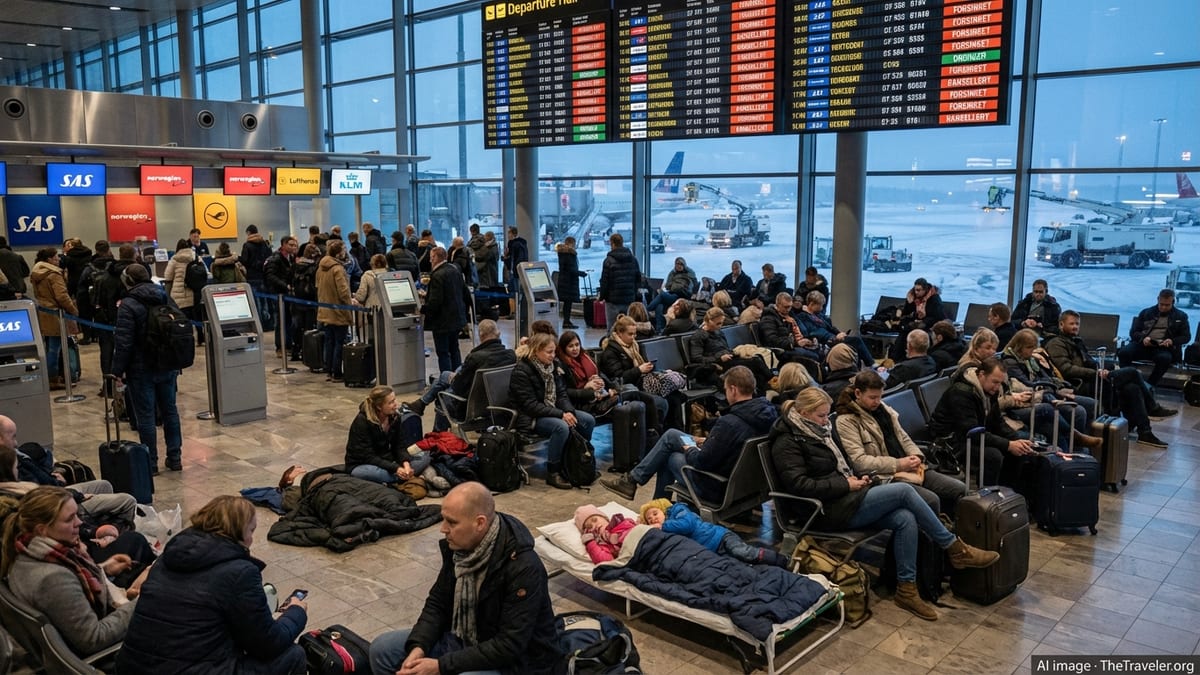
Wintry Weather and Operational Strains Converge at Oslo
Oslo Gardermoen, normally one of Scandinavia’s most efficient hubs in winter, struggled to keep traffic flowing as a fresh band of snow and freezing rain pushed through southeastern Norway. Reduced runway capacity and rolling de-icing backlogs forced air traffic controllers to slow movements, quickly creating a bottleneck that rippled through morning and afternoon departures.
According to airport operations staff, the combination of marginal weather, airspace restrictions in neighboring countries and knock-on delays from earlier European disruptions left crews and aircraft out of position just as peak Friday traffic built. As a result, what began as a series of modest delays escalated into widespread schedule disarray across short and medium-haul routes.
By late afternoon, the departure boards at Oslo showed long rows of delayed flights, with routes to Helsinki, Berlin, Amsterdam and Copenhagen among the hardest hit. Several services to Istanbul and other southern hubs were also impacted, as connecting aircraft failed to arrive on time from earlier sectors.
Airport announcements warned travelers that irregular operations would likely persist into the evening, urging passengers to remain patient and to use airline apps where possible rather than joining already swollen service desks.
Major Carriers Hit Across Key Nordic and European Routes
The disruption struck some of Europe’s best-known airlines at one of the busiest times of the week. Scandinavian flag carrier SAS faced a wave of delays from Oslo to Helsinki, Copenhagen, Stockholm and Berlin, with some departures pushed back by several hours as the airline rotated available aircraft and crews to cover the most time-sensitive routes.
Lufthansa and KLM reported significant knock-on impacts on feeder services linking Oslo with their hubs in Frankfurt, Munich and Amsterdam. These flights are crucial for long-haul connections, and delays of even 60 to 90 minutes left many passengers in Oslo and at onward hubs scrambling to secure new itineraries to North America, Asia and the Middle East.
Norwegian, a major player in the Scandinavian market, also struggled to maintain its timetable to destinations including Helsinki, Hamburg and various European city-break routes. While the carrier emphasized that safety remained the priority, passengers voiced frustration at what some described as limited real-time communication and inconsistent information between gate staff and airline apps.
Other operators, including Finnair, Turkish Airlines and regional carriers serving northern Norway and the Baltic region, were drawn into the disruption as slots tightened and turnaround times stretched far beyond normal limits.
Passengers Face Overnight Stays, Missed Connections and Mounting Costs
Inside the terminal, the human impact of the disruption quickly became visible. Long lines snaked from airline service counters, where families, business travelers and tourists waited to be rebooked onto later flights or rerouted through alternative hubs. With hotel capacity around the airport rapidly filling, many travelers prepared for the likelihood of spending the night at Gardermoen.
Some passengers heading to Helsinki and Berlin described missing tightly timed connections for concerts, conferences and holiday departures. Others en route to long-haul flights via Amsterdam and Istanbul found themselves rebooked for departures a full day later, complicating visa rules, prepaid accommodation and tour bookings at their final destinations.
Several travelers reported difficulty securing vouchers for meals and lodging as airlines prioritized operational issues over customer service. While carriers are required under European passenger-rights regulations to provide assistance during extended delays and cancellations, the sheer volume of affected customers appeared to slow response times at Oslo.
Airport staff rolled out additional cots and distributed blankets in quiet areas of the terminal as evening approached, a visible acknowledgment that many would not be leaving Norway as planned. Charging points, already in high demand, became gathering spots for passengers attempting to rebook via airline apps or contact travel insurers.
Regional Knock-On Effects from Wider European Turbulence
The problem at Oslo unfolded against a broader backdrop of winter weather and operational pressures affecting airports across northern and central Europe in recent days. Storm systems moving through the North Atlantic and over Scandinavia have brought bouts of snow, gusty winds and poor visibility to multiple hubs, periodically slowing runway movements and forcing ground-handling suspensions.
Earlier in the week, airports in the Netherlands, Germany and the United Kingdom had already reported substantial delays and cancellations, leaving airlines with limited flexibility to recover when Oslo’s operations began to falter. Aircraft and crew that might normally have been redeployed to stabilize the schedule were instead tied up by lingering disruptions at other European gateways.
Industry analysts note that tighter post-pandemic staffing at airlines, handling companies and air traffic control centers has reduced the system’s resilience. When several hubs experience weather or technical problems at the same time, recovery can take many hours, sometimes days, as carriers work through complex crew duty-time rules and reposition aircraft.
For Oslo passengers, this translated into a shortage of available seats on alternative services to key cities such as Helsinki, Berlin and Amsterdam. Even when airlines could confirm new itineraries, the options often involved circuitous routings and long layovers at secondary airports.
Advice for Travelers as Disruptions Continue
With forecasts pointing to continued unsettled conditions over parts of Scandinavia and northern Europe, airlines and airport authorities advised passengers to treat schedules as subject to change over the coming 24 hours. Travelers with tickets to or from Oslo, especially those connecting onward through major hubs like Amsterdam, Frankfurt, Munich or Istanbul, were urged to check their flight status frequently before setting out for the airport.
Airlines emphasized the importance of using digital tools, including carrier apps and self-service portals, to manage rebookings and request refunds where eligible. These channels can often process changes more quickly than staffed counters during major disruptions, particularly when thousands of travelers are seeking assistance at the same time.
Travel agents and tour operators also reported a spike in calls from customers needing to rearrange hotel stays, transfer services and time-sensitive activities at their destinations. Many urged clients to retain receipts for meals, transport and accommodation in case they are able to claim reimbursement later under airline or insurance policies.
While operations at Oslo Airport slowly stabilized into the evening, the queues and weary faces in the terminal underscored how quickly a bout of winter weather and stretched airline resources can upend travel plans across an interconnected European network.