

More news on this day
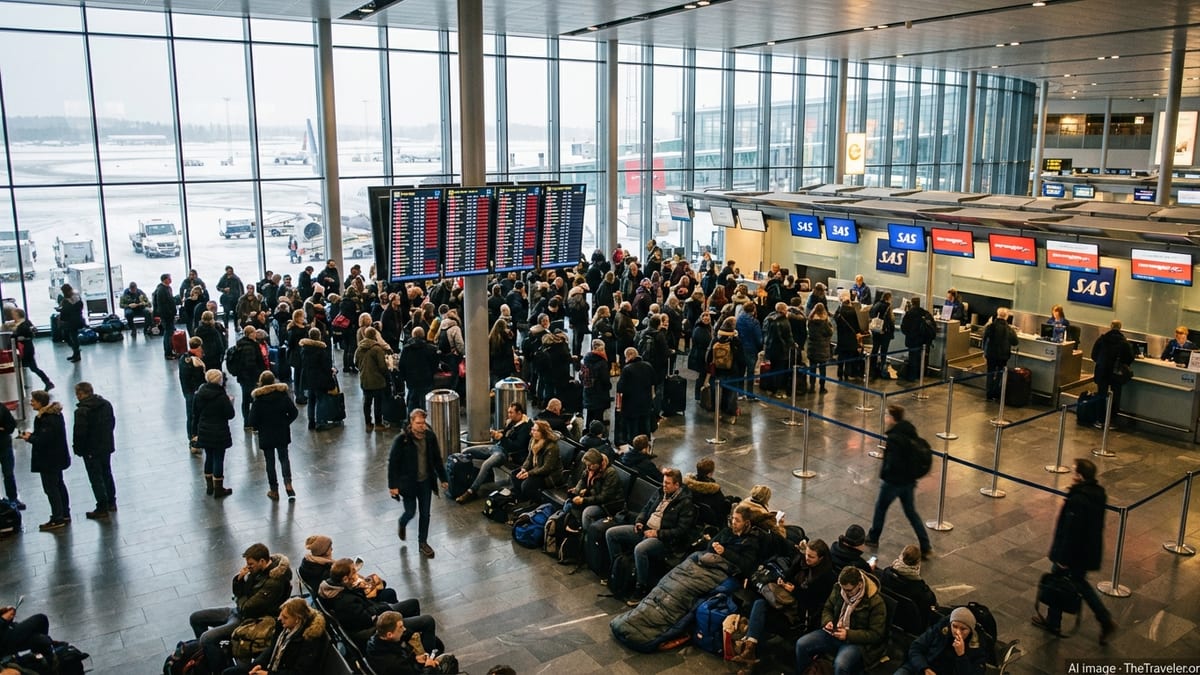
Hundreds of travelers were left stranded at Oslo Airport on Saturday as 130 flights were delayed and 20 canceled, disrupting services on major routes to Helsinki, Berlin, Amsterdam, Istanbul and other European hubs and snarling operations for carriers including SAS, Lufthansa, Norwegian and KLM.
Wintry Weather and Congested Skies Trigger New Wave of Disruptions
The latest turmoil at Oslo Gardermoen comes amid a broader pattern of severe winter weather and capacity constraints that have hammered European aviation throughout February. A band of snow and freezing rain moving across southern Norway forced air traffic controllers to slow arrivals and departures, quickly creating a bottleneck as morning and midday traffic peaked.
While the snowfall was not extreme by Norwegian standards, aviation authorities said shifting winds and low visibility reduced runway capacity at key moments, obliging airlines to hold inbound aircraft and delay departures already queued at gates. As schedules compressed, minor delays of 20 to 40 minutes cascaded into multi-hour disruptions and, ultimately, cancellations on the most congested rotations.
Operational knock-on effects from earlier storms elsewhere in Europe compounded the problem. Several aircraft scheduled to operate morning departures from Oslo arrived late from hubs such as Amsterdam, Frankfurt and Copenhagen after facing earlier weather-related restrictions, leaving crews out of position and narrowing the margin to recover the day’s timetable.
The result by early afternoon was a terminal full of frustrated travelers and departure boards heavily marked in red, with dozens of flights showing long delays and a growing list of cancellations concentrated on busy intra-European routes.
Key Routes to Helsinki, Berlin, Amsterdam and Istanbul Hit Hard
Short-haul corridors linking Oslo with other Nordic capitals and major continental hubs were among the worst affected. Multiple departures to Helsinki, Stockholm and Copenhagen operated by SAS and Finnair were delayed or scrubbed entirely, stranding business travelers and weekend city-break passengers in equal measure.
Routes to Berlin and Amsterdam, crucial for both point-to-point travel and onward long-haul connections, also saw significant disruption. KLM and Lufthansa reported rotations arriving late into Oslo from their home hubs, forcing rolling delays on return sectors and leaving some transfer passengers unable to reach onward flights to North America, the Middle East and Asia.
Further afield, services to Istanbul and southern Europe experienced extended holds as airlines prioritized congested northern European trunk routes. One mid-morning departure to Istanbul reportedly pushed back more than three hours behind schedule as ground handlers juggled de-icing queues, crew duty-time limits and aircraft swaps needed to keep at least a skeleton schedule running.
By late afternoon, some of the day’s earliest delays still had not fully cleared, with late-evening flights to central and eastern Europe facing revised departure times and growing uncertainty about whether they would operate at all.
Airlines Struggle to Rebook Passengers and Manage Expectations
For carriers operating at Oslo, the dual challenge on Saturday was to stabilize stretched operations while coping with hundreds of passengers needing new itineraries. SAS, Lufthansa, Norwegian and KLM all encouraged customers to use apps and self-service kiosks to rebook, but long lines quickly formed at traditional service desks as travelers sought face-to-face assistance.
Ground staff reported frequent cases of families and older travelers unfamiliar with digital tools, who were reluctant to rely solely on automated rebooking messages as departure times repeatedly slipped. Many passengers with tight connections in Helsinki, Berlin or Amsterdam requested rerouting via other hubs, only to find alternative flights already heavily booked after weeks of weather-related disruptions across the continent.
Norwegian, which uses Oslo as a primary base, faced particular pressure to accommodate domestic travelers connecting onward to northern Norway and the west coast. With aircraft and crews out of regular rotation, some regional services saw significant knock-on delays, forcing the airline to prioritize routes with limited ground transport alternatives over those with rail or coach back-up.
Airlines reminded passengers that, under European air passenger rules, those facing long delays or cancellations may be entitled to care such as meals and hotel accommodation, though eligibility can depend on whether weather is deemed an extraordinary circumstance. In practice, the immediate concern for many stranded travelers was simply finding a confirmed seat out of Oslo within the next 24 hours.
Long Queues, Limited Seating and Rising Frustration in the Terminal
Inside the terminal, scenes were familiar to anyone who has traveled during a major disruption: crowded check-in halls, long security queues, and passengers clustered around charging points as they refreshed airline apps for updates that often slipped by another 30 or 60 minutes at a time.
With departures backing up, gate areas filled quickly, and some travelers reported sitting on the floor near crowded boarding zones as seating ran short. Airport staff circulated offering information and directing passengers whose flights had crossed critical delay thresholds to customer service desks and airline help points in other parts of the building.
Retail and food outlets did brisk business as passengers waited out delays, but some complained that meal vouchers provided by airlines were insufficient during what became all-day waits. Others, caught between uncertain departure times and the high cost of leaving the secure zone, opted to stay near their gates for fear of missing last-minute boarding calls in the event that a delayed aircraft finally became available.
Despite visible frustration, the atmosphere at Oslo remained largely orderly, with most travelers resigned to weather-related disruption that has become a recurring feature of this winter’s European travel season. Calls for clearer, more consistent communication from both the airport and airlines, however, were a common refrain among those facing missed weekends away and disrupted business itineraries.
Ongoing Winter Season Raises Fears of More Travel Turbulence
The latest wave of disruption at Oslo adds to a string of recent days in which airports across Europe have struggled to maintain normal schedules in the face of storms, snow, strong winds and periodic industrial action. Aviation analysts note that while modern aircraft can operate safely in challenging conditions, the combination of congested airspace, tight turnarounds and crew duty rules makes networks increasingly vulnerable when weather or staffing issues hit multiple hubs at once.
With the European winter still not over, airlines are bracing for further bouts of turbulence in the coming weeks. Many carriers have preemptively trimmed some frequencies, built in longer turn times at congested airports and strengthened contingency plans for rapid rebooking, yet sudden drops in runway capacity like those seen at Oslo continue to expose how finely tuned many schedules remain.
For travelers, the message from both airlines and airports is to build more flexibility into winter itineraries. Passengers connecting to long-haul flights via hubs such as Amsterdam, Berlin or Istanbul are being urged to allow extra connection time, keep contact details up to date in airline profiles and monitor flight status closely from 24 hours before departure.
As operations at Oslo slowly normalize, hundreds of delayed passengers are still expected to ripple through the European network over the next day, filling the remaining empty seats on already busy late-winter services and underscoring once again how a single morning of snow in Scandinavia can reverberate across the continent’s crowded skies.