

More news on this day
Travelers passing through Ottawa Macdonald–Cartier International Airport on Friday faced mounting frustration as a cluster of Air Canada and Porter Airlines cancellations and delays rippled across regional routes to Toronto, Fredericton, Halifax, Quebec City, Sudbury and other eastern Canadian destinations.
Get the latest news straight to your inbox!
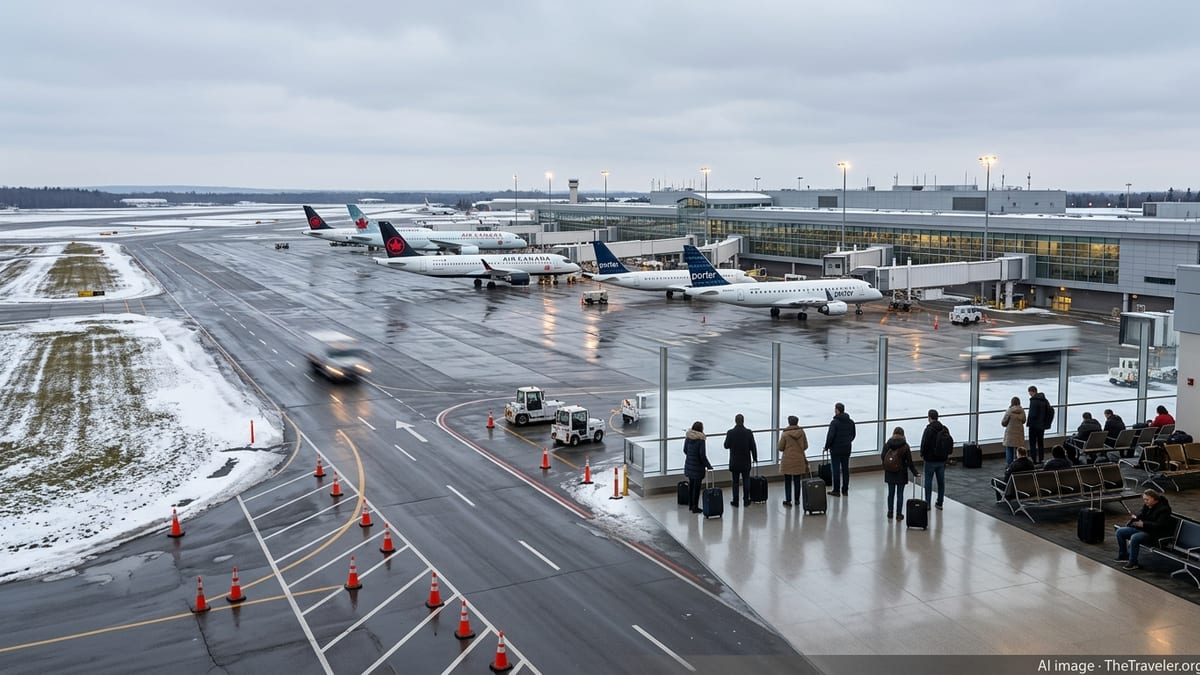
Cluster of Cancellations Snags Ottawa’s Regional Network
Publicly available flight-status boards on Friday showed nine combined departures and arrivals operated by Air Canada and Porter Airlines from Ottawa scrubbed over the course of the day, affecting a mix of morning and evening services. The disruptions touched some of the airport’s most heavily used regional links, including short‑haul hops to Toronto Pearson and Toronto’s downtown Billy Bishop airport, as well as connections onward to Atlantic Canada and northern Ontario.
The cancellations were concentrated on routes that typically funnel travelers between Ottawa and secondary cities such as Fredericton, Halifax, Quebec City and Sudbury. These flights are often used by business travelers on tight schedules and by leisure passengers relying on a single daily frequency, magnifying the impact when services are removed from the schedule.
Operational data indicates that the grounded flights quickly translated into knock‑on delays for other services as aircraft and crews fell out of position. With many routes operating at limited frequency, rebooking options within the same travel day were constrained, particularly for passengers headed to smaller markets.
The disruptions unfolded against a broader backdrop of weather related and operational volatility across the Canadian network this winter, which has left airlines with thinner margins to recover when a single airport experiences cascading schedule problems.
Weather, Crewing and Congested Hubs Feed Into Delays
Recent storms across central and eastern Canada, including significant winter weather systems in January and March, have strained airline operations at major hubs and secondary airports alike. Published meteorological summaries describe heavy snow, high winds and freezing conditions that periodically reduced airport capacity and forced flight reductions at Toronto, Montreal and other key nodes.
Ottawa often functions as a reliever and connector for these larger hubs, but it is not immune to the same winter constraints. When capacity is cut in Toronto or Montreal, airlines frequently adjust upstream feeder schedules from Ottawa, Fredericton, Halifax, Quebec City and Sudbury to avoid sending aircraft into already congested airfields or into deteriorating weather bands.
Industry performance updates from Canadian transportation agencies have also highlighted variability in on time performance and cancellation rates at Ottawa and Halifax in recent months. While overall cancellation percentages remain relatively modest on a national basis, the impact for individual travelers can be acute when a limited frequency regional route is removed and the next available seat is hours or even days away.
Air Canada and Porter, both of which rely heavily on tight aircraft utilization and quick turn times in Ottawa, have faced added complexity from crew scheduling and fleet deployment in this environment. Even small timing disruptions on early morning flights can leave crews out of rotation later in the day, amplifying the effect of any single cancellation.
Routes to Toronto, Atlantic Canada and Quebec Especially Affected
The latest wave of disruptions at Ottawa Macdonald–Cartier particularly affected services feeding into Toronto and onward into Atlantic Canada and Quebec. Toronto Pearson remains the dominant connection point for domestic and international itineraries, meaning that a cancelled Ottawa to Toronto flight can force complete itinerary changes for passengers connecting to other provinces or overseas.
Travel forums and recent schedule data show that routes linking Ottawa with Fredericton and Halifax have become increasingly important for point to point travel, as well as for connections deeper into Atlantic Canada. Reduced frequencies and occasional cancellations on these services can leave travelers with few same day alternatives, especially during peak periods or in the shoulder seasons when schedules are thinner.
Quebec City and Sudbury, which depend on a small number of daily flights from Ottawa and Toronto, are similarly vulnerable to disruption. When an Ottawa to Sudbury or Ottawa to Quebec City flight is removed, rebooking typically requires an additional connection or an overnight stay, adding cost and complexity for travelers who may already be dealing with weather related delays.
Recent schedule changes by multiple Canadian carriers, including the restructuring of some Toronto to Sudbury services and adjustments to Halifax flying, have further concentrated demand onto remaining Ottawa based routes. As a result, seats on alternative flights can sell out quickly when irregular operations strike.
Passengers Scramble for Alternatives Under Protection Rules
Reports from passenger advocacy groups and online travel communities indicate that many affected travelers in and out of Ottawa on Friday were rebooked onto later same day services where space permitted, or rerouted through alternate hubs such as Montreal. Others were offered travel on next day departures when no immediate alternatives were available.
Canada’s Air Passenger Protection Regulations establish varying levels of compensation, care and rebooking obligations depending on the size of the carrier, the cause of the disruption and the length of delay. Guidance from federal transportation authorities notes that passengers whose flights are cancelled for reasons within an airline’s control, and who experience significant arrival delays, may be entitled to monetary compensation as well as meal vouchers, accommodation and ground transportation in some circumstances.
However, when airlines attribute disruptions to weather or other safety related factors, compensation obligations may be more limited, even though carriers are still expected to offer prompt rebooking or refunds. This distinction often leaves passengers frustrated when neighboring flights appear to operate while their own is cancelled or delayed for several hours.
Consumer advocates encourage travelers affected by cancellations at Ottawa and other Canadian airports to document their interactions with airlines, keep receipts for any additional expenses and review the latest guidance from the Canadian Transportation Agency when pursuing claims.
Ongoing Fragility in Canada’s Regional Air Links
The turmoil at Ottawa Macdonald–Cartier underscores the continued fragility of Canada’s regional air network, particularly for communities that rely on a small number of daily flights for connections to the national grid. Recent schedule adjustments by major carriers, along with the lingering effects of earlier labor disputes and evolving fleet strategies, have left some routes with slimmer buffers when disruptions occur.
Air Canada and Porter have both invested heavily in Ottawa over the past several years, adding new domestic and transborder routes and marketing the airport as an alternative gateway to major hubs. At the same time, shifting demand patterns, pilot and crew availability, and changing competitive dynamics in markets such as Toronto, Halifax and Sudbury have led to periodic reductions or realignments in service.
Industry analysts note that regional reliability is likely to remain a concern through at least the remainder of the winter and early spring travel period, as airlines balance the need to protect schedules with the realities of volatile weather and constrained resources. Travelers using Ottawa as an origin, destination or connection point are increasingly advised by travel planners to build in longer connection times, monitor flight status closely and consider backup options such as rail or intercity bus on shorter corridors.
For now, the nine cancelled flights at Ottawa serve as a snapshot of broader stresses across the country’s aviation system, where even a modest number of grounded aircraft can create outsized disruption for travelers moving between Canada’s capital and regional centers in Ontario, Quebec and Atlantic Canada.