

More news on this day
Thousands of air travelers across Indonesia and the Philippines are facing severe disruption this week after more than 218 flights were cancelled at major airports including Jakarta’s Soekarno Hatta, Manila’s Ninoy Aquino International, Sultan Hasanuddin International, Sultan Mahmud Badaruddin II and several regional gateways, leaving terminals crowded, tempers frayed and travel plans in disarray.
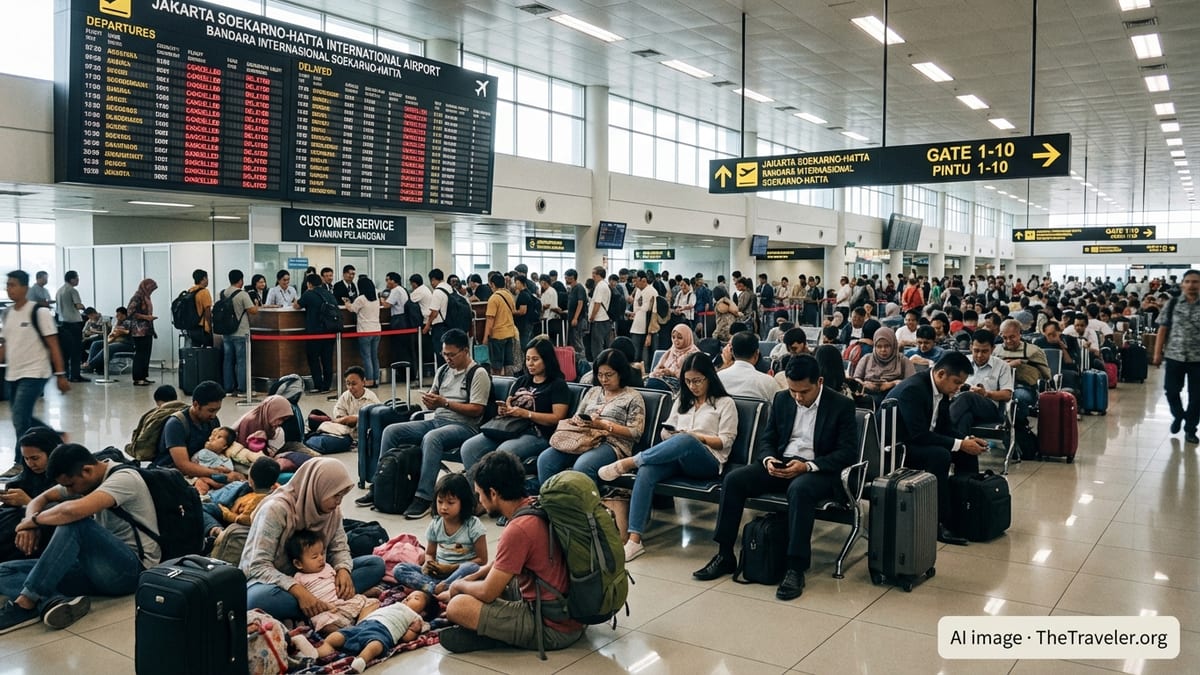
Widespread Cancellations Hit Key Hubs in Indonesia and the Philippines
Operational data compiled from airport departure boards and regional aviation trackers over recent days show a sharp spike in flight cancellations and extended delays across Southeast Asia, with Indonesia and the Philippines among the hardest hit. The latest tallies point to more than 218 flights cancelled in the current disruption cycle, alongside hundreds more delayed, affecting both domestic and international routes.
Jakarta’s Soekarno Hatta International Airport and Manila’s Ninoy Aquino International Airport have emerged as the epicenters of the turmoil. As primary gateways for their respective countries, any operational shock at these facilities quickly cascades through national and regional networks, grounding aircraft, backing up aircraft rotations and leaving passengers stranded far from their intended destinations.
Indonesian hubs including Makassar’s Sultan Hasanuddin International and Palembang’s Sultan Mahmud Badaruddin II have also reported clusters of grounded services and rolling delays. In the Philippines, bottlenecks are radiating out from Manila to secondary airports such as Mactan Cebu and Davao, further complicating efforts by airlines to reposition aircraft and crews.
While levels of disruption have varied from day to day, airport officials and industry analysts say the pattern is clear. A combination of volatile weather, tight airline schedules, infrastructure constraints and lingering staffing gaps has left little margin for error, creating conditions in which relatively localized issues can quickly snowball into systemwide chaos.
Weather, Congestion and Operational Strain Blamed
Meteorological instability has been a central factor in the latest wave of cancellations. Seasonal thunderstorms, heavy rain bands and low visibility have repeatedly swept across key corridors connecting Indonesia and the Philippines, forcing air traffic controllers to widen separation between aircraft and triggering ground stops at already congested airports.
At Jakarta’s Soekarno Hatta, intermittent storms and shifting wind patterns have constrained runway capacity during peak banks of departures and arrivals. Even short weather holds have translated into longer queues for takeoff and landing as airlines attempt to move near-maximum traffic through limited slots, particularly during morning and evening waves when both domestic and international services are heaviest.
In the Philippines, air traffic management challenges at Manila’s Ninoy Aquino International Airport, long operating near its design limits, have magnified weather-related pressure. Industry reports in recent months have highlighted how a single runway closure or temporary restriction in Manila can reverberate across the archipelago, forcing cancellations on provincial routes and leaving travelers stuck in far-flung island airports.
Aviation planners note that these disruptions are occurring against a backdrop of surging demand. Passenger volumes across Southeast Asia rebounded strongly in 2025 and have continued climbing into early 2026, in many cases surpassing pre-pandemic levels. Airlines have been racing to restore capacity, but aircraft availability and crew rostering remain tight, limiting their ability to absorb shocks.
Major Airlines Scramble as Network Disruptions Deepen
The cancellations have cut across a wide spectrum of carriers, from full-service flag airlines to low cost operators. In Indonesia, Garuda Indonesia and regional players such as Batik Air, Citilink and Indonesia AirAsia have all reported days with significant disruptions on their domestic and short haul international routes, including services linking Jakarta and Bali with secondary cities.
Operational data from earlier weeks already showed elevated levels of delays and scrapped flights for several of these airlines at Jakarta and Makassar, leaving thousands of passengers waiting for rebooked services or alternative routings. With the latest surge in cancellations now extending to more than 218 flights across the wider region, network planners are having to redraw aircraft rotations and crew schedules on an almost hourly basis.
In the Philippines, Philippine Airlines and Cebu Pacific have been among the carriers most affected in Manila and Cebu. Cancellations have included popular international routes to regional hubs as well as high frequency domestic links vital for business and family travel. Industry sources describe operations control centers working through the night to reconfigure schedules and negotiate additional slots at less congested times of day.
Some foreign carriers operating into Jakarta, Bali and Manila have also trimmed or retimed services in response to operational constraints, creating knock on effects for long haul travelers connecting from Europe, the Middle East and North America. With aircraft tightly scheduled, a late arrival into Southeast Asia can ripple through several subsequent legs, compounding the backlog.
Passengers Face Long Queues, Overnight Stays and Limited Information
For passengers, the operational jargon of rotations and slot constraints has translated into a far more tangible reality: long queues at check in counters and service desks, crowded boarding gates and overnight stays in airport terminals or nearby budget hotels. Social media posts from Jakarta, Makassar and Manila have shown departure halls with passengers stretched along the walls, some sleeping on luggage trolleys or on makeshift mats.
Travelers report that rolling cancellations, often announced only shortly before scheduled departure times, have left them scrambling to secure scarce seats on later flights. At several airports, rebooking queues have snaked across terminal floors, with some passengers waiting hours to speak to airline staff about new arrangements or compensation options.
Families traveling with children and elderly passengers have been particularly hard hit, as have international travelers facing visa or onward connection constraints. Tourism operators in Indonesia’s Bali and Sulawesi regions say guests have missed prepaid tours and hotel nights because of cancellations at Jakarta and Sultan Hasanuddin, while business travelers in Manila report missed meetings and conferences due to the unpredictable schedules.
Consumer advocates across the region have renewed calls for clearer communication from airlines during periods of mass disruption. While many carriers have issued broad advisories urging passengers to check flight status before heading to the airport, stranded travelers complain that real time updates and practical guidance on the ground often fall short of expectations.
Airport Authorities Move to Manage Crowds and Restore Flow
Airport operators in both Indonesia and the Philippines say they have activated contingency plans to manage the surge in stranded passengers and minimize further disruption. At Soekarno Hatta, additional staff have been deployed to assist with crowd management, direct passengers between terminals and support airlines with check in and boarding processes during peak disruption periods.
Jakarta’s airport authority has also increased coordination with air traffic control to sequence departures more efficiently once weather conditions improve, aiming to clear backlogs quickly before the next wave of flights arrives. Temporary holding areas and overflow seating have been set up near some gates to relieve congestion in main concourses.
In Makassar and Palembang, local airport officials report similar efforts, including extended operating hours for food and retail outlets and cooperation with local hotels to secure emergency accommodation for passengers whose flights have been cancelled late at night. Public address announcements emphasizing the importance of staying with official queues and avoiding crowding around counters have become a common background soundtrack in terminals.
In Manila, authorities at Ninoy Aquino International have faced the added complication of balancing disrupted commercial traffic with existing maintenance and upgrade works at parts of the facility. Nonetheless, they have pledged to work closely with airlines to resequence flights, prioritize services with large numbers of connecting passengers and keep security and immigration lines flowing during surges in rebooked travelers.
Economic and Tourism Impact Spreads Beyond Airport Gates
The scale of cancellations and knock on delays is beginning to show up in the broader travel economy of both Indonesia and the Philippines. Tourism operators in popular destinations such as Bali, Yogyakarta, Palawan and Cebu report last minute changes, shortened stays and outright cancellations from visitors unable to reach resort areas on time.
Small and medium sized businesses that rely on reliable air links, from island based logistics firms to exporters of perishable goods, have also faced difficulties. Delayed shipments and missed air cargo allocations tied to cancelled flights have created backlogs in some sectors, particularly where goods are time sensitive or dependent on connecting flights through Jakarta and Manila.
Local chambers of commerce in affected cities say the disruptions underscore structural challenges in regional aviation, where demand has recovered faster than infrastructure and staffing. Airports that were already operating close to capacity now find themselves stretched by surging passenger numbers and more frequent episodes of severe weather linked to changing climate patterns.
For governments, the latest disruption cycle is a reminder of the importance of investing in resilient air transport systems. Indonesia is pushing ahead with plans to expand and modernize several of its major airports, while the Philippines continues to pursue proposals for additional capacity around Manila and upgrades at secondary gateways to ease pressure on its main hub.
What Stranded Travelers Need to Know Right Now
With operational conditions still fluid, aviation experts urge passengers traveling to, from or within Indonesia and the Philippines in the coming days to build extra flexibility into their plans. That includes allowing generous connection times between flights, especially when transiting through major hubs such as Jakarta, Manila or Bali, and considering the possibility of overnight stays if schedules unravel.
Travelers are advised to monitor flight status across multiple channels, including airline apps and airport information boards, and to register for notification services where available. During periods of mass disruption, digital tools that allow self rebooking can be faster than waiting in terminal queues, provided passengers are comfortable navigating those systems.
For those already stranded at airports, travel advisers recommend keeping receipts for meals, transport and accommodation in case partial reimbursement is later offered under airline policies or national consumer protection rules. Passengers should also familiarize themselves with their carrier’s conditions of carriage, which outline entitlements in the event of cancellations, though these can vary significantly between airlines and ticket types.
Despite the frustrations, industry analysts stress that safety remains the overriding consideration for pilots, airlines and air traffic controllers. Flights grounded for weather, technical checks or crew duty time limits are decisions taken to avoid compounding risk, even when they cause short term hardship for passengers. With regional demand set to remain strong through 2026, the challenge will be building systems robust enough to keep people moving when the skies turn unsettled.