

More than 220 flights were cancelled across Canada on February 17 and 18, 2026, stranding thousands of passengers and pushing travel disruption at Toronto Pearson, Montreal Trudeau, Winnipeg and Calgary international airports toward record levels for the year.
Winter Storms and System Strain Collide Across Canadian Skies
The latest wave of cancellations comes at the height of an already bruising winter for Canadian aviation, with repeated storms and deep freezes exposing just how little slack remains in the country’s air travel system. In the space of forty eight hours, over 220 flights were cancelled nationwide, with the highest concentration at Toronto Pearson, Montreal Trudeau, Calgary and Winnipeg. Hundreds more services were delayed, triggering missed connections and forcing overnight stays for travelers who thought they were nearing the end of their journeys.
Airport authorities and airlines alike have pointed to a familiar mix of causes. Heavy snow, freezing rain, strong crosswinds and prolonged de icing queues have sharply reduced runway capacity at key hubs. At the same time, crews and aircraft have been left out of position after weeks of rolling disruption, meaning even moderate weather events now produce outsized ripple effects. For passengers, the distinction between weather related and operational cancellations offers little comfort as departure boards fill with red text and service counters with long, anxious lines.
While Canada’s aviation sector is no stranger to harsh winters, industry analysts say the scale and frequency of recent disruptions stand out. The January 23 to 27 winter storm that buried southern Ontario and southern Quebec already produced several days with hundreds of cancellations at Toronto and Montreal. The latest totals suggest 2026 is on track to become one of the most turbulent years for Canadian travelers in the past decade, particularly at the country’s busiest hub, Toronto Pearson.
Toronto Pearson Records One of Its Busiest Disruption Days of 2026
Toronto Pearson International Airport, the primary gateway for Air Canada and a critical connection point for WestJet and global partners, has borne the brunt of the current wave of disruption. Over the two day period, Pearson logged scores of cancellations and a far higher number of delays, with airport data indicating that February has already seen multiple days when more than one third of scheduled flights were disrupted in some form.
On several of those days, the combined effect of cancellations and long delays rivaled the fallout from the late January snowstorm, when Pearson recorded its highest single day snowfall on record and saw more than half of scheduled flights scrubbed at the peak of the storm. Even as crews cleared taxiways and runways in recent days, fresh bands of snow and gusting winds forced further capacity reductions, leaving airlines to trim schedules and prioritize long haul and essential regional routes.
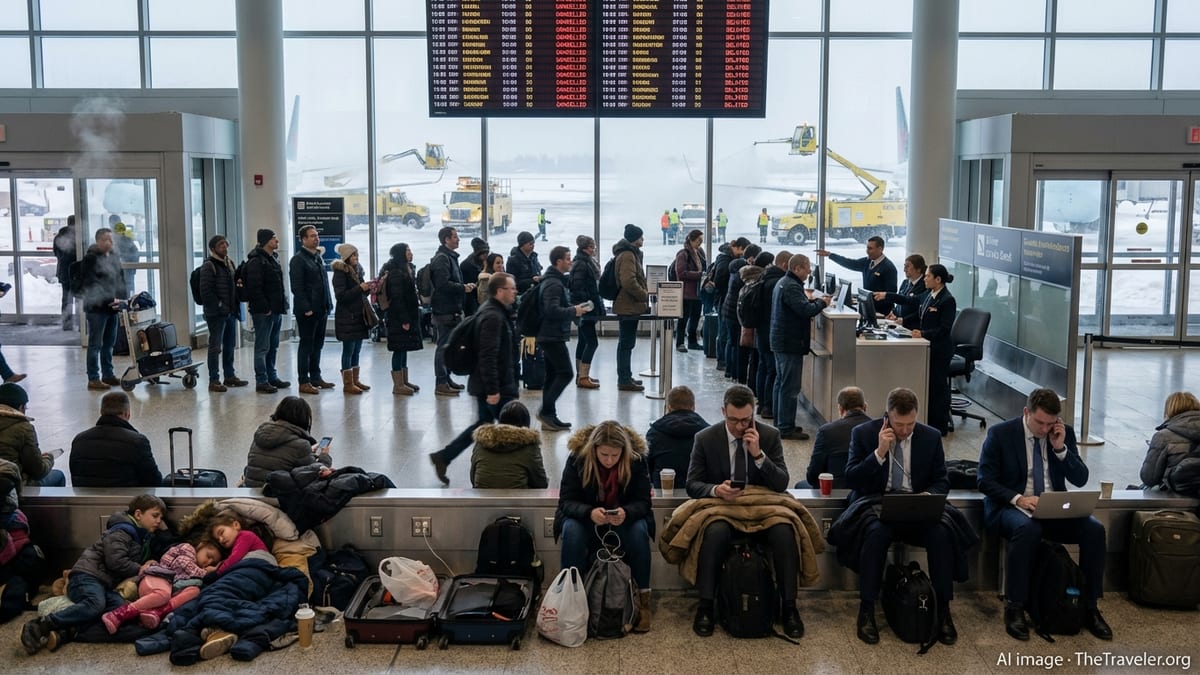
Inside the terminal, the impact was unmistakable. Check in halls at both Terminals 1 and 3 filled with travelers waiting to rebook, many camped on the floor near power outlets as they tried to rearrange hotel stays and onward connections. Long queues snaked outside airline service desks as staff worked through complex rebooking scenarios, juggling scarce seats on already full flights later in the week. For passengers arriving from overseas who missed connections to domestic destinations, the disruption often meant unexpected stopovers in Toronto with limited accommodation options near the airport.
Montreal, Winnipeg and Calgary Face Cascading Knock On Effects
While Toronto captured the largest share of media attention, Montreal Trudeau, Winnipeg and Calgary also saw serious operational strain as the latest storm system marched eastward across the Prairies and into central Canada. At Montreal Trudeau, a combination of snow, low visibility and strong winds forced airlines to pare back schedules and consolidate services, particularly on short haul routes to Atlantic Canada and the northeast United States. Passengers arriving from Europe and the Caribbean encountered long immigration lines followed by the unwelcome news that their onward domestic flights were either significantly delayed or removed from the schedule altogether.
Farther west, Calgary International Airport continued to wrestle with the dual challenge of winter weather and knock on disruptions flowing through the national network. As one of WestJet’s key hubs and an important base for regional services into Alberta and the territories, Calgary relies on tightly timed connections. When aircraft and crews are held back in Toronto, Montreal or Vancouver, the resulting gaps in Calgary’s schedule are felt most acutely on smaller routes serving communities with few alternative transport links.
In Winnipeg, even comparatively modest numbers of cancellations created outsized disruption for travelers. Many routes from the Manitoba capital operate with limited daily frequencies, so a single cancelled flight can translate into a twenty four hour wait for the next available departure. For residents of northern communities who depend on connecting flights through Winnipeg to access specialized medical care or essential services, the latest disruption was not just an inconvenience but a genuine concern.
Air Canada, WestJet and Regional Carriers Under Mounting Pressure
Canada’s mainline and regional airlines once again found themselves at the center of passenger frustration as the cancellation tally climbed. Air Canada, WestJet and affiliate carriers such as Jazz and Porter all reported significant operational challenges during the current disruption window. Where possible, airlines attempted to consolidate lightly booked services, upgauge aircraft on high demand routes and add extra sections once weather windows allowed, but staffing and fleet constraints limited their flexibility.
Social media feeds quickly filled with posts from passengers in Toronto, Montreal, Calgary and Winnipeg who described waiting hours in line to speak with agents, only to discover that the next available rebooking options were days away. Some reported being offered connections through distant hubs in the United States or western Europe simply to reach destinations within Canada, highlighting how stretched domestic capacity has become on peak disruption days.
Airline representatives stressed that safety remained the overriding priority, emphasizing that de icing operations and approach minimums cannot be compromised even under intense commercial pressure. They also pointed to the cumulative impact of repeated storms since early January, which have left aircraft and crew rosters frequently out of position. Each new weather event, however small, now lands on a system already stressed by weeks of irregular operations, magnifying the effect on daily schedules.
Why 2026 Is Shaping Up as a Record Year for Travel Disruption
As travelers count missed holidays, lost business meetings and extended overnight stays, aviation experts are beginning to ask whether 2026 will be remembered less for record passenger numbers and more for record disruptions. The combination of a busy winter travel season, increasingly volatile weather and lingering staffing challenges in both airline and airport operations has created a fragile equilibrium where even short lived storms can trigger nationwide fallout.
Canada’s largest airports entered the year with ambitious capacity plans, expecting continued growth in transatlantic and transpacific demand and a further rebound in domestic tourism. Yet the harsh reality of repeated winter weather events has laid bare the limits of ground handling and air traffic control capacity. De icing pads, snow removal teams and ramp operations can only move so quickly when temperatures plunge and visibility drops, and every extended turn of a single aircraft ripples through the schedule for the remainder of the day.
Industry observers note that while airlines have improved communication tools and rebooking options since the pandemic era, the underlying infrastructure has been slower to adapt. Investments in additional de icing capacity, more resilient staffing models and enhanced cross border contingency planning are under discussion, but these are long term remedies. For passengers traveling in February 2026, the practical reality remains that weather driven disruption is both more frequent and more impactful than in many recent winters.
What Stranded Passengers Are Experiencing at Major Hubs
Across Toronto, Montreal, Calgary and Winnipeg, the human face of the disruption has been visible in crowded terminal seating areas, blankets spread out near departure gates and long lines at airport food outlets. Families returning from school holidays queued alongside business travelers and international tourists, all sharing the same limited access to hotel rooms and available seats on later flights. At many gates, airline staff made repeated announcements urging passengers to sign up for text and email alerts rather than remain in line.
Some passengers reported receiving rebooking notifications in the middle of the night as airlines tried to rebuild schedules on the fly and slot travelers into newly available seats. Others found that automated options offered itineraries that stretched what should have been a three hour domestic journey into a multi segment odyssey spanning more than twenty hours with tight connections through multiple hubs. For travelers with young children or mobility challenges, these options were often impractical, leaving them to negotiate for simpler alternatives in person.
Airport authorities have emphasized that they are working closely with airlines to manage crowding and keep essential services running, from security screening to baggage handling. Still, the sheer volume of disrupted passengers on the worst affected days has tested the limits of facilities. Extended waits at baggage carousels have become common as ground crews juggle the offloading of arriving aircraft with the reprioritization of bags for flights that are being re routed or canceled at short notice.
How to Check if Your Flight Is Affected
With cancellation numbers changing hour by hour, the most important step for travelers is to verify their flight status before leaving for the airport. Airlines continue to stress that passengers should use official digital channels such as airline apps and direct customer accounts rather than relying solely on third party trackers or social media. These tools typically provide the fastest updates on schedule changes, gate reassignments and rebooking options, as well as eligibility information for travel waivers and fee free changes.
Canadian airports also maintain real time departure and arrival boards accessible through their official websites and mobile platforms. For the latest disruptions affecting Toronto Pearson, Montreal Trudeau, Winnipeg and Calgary, travelers can cross check their airline’s information with airport status pages, paying close attention to departure times, terminal changes and security wait estimates. Given how quickly conditions can deteriorate during active storms, many airports recommend arriving earlier than usual but only after confirming that a flight is still scheduled to operate.
Passengers already at the airport who discover that their flight is cancelled are advised to first attempt digital rebooking options, which may present more choices than those available at staffed counters. Where accommodations or meal vouchers are provided, eligibility will depend on whether the disruption is deemed within the airline’s control. Travelers are encouraged to retain receipts for additional expenses such as hotels and ground transport, as these may be useful when submitting claims under airline policies or national air passenger protection regulations.
What This Means for Travelers in the Coming Weeks
For Canadians planning trips over the remainder of February and into early March, the latest round of travel chaos serves as a cautionary signal. Airlines and airports will need several days to fully restore normal operations after a nationwide surge of cancellations and delays, particularly as aircraft and crews are repositioned and maintenance backlogs are cleared. That recovery phase may intersect with further bouts of winter weather, increasing the risk of renewed disruption even as the system attempts to stabilize.
Travel planners are advising passengers with flexible itineraries to consider scheduling important trips outside peak storm windows when possible, and to build additional time into connections, especially if traveling through Toronto Pearson or Montreal Trudeau. For essential journeys that cannot be moved, booking the first flight of the day, traveling with carry on baggage only when feasible and closely monitoring forecasts for departure and arrival cities can help reduce, though not eliminate, the risk of becoming stranded.
For now, the numbers tell a clear story. With more than 220 flights cancelled in just two days and thousands of travelers left in limbo from Toronto to Calgary, 2026 is setting a high watermark for winter travel disruption across Canada. As airlines and airports work to pull schedules back together, passengers are once again reminded that in the depths of a Canadian winter, even the best laid travel plans remain at the mercy of the weather and a tightly stretched aviation network.