

More news on this day
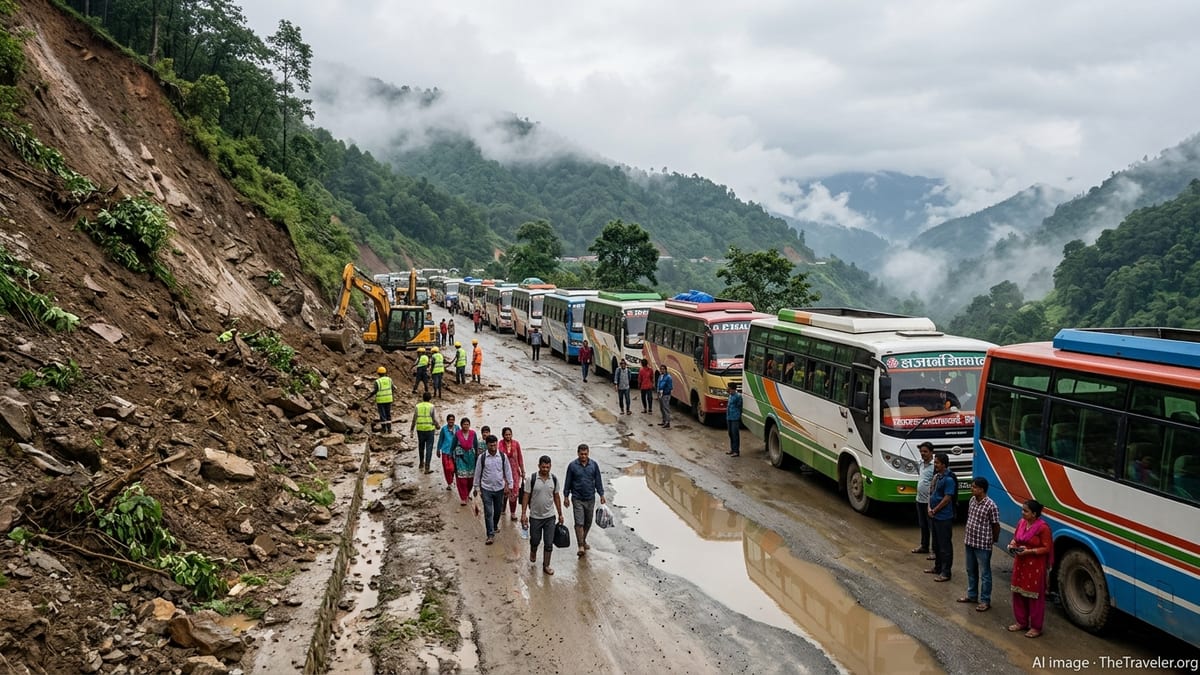
Over 220 passengers have been rescued after being stranded along sections of Nepal’s Mid-Hill Highway when landslides and road damage disrupted traffic amid worsening spring weather conditions, according to multiple regional media reports.
Get the latest news straight to your inbox!
Landslides and Road Damage Disrupt Key Mountain Corridor
Published coverage from Nepali news outlets indicates that days of intense rain triggered landslides and slope failures along portions of the Mid-Hill Highway, a strategic roadway that winds across Nepal’s interior hill region. The incidents reportedly blocked traffic in both directions, leaving buses and smaller vehicles immobilised on narrow mountain stretches with limited space to turn back.
The Mid-Hill Highway traverses steep terrain where road cuts hug unstable hillsides, making it especially susceptible to blockages when heavy rain loosens soil and rock. Recent construction and widening work along several segments have further exposed raw slopes that are vulnerable to sudden collapse. In this latest episode, debris flows and collapsed road sections are reported to have cut off multiple points along the corridor.
Local media accounts describe vehicles forced to halt for extended periods as crews struggled to assess damage, clear rocks and mud, and reopen at least a single lane for controlled movement. With alternative routes in the area limited and often unpaved, many passengers had little choice but to wait in place while conditions were evaluated.
The disruption highlights how quickly Nepal’s mountain highways can be compromised when seasonal weather intensifies, particularly where drainage systems are incomplete or overloaded and where cliff-side retaining structures remain under development.
Coordinated Rescue Brings Hundreds to Safety
Reports indicate that a coordinated rescue effort was launched once the scale of the blockage and the number of stranded passengers became clear. Passenger counts from various buses and shared vehicles suggest that more than 220 people were affected along the impacted stretch of the Mid-Hill Highway.
Publicly available information shows that teams comprising road maintenance personnel, security forces, and local volunteers used a combination of heavy machinery and on-foot support to reach stranded vehicles. In places where the highway surface had been partially undermined, responders reportedly guided passengers on foot past damaged segments before transferring them to alternative vehicles on safer ground.
For individuals unable to walk long distances, such as older passengers or those travelling with small children, rescuers and community members are reported to have provided physical assistance and improvised stretcher support. Some accounts describe passengers being escorted in small groups along narrow, temporarily stabilised paths beside blocked sections while excavators continued to clear debris nearby.
By the end of the operation, regional media tallies suggest that all known stranded passengers were moved away from the most hazardous points of the highway and transported to nearby towns and roadside settlements offering temporary shelter, food, and onward connections.
Challenging Conditions for Overnight Travelers
Accounts from the scene describe challenging conditions for travelers who faced long delays as rain continued to fall over the surrounding hills. Many buses had set out expecting overnight or early-morning arrivals, only to encounter sudden stoppages when fresh slides and rockfall made forward movement unsafe.
With limited facilities along some of the more remote stretches of the Mid-Hill Highway, passengers reportedly spent hours inside vehicles or waiting outside on wet, narrow verges. Roadside tea houses and small lodges in accessible hamlets appear to have played a crucial role, with travelers able to obtain basic meals, warm drinks, and limited accommodation while road crews worked to reopen at least partial access.
Publicly available photographs and descriptions suggest that conditions remained muddy and unstable even as rescue work progressed, complicating the movement of heavy machinery and raising concerns about additional slides. As a result, some passengers were encouraged to move out of high-risk zones on foot rather than remain close to debris-prone slopes.
The experience underscores how quickly an otherwise routine inter-district journey can shift into a prolonged and uncomfortable wait when road infrastructure intersects with volatile mountain terrain and intense rainfall.
Mid-Hill Highway’s Growing Role in Domestic Travel
The Mid-Hill Highway is designed to run parallel to Nepal’s north-south river corridors, linking hill towns and rural municipalities that historically depended on slower feeder roads and foot trails. As sections of the highway have opened over the past decade, the route has become an increasingly important conduit for local residents, traders, and domestic tourists seeking alternatives to the busier East-West Highway further south.
Travel and transport analysts have noted that improved access along the Mid-Hill corridor has supported the growth of small-town markets, homestays, and nature-based tourism across central and western hill districts. At the same time, the road’s alignment along steep slopes and exposed ridgelines means that even short closures can disrupt supply chains and strand significant numbers of people.
Recent disruptions reported on the Mid-Hill Highway fit a broader pattern observed across Nepal’s expanding road network, where rapid construction has sometimes outpaced comprehensive slope protection, drainage design, and long-term maintenance planning. As traffic volumes rise, the potential impact of any single blockage or slide also increases, particularly during the monsoon and shoulder seasons.
Transport commentators in local media have used such incidents to reiterate calls for more investment in resilient engineering solutions, as well as better coordination between road departments, district administrations, and emergency services when closures occur.
Renewed Focus on Safety and Preparedness for Hill Routes
The successful rescue of more than 220 passengers from the Mid-Hill Highway has drawn renewed attention to safety protocols for long-distance travel across Nepal’s hills. Published coverage highlights growing interest in early-warning mechanisms for landslide-prone segments, including closer monitoring of rainfall thresholds and regular inspections of newly cut slopes.
Some regional transportation reports suggest that operators and passengers alike are being urged to pay closer attention to seasonal weather forecasts, particularly when planning overnight journeys through areas where construction work or past landslides have already weakened road sections. Recommendations include building additional buffer time into itineraries and being prepared for temporary detours or delays when conditions deteriorate.
Advocacy groups focused on road safety have also emphasised the importance of clear communication when blockages occur, with calls for more timely public updates on closures, ongoing rescue efforts, and the availability of alternative routes. Reliable information, these groups argue, can help prevent vehicles from queuing in hazardous zones and reduce pressure on drivers to take unnecessary risks.
While the recent operation on the Mid-Hill Highway avoided major casualties, the scale of the rescue and the number of people involved underline how essential well-coordinated emergency plans have become for Nepal’s highland corridors. As the country continues to expand its road network into remote and scenic regions, balancing greater connectivity with robust risk management is expected to remain a central challenge for planners and travelers alike.