

More news on this day
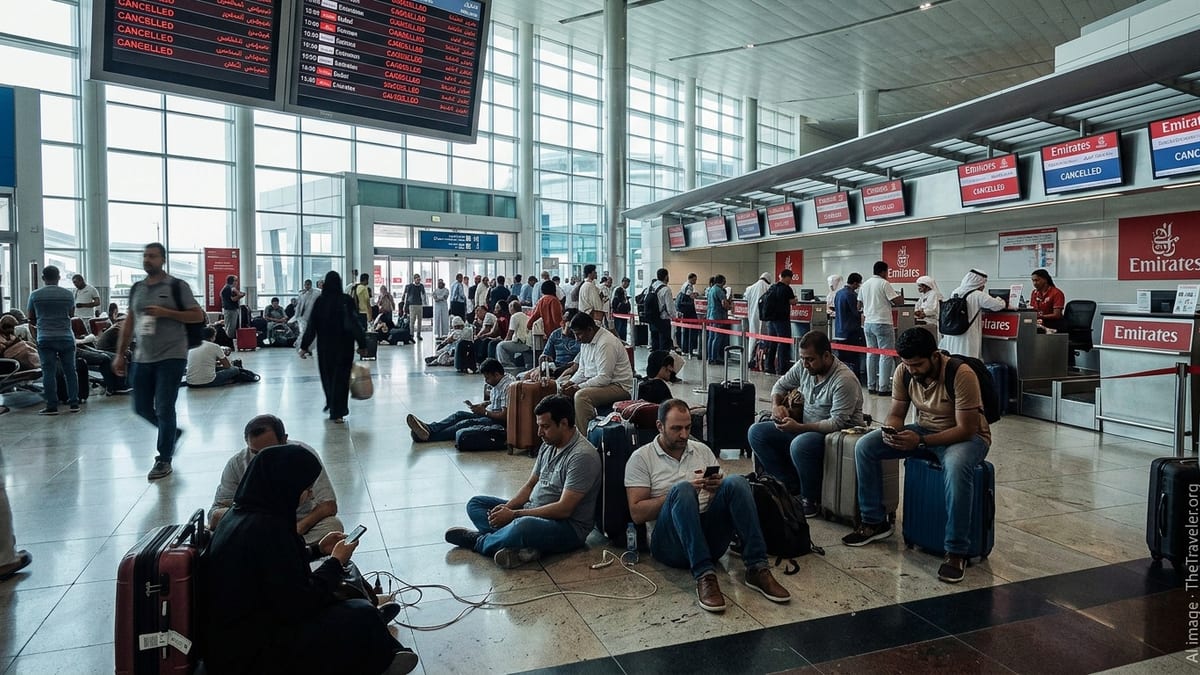
More than 30 flight cancellations at Dubai International Airport in recent days have left passengers stranded, as regional security tensions and airspace restrictions continue to disrupt one of the world’s busiest international hubs.
Get the latest news straight to your inbox!
What Triggered the Latest Disruptions at DXB
Publicly available information indicates that the most recent wave of cancellations at Dubai International Airport is linked to ongoing regional security tensions and intermittent airspace closures affecting the United Arab Emirates. Earlier in March 2026, strikes and drone activity in the wider Gulf region prompted precautionary shutdowns and capacity cuts at several airports, including Dubai. This has translated into rolling schedule changes and short-notice cancellations across multiple carriers.
Reports show that at various points in March, flight operations at Dubai International were reduced to a fraction of normal levels, with airlines operating limited schedules and prioritizing essential and repositioning flights. While the airport is officially open, the operating environment remains volatile, meaning individual flights can still be cancelled or rerouted with little warning. The current cluster of more than 30 cancellations forms part of this wider, prolonged period of disruption rather than a standalone incident.
Travel industry advisories released in early to mid-March recommend that passengers treat Dubai as a constrained hub for the time being. Schedules remain fluid, and the traditional reliability of DXB as a connecting point has been temporarily undermined by the combination of security considerations and congestion from earlier days of complete or near-complete shutdown.
How Many Flights Have Been Affected and Who Is Impacted
Data compiled from airline updates and airport departure boards over the last several days show that more than 30 flights to and from Dubai International have been cancelled in a short window, on top of earlier mass disruptions since late February. These cancellations span a mix of long-haul and regional services, including routes to Europe, North America, South Asia, and other Gulf destinations, amplifying the knock-on impact across multiple continents.
Passengers most affected are those connecting through Dubai on multi-leg itineraries. When an inbound or onward sector is cancelled, travelers can find themselves stranded either at DXB or at intermediate points, sometimes with limited alternative routes available due to constrained capacity across the region. Social media posts and online forums in March 2026 describe travelers spending extended periods in terminals or in temporary hotel accommodation while waiting for rebooking options.
Travelers booked on budget or regional carriers have reported particular difficulties securing quick alternatives, given that these airlines may operate fewer daily frequencies and have less spare capacity. However, even major international carriers based in Dubai are running reduced schedules, which limits their ability to absorb large numbers of disrupted passengers at short notice.
What Stranded Passengers Are Experiencing on the Ground
Accounts from stranded travelers shared through public forums describe crowded customer-service counters, long waits for rebooking, and uncertainty about the timing of onward flights. With rolling cancellations in recent weeks, hotel availability near the airport has at times been tight, especially during peak disruption days when large numbers of passengers needed accommodation at once.
Some passengers report being moved to alternative routings via other regional hubs or secondary airports in the UAE, such as Al Maktoum International, as airlines attempt to clear backlogs. In other cases, travelers have been advised to delay their journeys entirely or to accept itineraries with long layovers and multiple connections. The overall picture that emerges from published coverage and traveler reports is one of a system still under stress, despite a gradual return to higher levels of activity.
Food, water, and basic assistance have generally been available at the airport, but the sheer volume of disrupted travelers has led to frustration over limited information, changing departure times, and the difficulty of reaching call centers. Several travelers describe repeatedly checking airline apps and airport information screens, only to see flights switch status from scheduled to delayed and then to cancelled.
Key Advice for Anyone Flying Via Dubai Now
Based on recent advisories and airline communications, passengers with upcoming flights through Dubai are strongly encouraged to verify the real-time status of their journeys before leaving for the airport. Travelers are advised to check both their airline’s digital channels and Dubai International’s departure and arrival information, as schedules can change close to departure time.
Passengers whose flights have already been cancelled are generally being offered a mix of rebooking on later dates, rerouting via alternative hubs, or refunds, depending on the airline and fare conditions. Guidance from consumer advocates suggests that travelers should avoid cancelling their own bookings if the airline has not yet officially cancelled the flight, since voluntarily cancelling may affect eligibility for full refunds or complimentary rebooking.
Travel planners also recommend allowing extra connection time for itineraries that still route through Dubai, particularly if combining separate tickets on different airlines. Where possible, travelers booking new trips are considering routings that avoid the most affected hubs, or selecting fully flexible fares that allow for date and routing changes without heavy penalties if the regional situation deteriorates again.
What This Means for Upcoming Travel Plans
For travelers with journeys scheduled over the coming weeks, the cluster of more than 30 cancellations at Dubai International is a reminder that the wider disruption in the Gulf region has not fully passed. While operations at DXB have improved since the most severe shutdowns in late February and early March, schedules remain more fragile than usual, and the risk of further last-minute changes persists.
Airlines are gradually rebuilding their networks from Dubai, but the backlog of displaced passengers and the need to manage security-related constraints mean that capacity may be tightly controlled on some routes. Travelers who must transit through Dubai in the near term should be prepared for possible schedule adjustments, monitor their bookings closely, and keep contact details up to date in airline profiles so that any changes can be communicated quickly.
For leisure and business travelers alike, the situation underscores the value of travel insurance that covers disruption and additional accommodation costs, as well as the importance of flexible planning. Until airspace conditions in the region stabilize further and Dubai International returns to a more predictable operating pattern, a degree of caution and contingency planning will remain essential for anyone relying on the airport as a key connection point.