

More news on this day
Passengers traveling through Paris airports faced fresh disruption today as more than 30 flights were canceled, affecting services operated by Air France, SAS, Lufthansa and other carriers on key routes across Europe and the Middle East.
Get the latest news straight to your inbox!
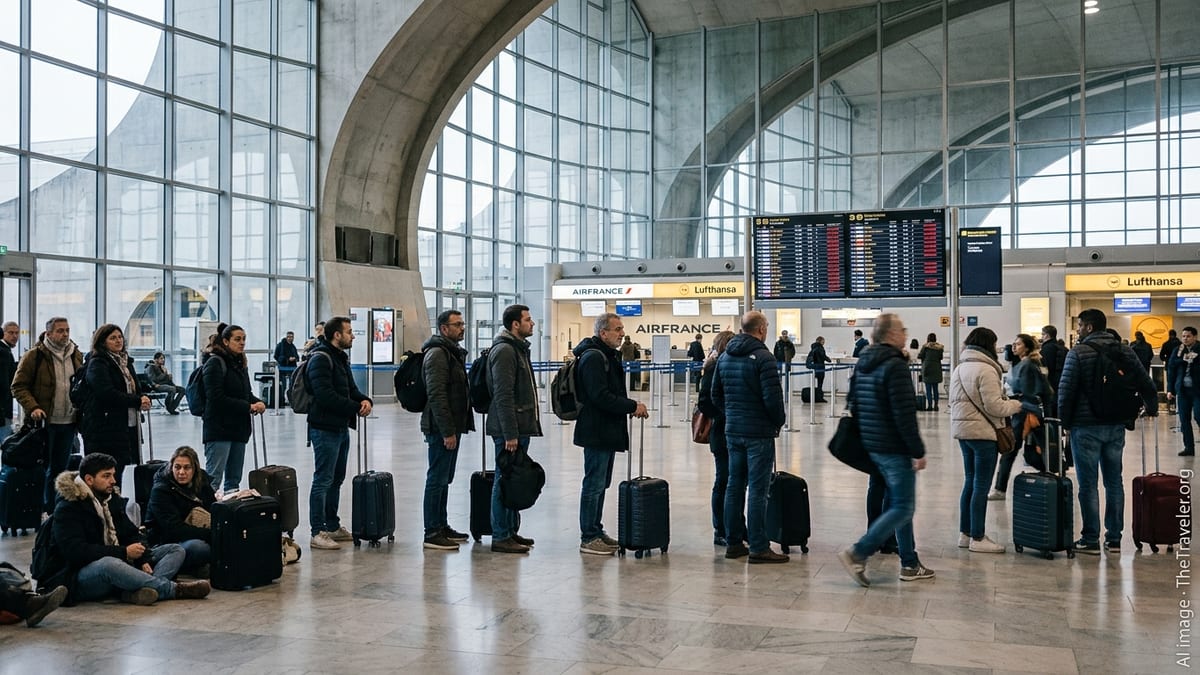
Widespread Cancellations From Paris to Key Global Hubs
Published flight information for Paris Charles de Gaulle and Paris Orly shows a new wave of cancellations on both short and long haul services, interrupting links to Dubai, Bahrain, Tel Aviv, Oslo, Frankfurt, London, Nice, Munich, Amsterdam and additional destinations. The disruption follows weeks of instability on routes touching the Middle East, which have already seen multiple schedule changes and suspensions.
According to publicly available airport departure boards and airline status pages, more than 30 flights were withdrawn from schedules over the course of the day. The cancellations affect departures and arrivals operated by several European groups, including Air France, Lufthansa and Scandinavian carrier SAS, as well as codeshare services marketed by partner airlines.
Many of the canceled flights connect Paris with major hubs such as Frankfurt, London and Amsterdam, where onward long haul links are normally available, amplifying the impact for travelers with tight connections. Regional French services, including flights between Paris and Nice, have also been hit, reducing domestic options for rerouting.
Travel industry tracking tools indicate that the pattern at Paris mirrors a broader reshaping of European schedules on routes to the Gulf and Eastern Mediterranean, particularly services touching Dubai, Bahrain and Tel Aviv, which have been repeatedly adjusted in recent weeks.
Middle East Routes Remain Volatile
Publicly available coverage over recent days shows that several European airlines have extended or reintroduced suspensions on flights to parts of the Middle East, especially Tel Aviv and certain Gulf destinations. Previous notices from Lufthansa Group and Air France highlighted temporary halts to services to Tel Aviv, Dubai and other cities amid heightened regional tension, and those adjustments continue to ripple through wider networks.
Flight status data indicates that some Paris services bound for Dubai and Bahrain were removed from today’s schedules, limiting direct connections from France to the Gulf. Where flights are still operating, many appear on reduced frequencies or with altered timings, leaving fewer alternatives for passengers whose original bookings are canceled.
Routes between Paris and Tel Aviv have been among the most persistently affected since late 2023, with various airlines repeatedly pushing back target restart dates. Current cancellations at Paris airports mean that travelers heading to Israel often face multi‑stop itineraries or must transit through hubs where capacity is already strained.
Advisories issued by several carriers in recent weeks have urged passengers traveling anywhere in the broader Middle East region to monitor their flight status closely on the day of departure and to allow extra time for ticket changes, reflecting the likelihood of further short‑notice adjustments.
European and Nordic Networks Under Pressure
In addition to long haul cuts, European and Nordic routes are experiencing knock‑on disruption from the situation. Lufthansa and its partners have withdrawn selected flights between Paris and German hubs such as Frankfurt and Munich, which are normally key stepping stones for intercontinental journeys. These cancellations reduce options for passengers attempting to reroute around disrupted Middle East corridors.
SAS services connecting Paris with Scandinavian cities, including Oslo, are also among those affected, according to airline timetables and live tracking feeds. The loss of frequency on these routes further complicates travel plans for passengers connecting from France to northern Europe and beyond.
Schedules linking Paris with London and Amsterdam show a mix of operating and canceled flights, reflecting a patchwork recovery in intra‑European travel. Reports from airline operations updates suggest that some of these cancellations are driven by aircraft and crew being repositioned or held in reserve while carriers work around closures and restrictions on certain airspace.
Within France, cuts on the busy Paris–Nice corridor are contributing to congestion on remaining services and on alternative rail routes. Capacity constraints on both air and rail increase the risk of bottlenecks for travelers trying to transfer between domestic and international legs of their journeys.
Passenger Impact and Travel Advice
For passengers already at the airport, the latest round of cancellations has led to long queues at customer service desks, as travelers seek rebooking, overnight accommodation or refunds. Online rebooking tools and call centers have also come under heavy pressure, particularly for those attempting to secure scarce seats on the limited flights still operating to Dubai, Bahrain and other affected hubs.
Consumer rights organizations and travel analysts are advising passengers to check their flight status repeatedly in the 24 hours before departure and again before leaving for the airport, since schedules on key routes continue to change at short notice. Travelers on itineraries involving Tel Aviv, the Gulf region or multiple European connections are being encouraged to build in extra buffer time between flights.
Publicly available guidance also highlights that, for flights departing from European Union airports or operated by EU‑based airlines, passengers may have specific rights to care, rerouting or compensation in the event of cancellations, depending on the cause. However, where airlines cite extraordinary circumstances related to regional security, entitlement to monetary compensation may be limited even when assistance such as meals and hotel rooms is offered.
Travel planners note that those with nonessential trips may wish to consider postponing journeys involving the most affected corridors, particularly routes touching Paris and onward connections to the Middle East, until schedules stabilize. For essential travel, flexible tickets and comprehensive travel insurance are being recommended to help mitigate the risk of additional disruption.
Outlook for Paris Operations in the Coming Days
Operational bulletins from airlines serving Paris indicate that timetables for the next several days remain under active review. While some carriers are attempting to gradually restore capacity on core European routes, ongoing airspace restrictions and rerouting requirements over parts of the Middle East are expected to keep pressure on aircraft utilization and crew availability.
Industry observers point out that the situation at Paris airports is closely linked to developments at other major hubs such as Frankfurt, London and Amsterdam, where airlines are also adjusting timetables. Any further extension of route suspensions to Dubai, Bahrain or Tel Aviv could prompt additional changes in Europe‑wide schedules, including more cancellations or aircraft swaps on flights to and from France.
Weather and seasonal demand patterns may add another layer of complexity, particularly as airlines weigh whether to protect peak services or to cut lower‑yield frequencies when disruption becomes unavoidable. As a result, passengers may continue to see rolling schedule changes rather than a single, fixed disruption period.
For now, publicly available information suggests that travelers planning to use Paris Charles de Gaulle or Paris Orly should treat schedules as provisional, especially when flying to or via the Middle East, and should remain prepared for last‑minute changes as airlines continue to adapt their operations.