

More news on this day
Dozens of flights operated by Viva Aerobus, Aeroméxico, United Airlines and other carriers have been canceled or heavily disrupted across Mexico, unsettling travel plans on key domestic and international routes linking cities such as Cancún, Guadalajara, Vancouver, Toronto, San Francisco and Detroit.
Get the latest news straight to your inbox!
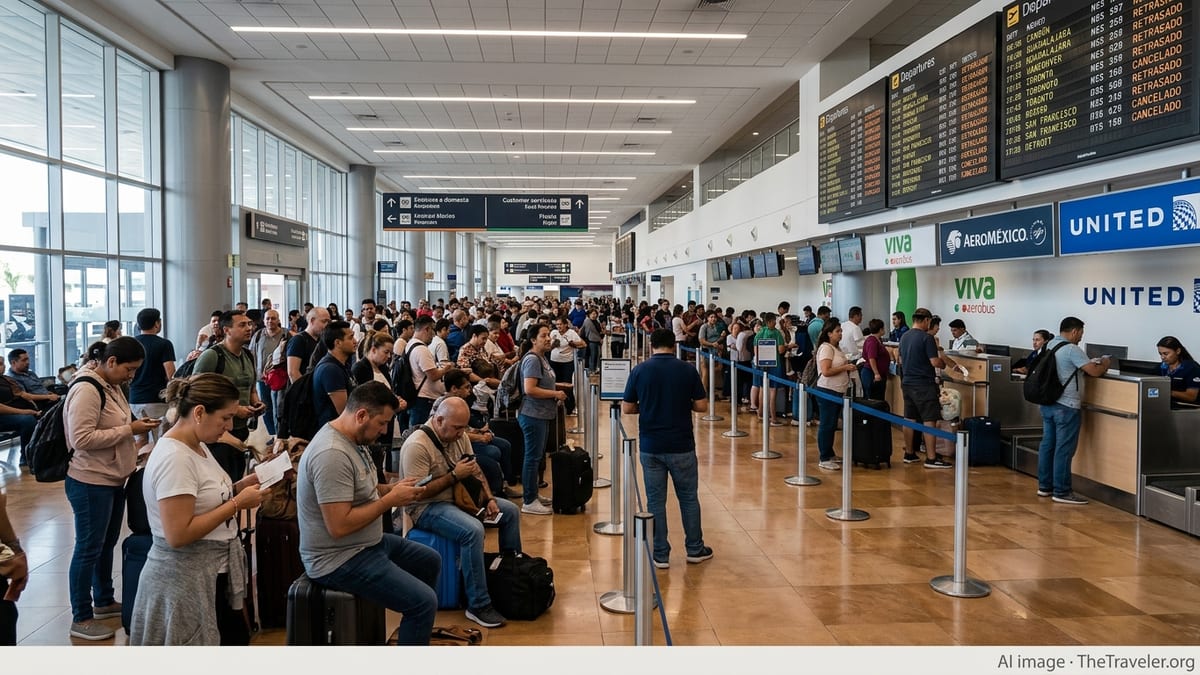
Widespread Cancellations Hit Major Mexican Hubs
Published coverage and live flight-tracking data indicate that more than 40 flights were canceled or severely disrupted over a short period, concentrated at Mexico’s busiest airports, including Mexico City, Cancún and Guadalajara. The disruptions involved a mix of domestic services within Mexico and cross-border routes connecting to Canada and the United States.
The largest impact appears to be on high-demand leisure and VFR (visiting friends and relatives) corridors. Routes to the resort city of Cancún and the business and tech hub of Guadalajara saw multiple departures scrubbed or delayed, creating long queues at check-in counters and customer service desks as travelers sought rebooking options.
Operational factors cited in public reports include aircraft rotation challenges, knock-on delays from earlier weather systems in North America and congestion in peak travel periods. In several cases, cancellations were concentrated in specific time bands, suggesting scheduling strain around morning and late-evening waves when airports handle the bulk of their daily movements.
Data for Mexico’s primary international gateways show that even a few dozen cancellations can quickly ripple through the network, as aircraft and crews are tightly scheduled and many flights operate near full capacity during spring travel season.
Viva Aerobus, Aeroméxico and United Among the Most Affected
The disruption has prominently involved Mexican low-cost carrier Viva Aerobus and flag carrier Aeroméxico, alongside United Airlines on cross-border segments. Publicly available flight-status boards and traveler reports point to a cluster of canceled or significantly delayed services operated by these airlines over the same timeframe, indicating that the issue is network-wide rather than isolated to a single carrier.
For Viva Aerobus, the cancellations add pressure to an already busy schedule serving secondary Mexican cities as well as popular sun destinations. Travelers reported abrupt schedule changes, last-minute cancellations and difficulty accessing digital tools at times, compounding the stress of disrupted itineraries.
Aeroméxico, which maintains a large hub in Mexico City with extensive North American connectivity, has also seen select flights scrubbed or retimed. According to published coverage, the carrier has focused on consolidating passengers onto remaining services where possible, prioritizing routes with the strongest onward connections and alliance links.
United Airlines, operating from U.S. hubs into Mexico’s major cities and resort areas, has been affected particularly on services that rely on tight aircraft rotations from earlier flights in the United States. When inbound segments encounter delays from weather or air traffic control constraints, outbound departures from Mexico can quickly become vulnerable to cancellation.
Impact on Routes to Cancún, Guadalajara, Vancouver, Toronto and U.S. Cities
The pattern of cancellations has been especially disruptive on routes that connect Mexico with key Canadian and U.S. gateways. Flights linking Mexico City and Cancún with Vancouver and Toronto have seen multiple schedule changes, with some departures canceled outright and others retimed significantly, creating missed connections for long-haul travelers.
Travelers heading to or from U.S. cities including San Francisco and Detroit have likewise experienced knock-on effects, particularly when itineraries involve a change of planes in Mexico City or another Mexican hub. Canceled domestic feeder flights have led to missed transborder departures, forcing rebookings on later services or alternative routings through different hubs.
Reports from passengers indicate that even when long-haul segments continue to operate, the loss of short-haul links into major hubs can strand travelers far from their intended departure points. This has been particularly challenging for those traveling from smaller Mexican cities, where frequency is limited and same-day recovery options are scarce.
For Canadian and U.S. travelers planning spring getaways to Mexican beach destinations, the situation underscores the sensitivity of cross-border leisure routes to operational disruptions. A relatively small number of cancellations on heavily booked days can quickly eliminate flexibility, with alternative seats selling out or becoming available only at higher fares.
What Travelers Are Experiencing on the Ground
Accounts shared on public forums describe crowded terminals, long lines at check-in and customer service counters, and difficulty obtaining clear, real-time information about rebooking options. Some travelers have reported receiving cancellation notifications close to departure time, leaving limited room to adjust onward travel or accommodation plans.
Others describe inconsistent communication between airline apps, airport display boards and email updates. In some cases, passengers arrived at the airport to discover that a flight showing as delayed on a mobile app had in fact been canceled or retimed, forcing last-minute scrambles to secure alternative options.
Travelers connecting through Mexico to Canada or the United States have also reported challenges with minimum connection times. When short delays accumulate on the first leg of a journey, connections in Mexico City, Cancún or Guadalajara can easily be missed, especially during crowded passport control and security periods.
Publicly available accounts suggest that some passengers have opted to purchase new tickets on different airlines to avoid long waits for the next available seat, particularly on heavily booked weekend departures. Others have chosen to reroute through alternate hubs in the United States or Canada to circumvent bottlenecks at Mexico’s busiest airports.
Key Steps for Passengers Booked on Upcoming Flights
With schedules still adjusting, travelers booked on Viva Aerobus, Aeroméxico, United and other carriers serving Mexico are being advised by consumer advocates and travel experts to monitor their reservations closely. Checking flight status directly with the airline on the day of departure, as well as verifying airport departure boards, can help passengers detect changes early.
Where possible, travelers are encouraged to leave extra time at the airport, particularly if they need to check bags or clear immigration and security during busy periods. Arriving earlier can also increase the chances of being rebooked onto the next available departure if a flight is canceled at short notice.
Passengers with connections, especially those traveling between smaller Mexican cities and international hubs such as Vancouver, Toronto, San Francisco and Detroit, may wish to review their itineraries to ensure that layovers provide a comfortable buffer. Longer connection times can offer more resilience if the first leg of a journey is delayed.
Finally, travelers are urged to keep records of boarding passes, receipts and any written notifications of cancellations or delays. These documents can be important when seeking refunds, credits or other forms of compensation under applicable airline policies and consumer regulations, particularly when disruptions significantly alter the timing or feasibility of a planned trip.