

More news on this day
Asia’s air travel network is facing a fresh wave of disruption as more than 50 flights were canceled across Indonesia, Malaysia, Taiwan, Hong Kong and Laos, hitting major airlines including Batik Air, Malaysia Airlines, Cathay Pacific, United Airlines and China Airlines and disrupting long-haul links to Los Angeles and Honolulu as well as regional hubs such as Jakarta, Bali, Kuala Lumpur, Taipei, Bangkok and Manila.
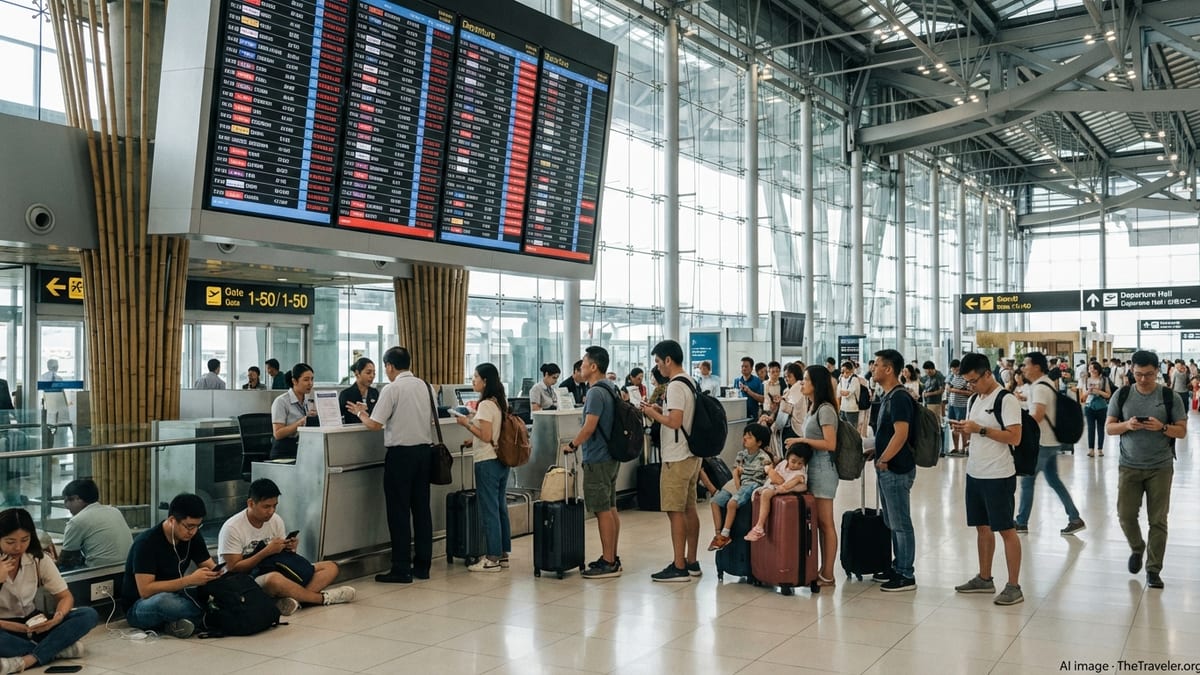
Fresh Disruptions Add to a Difficult Season for Asian Air Travel
The latest round of cancellations, reported on February 21, 2026, compounds what has already been a strained period for carriers operating in and out of Asia. Data and airport reports indicate more than 50 flights scrubbed in a single operating window, layered on top of hundreds of delays previously recorded across Indonesia, Malaysia, Thailand, Japan and China in recent days. Together they form a pattern of operational stress that is now spilling onto some of the region’s most heavily traveled transpacific and regional routes.
Travel industry monitors say the impact has been felt most sharply at major hubs including Jakarta’s Soekarno Hatta International Airport, Kuala Lumpur International Airport, Taipei Taoyuan, Hong Kong International and key Lao gateways, where knock-on effects quickly spread to connecting services. That has left passengers stranded or rerouted on complex itineraries that touch not just Asian capitals but also US gateways such as Los Angeles and Honolulu.
While each airline has cited a slightly different mix of factors, from aircraft rotation issues and weather to air traffic congestion at certain hubs, the net result is the same for travelers: fuller rebooked flights, crowded customer service desks and a spike in itinerary changes, particularly for those connecting between Southeast Asia and North America.
Airlines Most Affected: Batik Air, Malaysia Airlines, Cathay Pacific, United and China Airlines
Low-cost and full-service carriers alike have been caught up in the latest wave of disruption. Batik Air and Malaysia Airlines have recorded cancellations on short and medium haul services linking Indonesian and Malaysian cities with regional hubs such as Singapore, Bangkok and Taipei, as well as on select routes feeding into long-haul networks. These carriers play a central role in connecting secondary cities in Indonesia and Malaysia to larger intercontinental gateways.
Cathay Pacific and China Airlines, both key players on Northeast and Southeast Asia trunk routes, have seen flight cancellations and schedule adjustments on flights touching Hong Kong and Taipei. These hubs serve as crucial waypoints for travelers heading between North America and destinations such as Manila, Jakarta and Bali, meaning a canceled sector in Asia can quickly cascade into missed onward connections on other continents.
United Airlines, one of the largest US carriers operating to and through the region, has also reported affected services. Disruptions have been noted on transpacific flights linking major US cities, including Los Angeles and San Francisco, with Asian hubs such as Tokyo, Hong Kong and Singapore, where onward codeshares spread passengers further into Southeast Asia. Even when United flights operate, delays at partner hubs or late-arriving aircraft can still force last-minute changes that reverberate through closely timed banked departures.
Other regional operators, including Thai AirAsia, Malindo Air and Tianjin Airlines, have contributed to the growing tally of cancellations and delays around Asia’s main hubs in the days leading up to the current disruption, underscoring the broad, multi-carrier nature of the problem rather than a single-airline issue.
Key Airports Under Pressure Across Indonesia, Malaysia, Taiwan, Hong Kong and Laos
Jakarta and Bali remain at the center of Indonesia’s air traffic challenges. Soekarno Hatta, already among the region’s busiest airports, has experienced both cancellations and extended delays, with some Batik Air and Garuda-linked services cut or consolidated. In Bali, Ngurah Rai International Airport has seen tourist-heavy routes to Kuala Lumpur, Singapore and Hong Kong affected, posing difficulties for leisure travelers planning island getaways or onward connections deeper into the region.
In Malaysia, Kuala Lumpur International Airport has again emerged as a focal point. Recent reports show cancellations across both Malaysia Airlines’ mainline operations and associated regional carriers, especially on routes to Indonesia, Taiwan and intra-Southeast Asia. Because Kuala Lumpur serves as both a local origin and a long-haul transit point, operational hiccups there can quickly affect itineraries involving Europe, Australia and North America.
Hong Kong International Airport and Taipei Taoyuan International Airport, two of Asia’s most important long-haul gateways, are also grappling with schedule instability. Canceled and delayed flights operated by Cathay Pacific, United, China Airlines and others have disrupted tightly timed banks of departures to cities including Los Angeles, San Francisco, Honolulu and major Southeast Asian capitals. Even a relatively small number of cancellations can create ripple effects when they fall during peak transpacific departure windows.
Laos, though a smaller player in regional aviation, has not escaped the disruption. Newly developed airports such as Bokeo International and Nong Khang are part of a growing domestic and near-regional network linking Laos to hubs in Thailand, Vietnam and China. Flight cancellations there can sever onward connections for travelers aiming to reach Bangkok, Hanoi or further-flung destinations, particularly when they rely on small carriers and limited daily frequencies.
Impact on Passengers Bound for Los Angeles, Honolulu and Other Long-Haul Destinations
The cancellation of more than 50 flights across Asia has had disproportionate consequences for long-haul itineraries, where missed connections can translate into overnight stays and multi-day rebookings. Travelers heading to or from Los Angeles and Honolulu have reported interrupted journeys after regional feeders into transpacific gateways were pulled from schedules or delayed beyond connection windows.
For example, passengers starting in secondary Indonesian or Malaysian cities often depend on a chain of connecting flights: a domestic leg into Jakarta or Kuala Lumpur, followed by a regional hop to Hong Kong or Taipei, then a long-haul flight across the Pacific on a carrier such as Cathay Pacific, United or China Airlines. The cancellation of even one short sector in that chain can invalidate the entire itinerary and force a complete replan.
Travelers on routes linking Manila, Bangkok and Singapore with the US West Coast have experienced similar challenges. In several cases, regional services have been consolidated or retimed on short notice, leaving passengers with narrower connection windows or newly introduced overnight layovers. This is particularly troublesome during peak travel days, when remaining seats on alternative flights are scarce and fares for last-minute bookings soar.
Industry analysts note that while most affected passengers are eventually reaccommodated, the customer experience frequently involves long queues at service desks, extended waits on customer service hotlines and confusing rebooking options, especially when itineraries involve multiple carriers and codeshare partners.
Why So Many Flights Are Being Canceled and Delayed Now
Aviation experts point to a combination of structural and short-term factors behind the surge in cancellations and delays. Aircraft and crew availability remain tight across many Asian carriers following the intense ramp-up of flying over the past two years. Fleets that had been parked or underutilized during the pandemic era have returned to service, but maintenance backlogs and spare parts shortages have not fully normalized, leaving operators more vulnerable when a single aircraft goes out of rotation.
Weather and air traffic control constraints have also played a significant role. Seasonal storms across parts of East and Southeast Asia, coupled with congested airspace around megahubs such as Jakarta, Kuala Lumpur, Hong Kong and Tokyo, have created periodic ground stops and flow restrictions. When these occur during peak morning or late-night waves, the resulting delays can knock schedules off balance for an entire day and beyond.
In addition, the rapid growth of travel demand to and from emerging destinations, including newer Lao airports and secondary Indonesian and Malaysian cities, has increased the complexity of airline networks. More spokes mean more opportunities for disruption to spread, as missed connections and crew legal rest requirements ripple from one part of a network to another. Some carriers are still fine-tuning their schedules to better absorb these shocks, but as the latest disruptions show, the system remains fragile.
Finally, capacity constraints on high-demand long-haul routes like those connecting Los Angeles, San Francisco and Honolulu to Asia mean there are fewer spare seats to rebook passengers when something goes wrong. That tends to amplify the impact of each individual cancellation or extended delay on affected travelers.
How Travelers to Jakarta, Bali, Kuala Lumpur, Taipei, Bangkok and Manila Are Being Affected
For travelers bound for major Asian leisure and business destinations, the most immediate effect has been uncertainty. Tourists en route to Bali or Phuket, business travelers headed to Jakarta or Manila and expatriates commuting between Kuala Lumpur, Bangkok and regional headquarters are increasingly advised to build more buffer time into their itineraries, particularly when a single day’s delay could mean missed meetings or lost vacation time.
Reports from ground handling teams and airport staff describe longer queues at check in and transfer desks, with many passengers seeking same-day rerouting options or accommodation vouchers after misconnecting on through itineraries. In some cases, travelers have been offered alternative routings that are less direct, such as adding an extra stop in a secondary hub or switching from a non-stop transpacific service to a one-stop itinerary via another Asian city.
Hotels near major airports, especially in Jakarta, Kuala Lumpur, Hong Kong and Taipei, have seen a bump in short-notice bookings from passengers who suddenly find themselves stranded overnight. Travel insurers say they are fielding more claims related to missed connections and delays, particularly from travelers whose policies explicitly cover schedule disruptions caused by airline operational issues or adverse weather.
Despite the challenges, tourism boards in Indonesia, Malaysia, Thailand and the Philippines continue to stress that their destinations remain open and accessible. However, they are also urging visitors to stay in close contact with airlines, monitor flight statuses frequently and consider flexible booking options that allow changes without heavy penalties.
What Passengers Should Do Now if Their Flight Is Affected
For travelers with upcoming itineraries touching Jakarta, Bali, Kuala Lumpur, Taipei, Hong Kong, Bangkok, Manila, Los Angeles or Honolulu, the most important step is to stay proactive. Airlines are encouraging passengers to monitor their booking status through official apps and direct communication channels, rather than relying solely on airport departure boards or third party travel sites that may update more slowly.
Passengers whose flights have already been canceled or significantly delayed are typically entitled to a range of remedies, which can include rebooking at no additional cost, refunds on unused segments or, in some cases, meal and hotel vouchers when disruptions require an overnight stay. The specifics vary by airline and jurisdiction, so travelers are advised to review the conditions of carriage of the operating carrier and any applicable consumer protection rules in the countries they are flying through.
Experts recommend that passengers traveling on complex multi sector itineraries carry printed or downloadable copies of all ticket numbers and reservation codes, especially when journeys involve codeshares between airlines such as United, Cathay Pacific, Malaysia Airlines and regional partners. Having this information readily available can speed up the rebooking process at crowded customer service counters.
Travel planners also suggest allowing longer connection times where possible, particularly at busy hubs currently experiencing repeated delays. Choosing itineraries with at least two to three hours of connection time, rather than the minimum allowed, can reduce the risk of misconnecting if incoming flights run late.
Outlook for Asia Pacific Air Travel in the Coming Weeks
Industry forecasts suggest that Asia Pacific air travel demand will remain robust through the first half of 2026, supported by strong tourism flows into Indonesia, Thailand and the Philippines and sustained business travel between North America and key Asian financial centers. That continued demand is good news for airlines’ bottom lines but also means that any further operational hiccups could again leave limited room to maneuver when rebooking disrupted passengers.
Some carriers, including major players such as Cathay Pacific, Malaysia Airlines, United and China Airlines, have already signaled plans to refine schedules, add spare aircraft capacity during peak periods and improve coordination with airport authorities to manage flow at congested times of day. These steps are aimed at reducing the likelihood of large scale cancellation events and giving airlines more flexibility when weather or technical issues do arise.
Airports in Indonesia, Malaysia, Taiwan, Hong Kong and Laos are likewise investing in infrastructure and technology upgrades, from enhanced air traffic management systems to expanded terminal capacity. Over time, these improvements should help ease bottlenecks that currently contribute to delays, particularly during busy holiday seasons and long weekends when demand spikes.
For now, passengers planning trips that touch Los Angeles, Honolulu, Jakarta, Bali, Kuala Lumpur, Taipei, Bangkok, Manila and other popular destinations are being advised to stay informed, book with flexibility in mind and be prepared for the possibility of short-notice schedule changes, even as airlines work to stabilize their operations across the region.