

More news on this day
More than 75 flights across Japan and wider Northeast Asia have been canceled over recent days, disrupting operations at major hubs in Tokyo, Osaka, Fukuoka, Sendai and beyond, and forcing thousands of passengers to rebook or abandon journeys to and from Hong Kong, mainland China and key domestic cities.
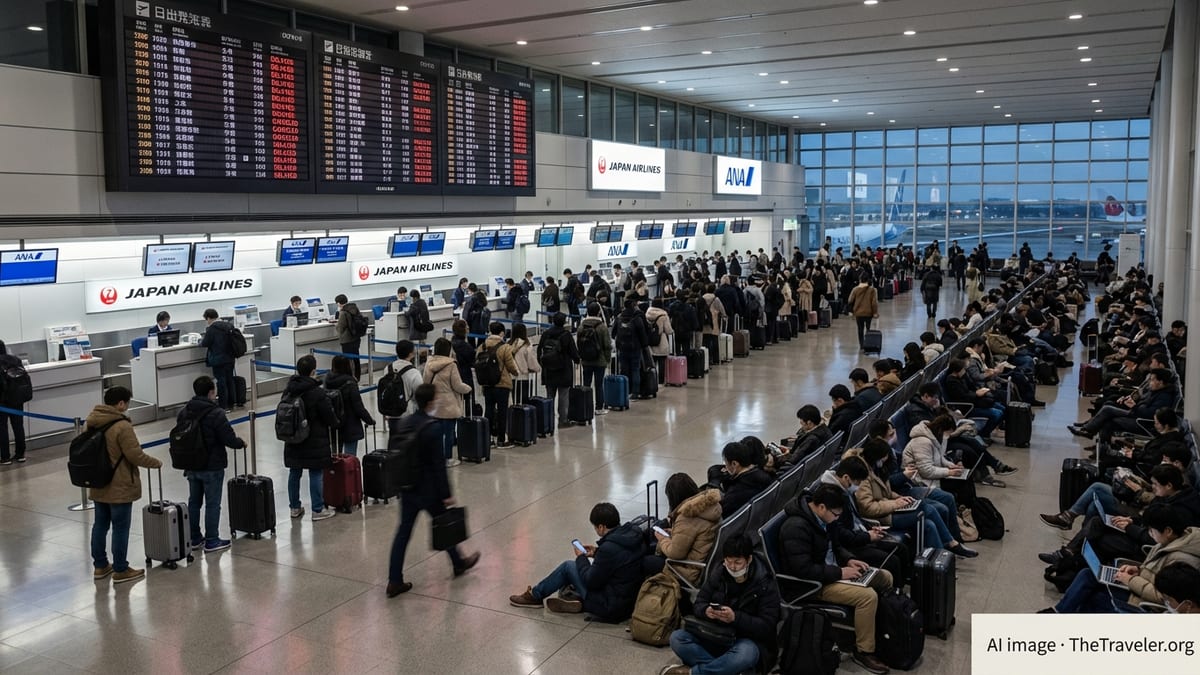
Wave of Cancellations Hits Japan’s Busiest Airports
The latest round of disruption has affected a broad mix of domestic and international services, with Japan Airlines, All Nippon Airways, Air Do and several regional and foreign carriers trimming or canceling departures. Operational data compiled over the past several weeks shows more than 75 flights scrubbed across Japanese airports, with cancellations concentrated at Tokyo Haneda, Tokyo Narita, Osaka Itami, Kansai International, Fukuoka and regional gateways such as Sendai.
Recent tallies highlight how frequently flight plans have been upended. In one 24 hour period alone, 18 scheduled departures were canceled across five major airports, affecting links to cities including Fuzhou, Newark, Tsushima, Kumamoto, Oita, Niigata, Sendai and Tokyo. On other days, wider networks saw dozens more cancellations layered on top of hundreds of delays, leaving departure boards dominated by revised timings and “flight canceled” notices.
The impact has been particularly visible at Haneda and Narita, where disrupted operations by Japan Airlines, ANA and their partners have rippled through connecting itineraries across Japan and the wider region. Passengers heading onward to secondary Japanese cities have often borne the brunt, as smaller turboprop and regional jet services are among the first to be grounded when airlines tighten schedules.
Regional Routes to Hong Kong and China Under Strain
The disruption is not confined to domestic flying. Routes linking Japan with Hong Kong and mainland China have been under sustained pressure, compounding the latest cancellations. Chinese authorities have recently halted flights on dozens of routes to Japan, sharply reducing capacity between major cities and contributing to higher cancellation rates on remaining services.
Data from regional aviation trackers shows that almost half of planned flights between mainland China and Japan in January were canceled, and all services on 49 specific routes for February were removed from schedules. Among the affected connections were busy corridors such as Beijing Daxing to Osaka Kansai and Shenzhen to New Chitose, putting additional strain on surviving routes via Tokyo and other hubs.
ANA and Japan Airlines have simultaneously moved to trim or downgrade several Japan China routes for the upcoming summer season, including reductions on Tokyo Narita to Hangzhou and equipment changes on services to Guangzhou and Shanghai. For travelers, that means fewer options, fuller flights and a higher likelihood that any operational hiccup will cascade into cancellations or extended delays.
Knock On Effects Across Domestic Networks
Inside Japan, the cancelations and delays have exposed how interdependent the country’s dense domestic network has become. When regional carriers such as ANA Wings, Ibex and Air Do pull flights, it not only isolates communities in Hokkaido, Kyushu or remote islands, it also breaks carefully timed connections to long haul services at Tokyo and Osaka.
Recent operational snapshots from Japanese airports show days where more than 70 regional and short haul flights were canceled nationwide, alongside hundreds of delays. Key airports including Sapporo New Chitose, Fukuoka, Osaka and Niigata have all reported spikes in disruption this winter season, forcing airlines to juggle aircraft and crews while prioritizing trunk routes with the highest demand.
Japan’s low cost and hybrid carriers, which typically run lean schedules and use tight aircraft rotations, have also been vulnerable. When a single flight is canceled or heavily delayed due to weather, technical checks or crew placement, the knock on effect can ripple through multiple legs, resulting in a cluster of cancellations that quickly push the national total past 75 affected flights.
Travelers Face Long Queues, Rebookings and Limited Alternatives
For passengers on the ground, the statistics translate into hours in queues, crowded customer service counters and limited same day rebooking options. Images from Tokyo, Osaka and Fukuoka airports in recent weeks have shown long lines of travelers waiting to be reassigned after early morning departures were scrubbed, with many told that the next available seat might not be until the following day.
Domestic travelers often have more flexibility, with Japan’s extensive rail network offering alternatives between major cities such as Tokyo, Osaka, Kyoto and Fukuoka. However, flyers bound for Hong Kong, mainland China, Taiwan or long haul destinations like North America have fewer options when multiple carriers trim or cancel services on the same day.
Airlines have generally offered rebooking at no extra cost on the next available flights, and in some cases meal vouchers or overnight accommodation where cancellations were announced late in the day. Yet high load factors on remaining services mean that some passengers have had to accept rerouting via secondary hubs, overnight stopovers, or even refunds instead of reaching their planned destination on schedule.
What Passengers Should Do Now
With schedules between Japan, Hong Kong and mainland China already tighter than in previous years, travel planners are warning passengers to build more slack into their itineraries, especially when connecting at Haneda, Narita, Kansai or Fukuoka. Same day self connections, which rely on two separate tickets with a tight transfer window, are particularly risky on routes that have recently seen cancellations.
Travel advisers recommend checking flight status several times in the 24 hours before departure and again on the morning of travel, as many of the recent cancellations were confirmed only hours before scheduled takeoff. Passengers should also ensure that airlines and booking platforms have up to date contact details so that disruption alerts by text or app notification are received in time to react.
Where possible, travelers heading to or from Hong Kong and Chinese cities are being encouraged to opt for larger hubs and earlier departures in the day, when recovery options are more plentiful. For domestic flyers, booking slightly longer connection times in Tokyo or Osaka can reduce the risk of misconnecting if a regional flight runs late or is pulled from the schedule at short notice.