

More news on this day
More than 80 flights to and from Egypt were cancelled on Friday as a fast‑moving regional airspace crisis rippled across Gulf and Levant routes, disrupting services operated by Egyptair, Qatar Airways, Gulf Air and other major carriers and stranding thousands of passengers bound for Bahrain, Doha, Kuwait, Dubai, Abu Dhabi, Riyadh, Jeddah, Baghdad, Amman, Beirut and London Luton.
Get the latest news straight to your inbox!
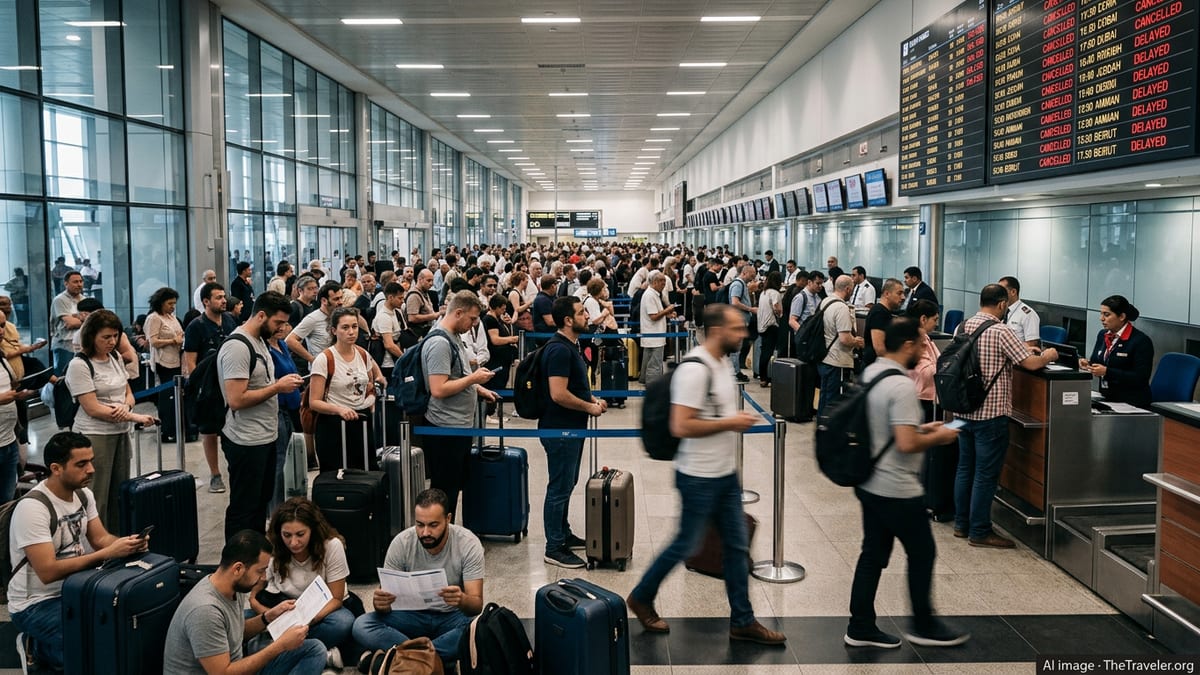
Wave of Cancellations Hits Cairo and Alexandria Hubs
Egypt’s main international gateways in Cairo and Alexandria saw dense departure boards turn red through the day as airlines scrubbed services in response to rapidly changing airspace restrictions and operational constraints. Airport officials said that, by late afternoon, more than 80 flights touching Egypt had been cancelled or significantly delayed, affecting both outbound and inbound traffic on key regional corridors.
National carrier Egyptair cancelled and rescheduled a series of services linking Cairo with Gulf capitals, while also adjusting timings on some European rotations. Regional partners including Qatar Airways, Gulf Air, Kuwait Airways and other Gulf-based airlines cut multiple frequencies into Egypt’s airports, citing the need to reroute around congested or restricted airspace and to comply with evolving safety advisories.
Passengers connecting through Egypt’s hubs were among the hardest hit. Many travellers arriving from Europe and Africa discovered onward flights to Gulf destinations cancelled at short notice, forcing overnight stays and last‑minute rebooking on limited alternative services operating via secondary hubs.
Ground staff at Cairo International Airport reported long queues at transfer and ticketing desks as airlines worked through backlogs of disrupted itineraries. Travellers were urged to remain inside the terminals and monitor airport information screens rather than head to departure gates until their revised flight status had been confirmed.
Gulf and Levant Routes Among the Worst Affected
Routes linking Egypt with Bahrain, Doha, Kuwait, Dubai and Abu Dhabi bore the brunt of the cancellations, reflecting their heavy reliance on overflight permissions and tightly managed air corridors across the Gulf region. Several daily services that typically connect business travellers and migrant workers between Cairo and financial centres such as Dubai and Doha were withdrawn from schedules, with some carriers indicating that only a skeleton operation would remain in place over the coming days.
Services to Saudi Arabia also suffered, with flights to Riyadh and Jeddah either cancelled or delayed as crews and aircraft were repositioned and new routings assessed. Iraqi, Jordanian and Lebanese routes were similarly disrupted, with flights to Baghdad, Amman and Beirut scaled back or pushed to later slots, creating knock‑on delays for passengers making long‑haul connections beyond the region.
Even Egypt’s links to the United Kingdom were affected. Flights carrying holidaymakers and diaspora travellers between Egyptian resorts and London Luton experienced schedule changes as airlines recalculated flight paths and crew duty times. Aviation analysts noted that relatively small changes in available airspace can have an outsized impact on medium‑haul networks, forcing carriers to cut frequencies or consolidate services at short notice.
Industry observers said the breadth of the disruption reflected how closely interwoven Egypt’s aviation ties are with Gulf and Levant hubs. With Cairo serving as both an origin and a transfer point for traffic bound for the wider Middle East, any constraint on regional airspace quickly reverberates through its arrival and departure banks.
Passengers Face Long Queues, Rebookings and Limited Options
For travellers on the ground, the sudden cancellations translated into long waits and few easy alternatives. At Cairo International Airport, lines formed outside airline service counters as passengers sought rebookings and accommodation vouchers after learning that their flights to Doha, Dubai, Abu Dhabi or Riyadh would not depart as planned.
Several travellers reported that alternative routings offered by airlines often involved detours via secondary hubs with limited capacity, such as Muscat or other regional airports that remain open but are now handling increased demand. With many neighbouring states also adjusting flight operations, seats on remaining services quickly filled, leaving some passengers facing multi‑day delays before they could be re‑accommodated.
Travel agents in Egypt and the wider region said corporate travellers and migrant workers were among those most affected, particularly those connecting from North Africa and Europe through Cairo to Gulf labour markets. Missed job start dates, disrupted business meetings and expiring visas were cited as immediate concerns, adding financial and administrative pressure to the inconvenience of being stranded.
Consumer advocates urged passengers not to attempt complex self‑rerouting without first confirming availability and ticket conditions with their airline or booking platform. They warned that booking new one‑way tickets on other carriers could be costly and may complicate later claims for refunds or compensation on the original itinerary.
Airlines Adjust Operations as Authorities Monitor Airspace
Airlines operating in and out of Egypt said they were coordinating closely with aviation regulators and air navigation service providers as they adjusted their schedules. Egyptair, Qatar Airways, Gulf Air and other regional carriers deployed operations control teams to monitor airspace notices, reassign aircraft and crews and identify safe, viable routings around restricted zones while maintaining limited connectivity where possible.
Aviation officials emphasized that safety considerations were driving the cancellations, with carriers expected to err on the side of caution when evaluating routes over or near any area designated as high risk. Rerouting flights around affected zones can add significant time and fuel burn, and in some cases make a service commercially or operationally unviable, prompting the decision to cancel rather than operate with severe constraints.
Experts noted that the disruption underscores the vulnerability of Middle East aviation networks to sudden geopolitical and security developments. Many of the most heavily used corridors link Gulf hubs with Europe, North Africa and Asia via limited stretches of controlled airspace. When one or more of those corridors is partially closed or subject to new risk assessments, airlines can run out of workable options, particularly for tightly timed overnight waves of flights.
Authorities in Egypt and neighbouring states said they were continuing to review the situation and issue updated guidance to airlines as conditions evolve. However, industry insiders warned that even once airspace restrictions ease, it may take several days for schedules, crew rotations and aircraft positioning to fully normalize.
Advice for Travellers With Upcoming Flights Through Egypt
Travel experts are urging anyone due to fly to, from or through Egypt in the coming days to check their booking status repeatedly, rather than relying on original itineraries. Because changes are being made in short cycles, sometimes only hours before departure, passengers are advised to use official airline apps, SMS alerts and airport departure boards as their primary sources of information.
Those with non‑essential journeys have been encouraged to consider deferring travel or seeking voluntary changes while options remain available. Travellers who must fly are being told to allow extra time for security and check‑in, to expect longer lines at customer service counters, and to be prepared for possible overnight stays if connecting flights are cancelled after arrival.
Airlines serving Egypt have stated that passengers on cancelled flights are generally being offered the choice of rebooking on the next available service, rerouting via alternative hubs where feasible, or requesting refunds in line with fare rules. However, with capacity constrained and demand high, seats on near‑term departures are limited, making flexibility on dates and routing crucial for those trying to secure a new itinerary.
With regional airspace conditions still in flux, aviation officials and carriers alike are cautioning that further changes to flight schedules remain likely. Travellers planning to transit Egypt’s airports to reach Gulf, Levant or European destinations are being urged to stay informed and to build contingency time into their plans until the current wave of disruption begins to ease.