

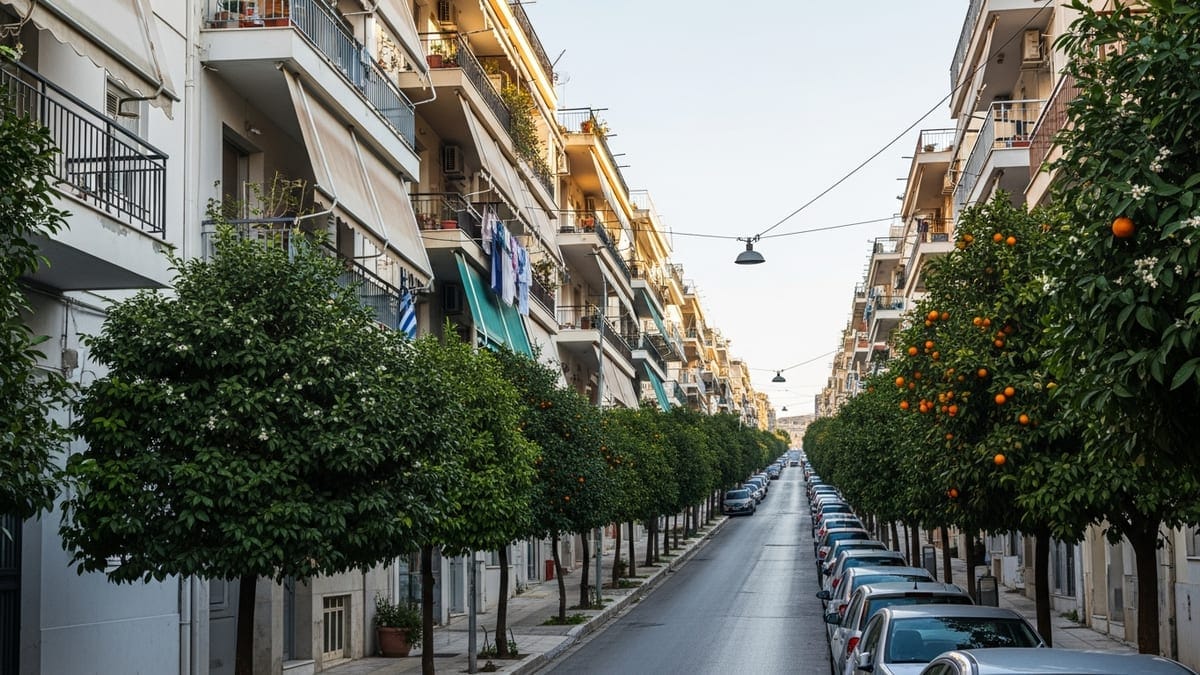
Pagrati is the kind of Athenian neighborhood that gets under your skin slowly. It is residential and unpolished, yet full of life at all hours, with steep streets scented by orange blossoms and the sound of espresso machines never far away. Just behind the Panathenaic Stadium and a walkable distance from Syntagma Square, it has become a favorite base for travelers who want to experience local Athens without sacrificing café culture, contemporary art and good food.
This guide walks you through what to expect from Pagrati today, from its squares and markets to the coffee bars and late-night hangouts that define everyday life here.
Getting Oriented: Where Pagrati Fits in Athens
Pagrati sits just southeast of central Athens, tucked behind the white marble horseshoe of the Panathenaic Stadium and spreading up the hills toward the residential suburbs of Vyronas and Kaisariani. To the west, the smaller district of Mets and the First Cemetery of Athens form a kind of green and stone boundary. It is a dense neighborhood of mid-century apartment blocks and narrow streets, threaded with pocket squares, churches and small parks. Despite its proximity to major sights, it still feels primarily like a place where Athenians live, work and meet friends.
For visitors, one of the advantages of Pagrati is how easily it connects to the rest of the city. The closest metro stop is Evangelismos on Line 3, from which you can walk into the heart of the neighborhood in around five minutes. Syntagma Square, the main downtown hub, is roughly a 20-minute walk away at a relaxed pace. Buses and trolleybuses run along main arteries like Vassileos Konstantinou Avenue and Spirou Merkouri Street, putting landmarks such as the Acropolis area, Monastiraki and Kolonaki within easy reach by public transportation or a short taxi ride.
The neighborhood itself is structured around a series of squares and key streets that act as landmarks when you explore on foot. Varnava Square, just behind the Panathenaic Stadium, is a bustling social center lined with tavernas, bars and gelato shops. Plastira Square offers a quieter contrast, with playgrounds and family-friendly cafés. Filolaou and Imittou Streets cut through the district with traditional bakeries, greengrocers, tavernas and relaxed bars, while smaller streets like Archelaou and Eratosthenous are known for their creative, younger energy. Once you have walked these main corridors, Pagrati begins to map itself naturally in your mind.
Local Life: How Pagrati Feels Day to Day
Life in Pagrati is unhurried but never dull. Mornings open with the familiar clatter of metal shutters rolling up, the smell of fresh bread from corner bakeries and retirees claiming their usual tables for a first coffee of the day. Parents walk children to school along side streets shaded by bitter orange trees, and shopkeepers greet customers by name. This is a neighborhood where everyday routines matter, and visitors who stay more than a couple of days start to recognize faces and rhythms.
By afternoon, the cafés fill with students typing on laptops, freelancers taking calls on terraces and groups of friends catching up over mezze plates. The steepness of the streets means café terraces often sit at quirky angles, with tables propped on bricks to keep drinks level, but the effect is part of the charm. In warmer months, windows stay open and life spills out onto pavements: laundry on balconies, conversations in doorways, and card games in old-fashioned kafeneia that have not changed much in decades.
Late evening is when Pagrati’s social side really comes into focus. Squares like Varnava and Proskopon hum with people drifting between bars, tavernas and gelaterias, while smaller streets hide tiny wine bars and bistros that stay lively well past midnight. Unlike more overtly touristy districts, the dominant language you hear is Greek, with English and other languages woven in. The crowd is a mix of long-term residents, students from nearby universities, and an increasing number of creative professionals and expats who have chosen the area for its balance of authenticity and urban lifestyle.
There is a gentle tension in the air between old and new. Some residents worry about gentrification as higher-end restaurants, design studios and specialty coffee shops move in. Others welcome the investment and fresh energy, noting that Pagrati has so far managed to accommodate different generations and income levels side by side. As a visitor, you sense both the pride locals feel in their neighborhood and their desire for it to remain grounded and inclusive rather than turning into a purely trendy enclave.
Arrival and Getting Around
Most visitors will first pass through Syntagma Square, the central node of Athens, before heading to Pagrati. From Athens International Airport, the Blue Line of the metro runs directly to Syntagma, usually taking around 40 minutes with trains departing roughly every 30 minutes. An express bus route connects the airport and Syntagma around the clock, taking between 50 and 70 minutes depending on traffic. Licensed yellow taxis line up outside arrivals and operate on a flat fare to the city center, making them a straightforward choice if you arrive late or with heavy luggage.
From Syntagma, you can walk to Pagrati in about 20 minutes, following Vassileos Georgiou and Vassileos Konstantinou Avenues past the National Garden and the Panathenaic Stadium, then crossing into the neighborhood via Varnava Square or Spirou Merkouri Street. If you prefer public transport for that leg, several bus and trolleybus lines run from Syntagma or nearby streets in the direction of the stadium and Pagrati. Checking routes in a contemporary journey-planning app once you arrive helps you match a line to your accommodation address, since services and line numbers can change over time.
Within Pagrati, walking is the most rewarding way to get around. Distances are short, but be prepared for hills and uneven pavements. Comfortable shoes are essential, especially if you plan to link neighborhood explorations with visits to the stadium, nearby museums and central Athens on the same day. Taxis are easy to hail on major roads and are generally affordable by European capital standards, making them a convenient option at night or when you are tired from climbing steep streets.
If you intend to explore the wider city, consider staying within walking distance of Evangelismos metro station. From there, you can reach Syntagma in one stop and connect to other metro lines or the tram network, which departs from central Athens toward the coastal suburbs. This combination of local neighborhood life and citywide connectivity is a key reason Pagrati works so well as a base for several days in Athens.
Cafés, Coffee Culture and Nightlife
Pagrati’s café scene is one of its biggest draws, especially if you appreciate specialty coffee and relaxed all-day hangouts. On streets like Archelaou, Rizari and Spirou Merkouri, each block seems to host at least one café with its own character, from minimalist espresso bars to cozy living-room style spaces piled with plants and mismatched furniture. Many serve brunch dishes like poached eggs, pancakes and grain bowls alongside the staples of Greek coffee culture such as freddo espresso, freddo cappuccino and frappé.
One standout area is around Archelaou Street, where popular spots combine inventive pastries and desserts with serious attention to coffee. Tables here fill quickly on weekends, when Athenians linger late over brunch and conversation. Nearby, Rizari Street offers a green corridor between the neighborhood and the main avenues, and cafés along its length make ideal stops before or after a stroll through the National Garden or a visit to the Panathenaic Stadium. As you head further into Pagrati, small squares and church forecourts provide sheltered terraces that stay busy from morning through late evening.
When the sun goes down, Pagrati’s bars come into their own. Proskopon Square and the surrounding streets host snug, atmospheric bars specializing in cocktails, gin or natural wines, drawing a mixed crowd that often spills out onto the pavement. Eratosthenous Street, closer to the stadium, is known for lively cocktail bars that anchor Friday and Saturday nights, their terraces glowing with strings of lights under the trees. Many places keep their lighting soft and music stylish but not overpowering, creating a social environment that works equally well for conversation and people-watching.
Despite its growing reputation among food and drink insiders, Pagrati retains a casual, unpretentious feel. Dress codes are informal, prices are generally lower than in more upscale districts, and solo guests are welcomed as readily as groups. Reservations are sometimes recommended at the most popular bars and restaurants on weekend evenings, but many spots still hold a portion of their tables for walk-ins, especially at the more traditional tavernas and neighborhood joints.
Where to Eat: From Tavernas to Fine Dining
The food landscape in Pagrati mirrors its blend of tradition and modernity. At one end of the spectrum are classic tavernas that have anchored local streets for decades, serving grilled meats, braised dishes and simple salads at shared tables. Places like Karavitis, operating since the 1920s, and long-established mageiria that specialize in home-style stews and oven-baked dishes, provide a direct line to the flavors of Greek family kitchens. These are spots where you point to trays in a heated display or follow the suggestions of staff rather than deciphering long menus.
Varnava Square is an excellent starting point for an evening of relaxed dining. Surrounding the square are convivial tavernas serving meze platters, seafood and grilled specialties, as well as more contemporary restaurants that experiment with seasonal ingredients and regional recipes. Two popular modern tavernas here are known for their friendly atmosphere and generous portions, offering an experience that is neighborhood-focused yet welcoming to visitors. The square is also home to an artisanal gelateria that has become a summer ritual for many Athenians, with lines of people clutching cones long into the night.
On the higher end, Pagrati includes some of Athens’ most acclaimed dining rooms. Spondi, a multi-award-winning restaurant near the stadium, has long been a benchmark for fine dining in the city, with tasting menus that reinterpret Mediterranean flavors through a contemporary lens. Nearby, restaurants such as Soil and other chef-led projects focus on hyper-seasonal produce, often sourced directly from their own gardens or small-scale suppliers, turning meals into detailed explorations of Greek ingredients.
There is also a growing selection of international and fusion options. From beloved pizzerias that draw loyal crowds for their thin-crust pies and burgers, to plant-focused Middle Eastern eateries and bistros with modern European menus, it is easy to vary your meals without leaving the neighborhood. Prices range widely: you can enjoy a hearty plate of grilled meats and salad with house wine at a traditional taverna for a modest sum, or splurge on multi-course tasting menus at high-end restaurants that need booking well in advance, especially in peak season and on weekends.
Squares, Markets and Everyday Errands
To understand Pagrati, spend time in its squares. Varnava Square, close to the Panathenaic Stadium, is a lively meeting point from morning to late night, busy with residents passing through on errands, children circling the square on bicycles, and groups settling into tavernas or bars as the evening unfolds. Plastira Square, further uphill, has a more residential character, with a playground and simpler cafés that act as informal extensions of local living rooms.
Smaller pockets such as Proskopon Square host a dense concentration of bars and eateries, becoming particularly animated on Friday and Saturday nights. Around them, residential streets lined with parked cars and balconies give way suddenly to tiny grocers, bakeries and florists, many of which are family-run. This patchwork of squares and side streets makes Pagrati an engaging place for aimless wandering: you can leave one busy café cluster, turn a corner and find yourself in a quiet, leafy lane with only the sound of a radio drifting from an open window.
Markets are another lens on daily life here. Weekly outdoor farmers’ markets, or laiki agoras, typically appear on set days along specific streets. In Pagrati, one well-known market runs along Spirou Merkouri or nearby streets early in the week, with another held on Archimidous Street on Fridays. Stalls overflow with seasonal produce, local cheeses, olives, herbs, honey and flowers, and prices are often lower than in supermarkets. Even if you are staying in a hotel, shopping here for fruit, nuts or picnic supplies is a memorable way to interact with vendors and practice a few Greek phrases.
For routine needs, Pagrati is extremely convenient. Pharmacies, small supermarkets, butchers and bakers are scattered through the neighborhood, and opening hours are often generous, especially for mini markets. It is simple to pick up SIM cards or top up public transport tickets at kiosks and ticket machines on main streets. Many cafés and shops accept cards, although carrying some cash is useful for markets, older kafeneia and small purchases from kiosks. As with most of Athens, tap water is generally safe to drink, so refilling a reusable bottle saves both money and plastic.
Cultural Highlights and Nearby Sights
While Pagrati itself is more about ordinary city life than grand monuments, it borders some of Athens’ most significant landmarks. The Panathenaic Stadium, or Kallimarmaro, sits right at its edge, a white marble horseshoe built on the site of an ancient stadium and reconstructed for the first modern Olympic Games. From Pagrati’s hills, especially from paths accessed around Archimidous Street, you can enjoy striking elevated views of the stadium and the city beyond, particularly beautiful in late afternoon light.
Just across the main avenues, the National Garden and the complex around the Zappeion Hall provide green respite from the dense streets, with shaded pathways, benches and small ponds. A short walk from Pagrati leads to the Basil and Elise Goulandris Foundation, a museum of modern and contemporary art that hosts an impressive collection of works by Greek masters and international artists, from impressionists to modern sculptors. Smaller galleries and studios are scattered within the neighborhood itself, contributing to a growing creative scene that coexists with its more traditional elements.
From a base in Pagrati, many of central Athens’ cultural attractions are walkable, especially if you enjoy urban strolls. The Acropolis and its museum are reachable in roughly half an hour on foot, depending on your starting point and route, or more quickly by combining a short walk with the metro or a taxi. Nearby districts such as Mets, with its quieter, tree-lined streets and neoclassical houses, and Koukaki, known for its own café and bar culture, make easy half-day excursions on foot.
Even when you return from major sights, Pagrati provides a calmer foil to the crowds. It is easy to spend a morning at museums and archaeological sites, then step back into a neighborhood café to digest what you have seen, watching residents go about their business. This oscillation between the monumental and the everyday is one of the pleasures of staying here rather than in a more overtly touristic quarter.
Safety, Costs and Practical Expectations
Pagrati is generally perceived as a safe area, particularly during the day and early evening when streets and squares are busy. As in any city neighborhood, it is wise to use common sense at night, stick to well-lit routes and keep an eye on your belongings in crowded bars or on public transport. Petty theft can occur in Athens, especially on metro lines and at major stations, so keep valuables secure and avoid leaving bags draped over the backs of chairs in busy spots.
In terms of costs, Pagrati sits comfortably below the most expensive parts of central Athens while not being the absolute cheapest area in the city. Coffee at local cafés is typically reasonably priced, with slightly higher rates at design-led specialty spots. Meals at traditional tavernas offer very good value, especially when dishes are shared among a group. Contemporary bistros and fine dining restaurants can climb to international capital levels, particularly with tasting menus and wine pairings, but they remain optional indulgences rather than the everyday norm.
Accommodation in and around Pagrati spans from short-term apartment rentals to small guesthouses and a handful of larger hotels on the neighborhood’s fringes. Many visitors choose apartments to enjoy more living space and kitchen facilities, which make it easy to take advantage of local markets and bakeries. When booking, pay attention to the exact location: streets closer to the main avenues and the stadium are flatter, while those higher up can involve steep climbs that may not suit everyone, especially in summer heat.
Noise is another factor to consider. While much of Pagrati is residential and quiet at night, pockets around squares and popular bar streets can remain lively into the small hours, especially on weekends. If you are sensitive to sound, look for accommodations on side streets a block or two away from the main café clusters, and consider bringing earplugs. On the upside, this energetic street life is part of what makes the neighborhood feel so genuinely inhabited and alive.
The Takeaway
Pagrati is not the polished Athens of postcards, but that is precisely what makes it so appealing. It offers a window into how the city really lives, framed by the clink of coffee cups, the calls of street vendors and the steady pulse of conversation in squares that function as communal living rooms. From early-morning bakery runs to late-night cocktails under fairy-lit trees, days here have a natural flow that encourages you to slow down, observe and participate rather than rush between sights.
Staying in Pagrati places you close to iconic landmarks such as the Panathenaic Stadium and within easy reach of the Acropolis and central Athens, yet it keeps you grounded in a neighborhood where your barista may learn your order and market vendors recognize you after a few visits. It is an ideal choice for travelers who enjoy exploring on foot, who value cafés and local eateries as much as museums, and who appreciate neighborhoods with layers of history and community. If you are looking for a base that balances authenticity with comfort, Pagrati deserves a place near the top of your Athens shortlist.
FAQ
Q1. Is Pagrati a good area to stay in for first-time visitors to Athens?
Pagrati works very well for first-time visitors who want a local neighborhood feel without being far from major sights. You are close to the Panathenaic Stadium, within walking distance or a short ride from Syntagma and the Acropolis area, and surrounded by cafés and eateries. It is less polished and tourist-oriented than Plaka or Monastiraki, but many travelers find that an advantage rather than a drawback.
Q2. How do I get from the airport to Pagrati?
The most straightforward way is to take the metro Blue Line from Athens International Airport to Syntagma station, then either walk, take a short taxi ride, or connect to a bus or trolley that heads toward the Panathenaic Stadium and Pagrati. Alternatively, the airport bus to Syntagma or a fixed-fare taxi to the city center are good options, especially if you have heavy luggage or arrive late at night.
Q3. Is Pagrati safe to walk around at night?
Pagrati is generally considered safe, and many locals walk between squares, bars and restaurants late into the evening. As in any city, you should stay aware of your surroundings, stick to well-lit streets and take normal precautions with valuables. If you are returning very late or feel tired, taxis are affordable and easy to find on main roads.
Q4. What kind of cafés and nightlife can I expect in Pagrati?
You will find a wide range of options, from traditional kafeneia where older residents sip Greek coffee and play cards, to modern cafés serving specialty coffee and brunch. At night, bars around squares such as Varnava and Proskopon offer cocktails, wine and craft spirits in relaxed settings, with music and outdoor seating on most evenings, especially in the warmer months.
Q5. Are there vegetarian or vegan dining options in Pagrati?
Yes. While traditional Greek tavernas tend to focus on meat and seafood, many dishes such as salads, baked vegetables, beans and pies are naturally vegetarian. In addition, Pagrati has several modern eateries and international restaurants with clearly marked vegetarian and vegan options, so it is not difficult to eat plant-based here, especially if you are willing to explore a few different spots.
Q6. How expensive is Pagrati compared to other parts of Athens?
Overall, Pagrati is moderately priced. Everyday items like coffee, bakery goods and simple meals are often cheaper than in the most touristy areas, while high-end dining can reach similar prices to other major European capitals. Accommodation costs vary depending on season and type, but apartments and smaller guesthouses in Pagrati often represent good value compared with hotels in the most central tourist districts.
Q7. Is it easy to reach the Acropolis and other main sights from Pagrati?
Yes. You can walk to the Acropolis and its museum in about half an hour from many parts of Pagrati, or combine a shorter walk with a metro or taxi ride. Central landmarks such as Syntagma Square, the National Garden and the main shopping streets are even closer. Using Evangelismos or Syntagma stations as hubs makes it simple to connect to other parts of the city.
Q8. What is the atmosphere in Pagrati like during the day?
During the day, Pagrati feels distinctly local. Children go to school, residents run errands, and cafés host a mix of remote workers, students and friends meeting for coffee. Markets and small shops are busiest in the late morning and early afternoon. It is a good time for unhurried walks, people-watching on café terraces and browsing bakeries, grocers and boutiques.
Q9. Do people in Pagrati speak English?
Many people working in cafés, restaurants and shops speak at least basic English, particularly younger staff and those used to international visitors. Menus at more modern venues are often available in English, while traditional tavernas may have more limited translations. Learning a few Greek phrases and being willing to point, smile and ask for recommendations goes a long way and is usually warmly received.
Q10. What should I pack if I plan to stay in Pagrati?
Comfortable walking shoes are essential, as Pagrati’s streets can be steep and pavements uneven. Depending on the season, lightweight clothing and sun protection are important for summer, while a light jacket or layers are useful for cooler months and evenings. A reusable water bottle, a small day bag and any specific medications or toiletries you prefer will round out your essentials, since most other items can be easily purchased in local shops if needed.