

More news on this day
Pakistan is moving toward authorizing private helicopter fleets for mountain tourism and alpine rescue in its northern highlands, a shift that observers describe as a potential turning point for access and safety in some of the world’s most remote and dramatic landscapes.
Get the latest news straight to your inbox!
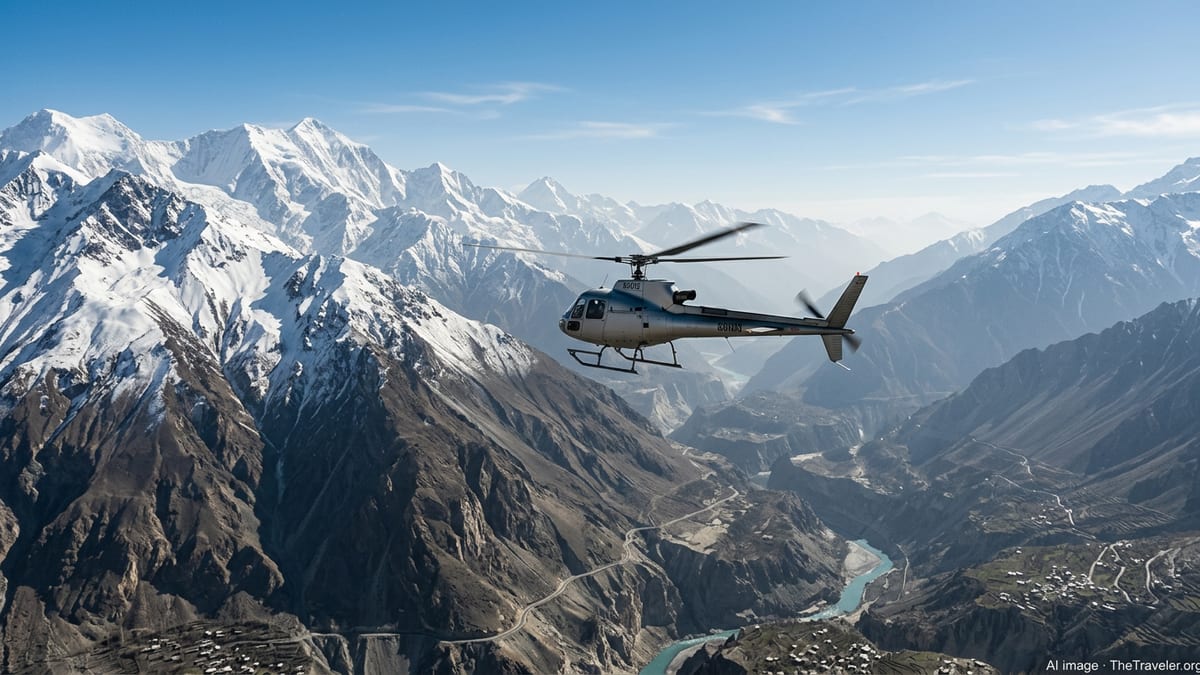
New Policy Framework Targets Remote Mountain Regions
Publicly available information from Pakistan’s national tourism planning documents and recent media coverage indicates that federal authorities are working on a framework to permit privately operated helicopter services in high-altitude regions for the first time on a structured, nationwide basis. The move is being positioned as part of a broader effort to unlock the economic potential of tourism in Gilgit-Baltistan, Khyber Pakhtunkhwa and other northern territories while strengthening rescue capabilities for trekkers, climbers and local communities.
Until now, most helicopter missions in Pakistan’s high mountains have relied heavily on military aviation assets or ad hoc charter arrangements, creating uncertainty for both commercial operators and expedition organizers. Industry information notes that private aviation companies have operated fixed-wing charters and limited helicopter support, but without a clear, tourism-focused regulatory model that would allow dedicated civilian fleets to base themselves at key gateway locations.
A national tourism strategy document circulated in late 2025 highlights the opening of mountain areas to private helicopter services and the liberalization of rescue operations as priority measures. These initiatives are framed as part of a package that also includes new standard operating procedures for tourism businesses and stronger coordination between aviation and disaster management agencies.
Reports suggest that the initial implementation phase is targeting an operational window beginning around April to May, aligning with the start of Pakistan’s main climbing and trekking season. Stakeholders expect early services to concentrate on established mountain hubs such as Gilgit, Skardu and Chitral, which already handle significant seasonal traffic for expeditions to peaks including K2, Nanga Parbat and Rakaposhi.
Tourism Access Poised for Major Shift
The planned authorization of private helicopter fleets is widely viewed as a response to long-standing logistical challenges in Pakistan’s highlands, where landslides, flooding and winter closures can isolate entire valleys for weeks. Commercial coverage of the tourism sector notes that domestic and international travelers have often faced abrupt itinerary changes due to road blockages on the Karakoram Highway and weather-related flight disruptions at small mountain airfields.
By allowing private operators to deploy modern helicopters on scheduled or on-demand services, policymakers aim to shorten travel times from regional airports to popular destinations such as Hunza, Fairy Meadows, Deosai Plateau and the Chitral and Swat valleys. Tourism analysts say that even a small fleet of reliable aircraft could significantly expand short-stay and high-end tourism, particularly among visitors who are willing to pay a premium for guaranteed access but are deterred by unpredictable ground conditions.
Provincial initiatives over the past two years have provided a preview of the potential impact. Khyber Pakhtunkhwa authorities, working with private aviation partners, have already trialed helicopter safaris and festival-linked sightseeing flights in select valleys. Media reports describe strong interest from domestic tourists, especially during flagship events and peak holiday periods, suggesting a ready market for more permanent offerings.
Industry observers caution, however, that high operating costs and seasonal weather patterns will limit the number of viable routes. They suggest that operators may initially focus on short, high-demand sectors that connect major towns with remote resorts or scenic landing sites, before expanding into more complex itineraries as experience and demand grow.
Strengthening Alpine Rescue and Safety Standards
Beyond tourism, the prospective authorization of private helicopter fleets is being closely watched by the mountaineering community, which has long called for faster, more predictable rescue options in Pakistan’s high-altitude zones. According to recent coverage by the Associated Press of Pakistan, plans for privately operated helicopters explicitly include support for search and rescue missions in regions where ground-based responses can be slow and hazardous.
Alpine and trekking organizations note that Pakistan’s climbing landscape has expanded in recent years, with more commercial expeditions attempting 8,000-meter peaks and technically demanding routes. Insurance requirements and expedition planning guidelines increasingly assume access to helicopter evacuation, yet actual availability has often depended on military schedules, weather windows and complex clearances.
The emerging framework is expected to formalize the role of civilian operators in rescue work, potentially through pre-arranged standby agreements, transparent pricing schedules and coordination protocols with provincial disaster management authorities. Observers say such changes could improve response times for injuries, altitude sickness and sudden storms, while giving expedition leaders clearer information on costs and procedures before entering the mountains.
Specialists also point out that a more robust civilian rescue capability may influence how foreign insurers assess Pakistan as a destination. More predictable evacuation options, supported by updated aviation and safety standards, could help broaden coverage for climbers and trekkers, which in turn might encourage a more diverse mix of small and mid-sized operators to include Pakistan in their itineraries.
Regulation, Environment and Community Concerns
The expansion of private helicopter activity in sensitive mountain ecosystems is prompting discussion about noise, emissions and visual impact on communities that have traditionally relied on quieter forms of transport. Environmental groups and local tourism advocates are emphasizing the need for strict zoning, altitude limits and route planning to protect wildlife habitats and preserve the character of popular trekking corridors.
Pakistan’s aviation authorities already oversee controlled airspace in the country’s northern flight information regions, but a shift from primarily military and limited charter movements to more frequent civilian tourism flights will require new layers of oversight. Analysts expect regulations on pilot training, maintenance standards, helipad construction, and operating hours to feature prominently in the final rules, alongside requirements for emergency equipment and insurance.
Some observers are drawing comparisons with Himalayan destinations where dense helicopter traffic has raised concerns about overcrowding and commercialization of remote landscapes. In response, commentators in Pakistan’s tourism sector are advocating a measured rollout, with caps on daily flights in narrow valleys, mandatory use of existing airstrips where possible, and community consultation on new landing zones.
Local stakeholders in highland districts are also focusing on how benefits are distributed. Discussions in regional forums highlight expectations around employment for local guides and ground crews, revenue sharing mechanisms for village councils that host helipads, and incentives for operators that integrate community-based tourism products into their packages.
Economic Prospects and Infrastructure Demands
Economists following Pakistan’s tourism sector suggest that authorizing private helicopter fleets could generate new investment in aviation infrastructure, hospitality and adventure services, particularly if policies remain stable over several seasons. Gateway cities such as Islamabad, Gilgit and Skardu are seen as likely hubs for maintenance facilities, training centers and logistics bases to support mountain operations.
However, the capital-intensive nature of helicopter fleets means that only a limited number of operators are expected to enter the market in the short term. Industry briefings point to high acquisition and maintenance costs, specialized crew requirements and volatile fuel prices as key constraints. These factors are expected to keep ticket prices relatively high, positioning helicopter products initially as premium offerings rather than mass-market transport.
Tourism planners argue that even a niche service can have outsized economic spillovers if it helps extend the season, supports high-value segments such as alpine expeditions and photographic tours, and improves the reliability of access for conferences, cultural events and sports competitions held in the highlands. They also note that better-connected mountain communities may find it easier to attract investors for hotels, eco-lodges and related services.
At the same time, infrastructure gaps on the ground remain a challenge. Road access to prospective helipads, reliable power supply for maintenance facilities and modern air traffic management tools suited to complex terrain are all cited as prerequisites for safe, scalable operations. Observers say that how effectively Pakistan addresses these foundations over the next few years will determine whether the planned opening for private helicopter fleets becomes a lasting feature of its mountain tourism landscape or remains a limited experiment.