

More news on this day
Flights connecting the Philippines and the Northern Mariana Islands are the latest casualties of a global jet fuel price shock, with Philippine Airlines’ Cebu–Guam route among several services to the Marianas suspended or reduced as carriers scramble to contain rising operating costs.
Get the latest news straight to your inbox!
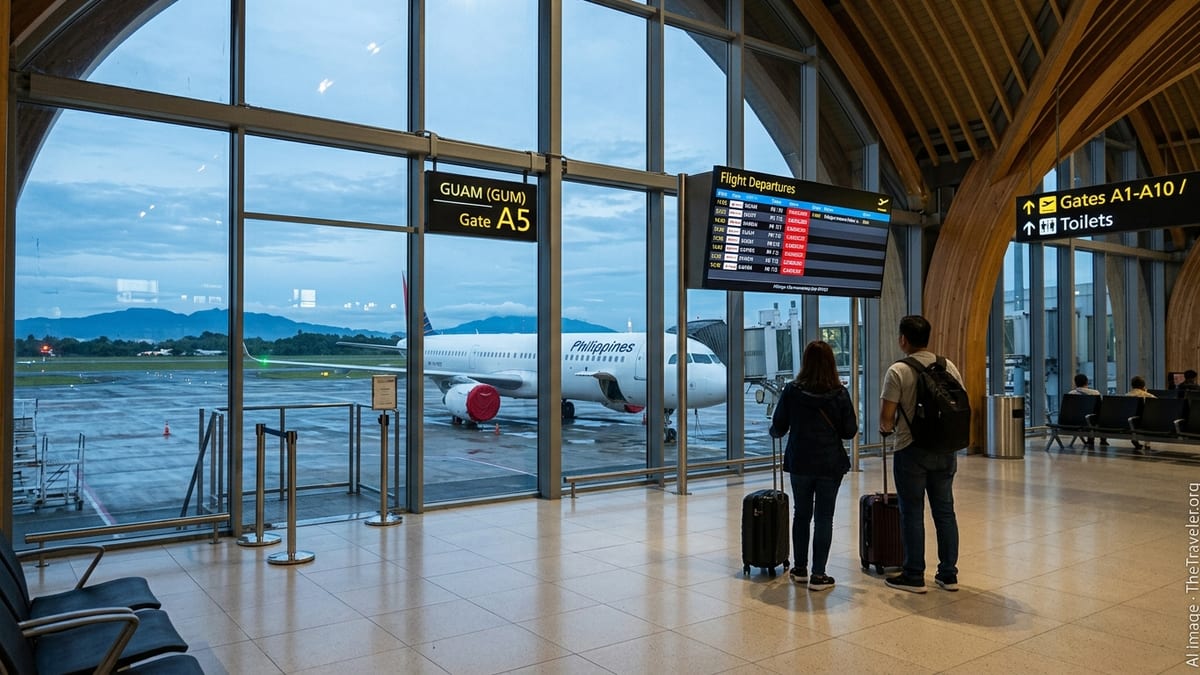
PAL’s Cebu–Guam link paused as costs surge
Publicly available schedule notices indicate that Philippine Airlines is halting its Cebu–Guam service, PR120 and PR121, from April 16, 2026, until further notice. The decision effectively severs a relatively new secondary-city connection between central Philippines and Guam, a key gateway to the wider Marianas, and pushes more traffic back through Manila and other hubs.
The Cebu–Guam route had only recently been promoted with special fares, underscoring how quickly market conditions have shifted. Less than a month before the suspension, promotional campaigns targeted leisure travelers and overseas Filipino workers, positioning Cebu as an alternative jumping-off point to Guam and onward to Saipan and other islands.
Industry observers point to the route’s slim margins and exposure to fuel prices as key factors. Regional flights over oceanic sectors offer fewer opportunities to offset higher costs with cargo or premium-cabin revenue, making them some of the first to be trimmed when fuel becomes significantly more expensive.
For travelers, the suspension means fewer options and potentially longer journeys, as many passengers will need to connect via Manila or other Asian hubs to reach Guam and the Northern Mariana Islands once the Cebu link stops operating.
Marianas network under pressure across multiple carriers
The loss of Cebu–Guam service comes on top of mounting air service challenges facing the Marianas. Local tourism bodies have previously highlighted that airlines serving Saipan and nearby islands already view the region as a marginal market, constrained by limited visitor demand, higher operating costs, and infrastructure constraints at smaller airports.
Published briefings from the Marianas Visitors Authority in recent months underline that carriers have been cautious about adding or even maintaining capacity into Saipan, Tinian, and Rota, emphasizing that routes must be commercially viable to survive. Earlier adjustments by Asian carriers, including reductions in Seoul–Saipan frequencies at selected times of year, signaled how sensitive the market is to even modest shifts in demand and cost.
The current fuel shock appears to be accelerating these structural pressures. With Philippine Airlines pausing Cebu–Guam and other regional airlines recalibrating frequencies, travelers heading to the Marianas are likely to see fewer direct options, more connections through Guam and major Northeast Asian hubs, and higher average fares.
For the islands themselves, reduced connectivity risks compounding an already fragile tourism recovery. Fewer flights not only limit visitor arrivals but can also constrain seat availability for residents who rely on air links for essential travel, from medical visits to education and business.
Jet fuel shock linked to Middle East conflict
The immediate backdrop to the latest suspensions is a steep and sudden rise in global jet fuel prices linked to escalating tensions in the Middle East. Industry monitoring and business media reports show aviation fuel climbing from pre-crisis levels of around 85 to 90 dollars per barrel to between roughly 150 and 200 dollars per barrel in recent weeks, following disruptions in a key oil export corridor.
Analysts cited by international financial and travel publications note that fuel accounts for roughly 25 to 40 percent of an airline’s operating costs, depending on the business model. When prices jump this sharply, carriers with limited hedging or thinner balance sheets are forced to react quickly, either by raising fares, adding fuel surcharges, cutting capacity, or a combination of all three.
Recent coverage from Asia and the Pacific details how airlines from New Zealand to India have already begun increasing surcharges, pruning schedules, or suspending financial outlooks for 2026. The Philippine aviation sector is part of this broader pattern, with government filings and local business reporting documenting higher fuel surcharges on tickets issued from early April and growing pressure to trim less-profitable routes.
For small island destinations such as the Marianas, which depend on relatively long-haul flights over water, the cost impact can be especially acute. Extra fuel burn on these sectors leaves little room to absorb price spikes, particularly where demand is seasonal or heavily discounted to attract price-sensitive tourists.
Philippine carriers recalibrate networks
The Cebu–Guam suspension is one element of a wider reshaping of Philippine airline networks triggered by the current energy shock. Public advisories and travel forum posts referencing official notices describe both flag carrier and low-cost operators implementing “temporary network adjustments,” ranging from frequency reductions to outright route pauses.
In regulatory filings and public statements over recent weeks, Philippine authorities have also approved higher fuel surcharge tiers for tickets booked between early and mid-April, increasing the add-on cost for many domestic and international journeys. Philippine media coverage suggests that surcharges could add several thousand pesos to some itineraries, even before base fares or ancillary fees are taken into account.
For airlines, concentrating aircraft on higher-yield or strategically important routes is a standard response to fuel volatility. By redeploying capacity from secondary city pairs like Cebu–Guam to trunk routes such as Manila–North America or Manila–Northeast Asia, carriers can target markets where demand remains resilient enough to bear higher prices.
However, this approach inevitably leaves gaps in connectivity. Routes that were introduced to support regional hubs like Cebu or to provide more direct access to smaller Pacific markets are proving harder to justify when every extra barrel of fuel significantly erodes profitability.
Travelers face higher fares and longer journeys
For travelers between the Philippines and the Marianas, the immediate effect of these changes will likely be higher fares, fewer nonstops, and more complex itineraries. According to travel industry analysis, airlines globally are increasingly choosing to pass a portion of higher fuel costs on to passengers, especially on international sectors where demand has remained comparatively strong.
Passengers who had come to rely on Cebu–Guam as a convenient alternative to flying via Manila may now need to route through other hubs, potentially adding hours and extra connections to their trips. Capacity constraints on remaining services can also lead to fuller flights and reduced flexibility when rebooking or changing dates.
Travel agents and online booking platforms are beginning to advise customers to secure seats earlier than usual for travel later in 2026, particularly on peak holiday dates or on routes with known schedule cuts. Some travelers may opt to postpone or shorten trips in response to higher overall trip costs, which in turn could further pressure airlines serving already thin leisure markets.
In the Marianas, tourism stakeholders have for months been calling attention to the need for coordinated financial and policy support to sustain air links. As fuel prices continue to climb and carriers such as Philippine Airlines pull back from routes like Cebu–Guam, the balance between commercial viability and regional connectivity is becoming an increasingly urgent issue for both aviation planners and island economies.