

Paleokastritsa is one of Corfu’s most iconic stretches of coastline, a dramatic amphitheater of pine covered cliffs, sapphire coves and hidden beaches that reward those who explore beyond the main resort. From the twin coves of Porto Timoni to the family friendly sands of Agios Spyridon, this part of the island offers a beach for every kind of traveler, whether you want an easy day with sunbeds and tavernas or a wild cove reached after a rocky hike or a boat ride.
Understanding Paleokastritsa and Its Coastline
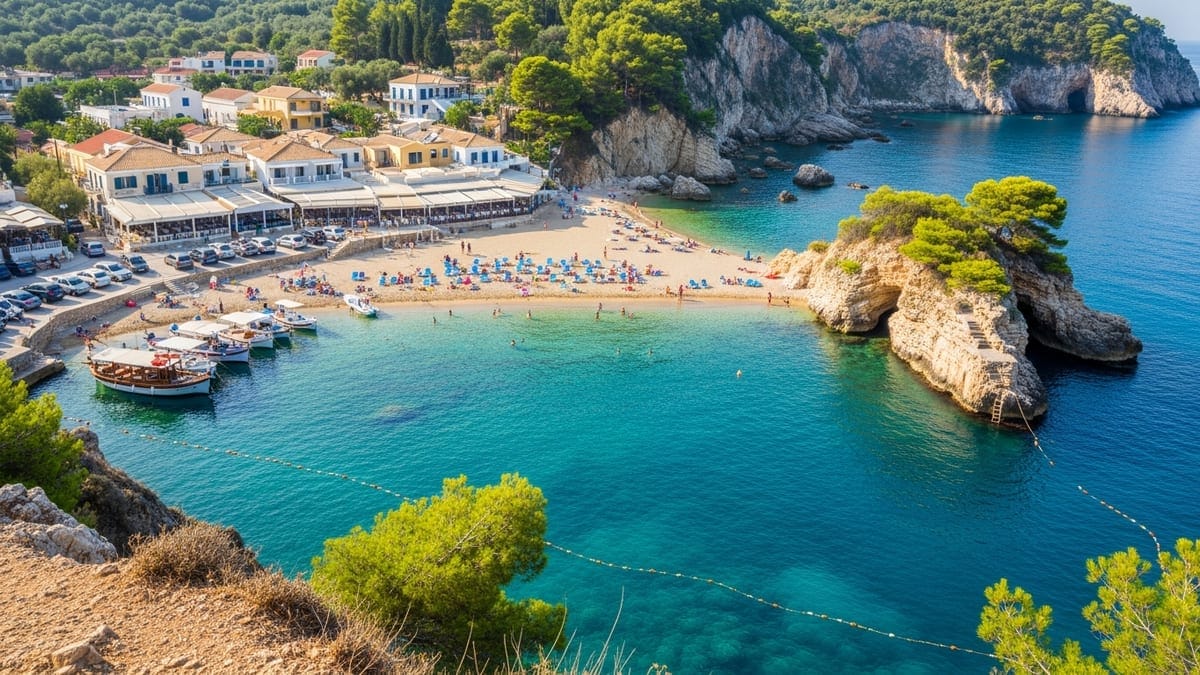
Paleokastritsa is not a single beach but a cluster of bays and small coves on Corfu’s west coast. The village curves around a series of sheltered inlets, with forested headlands and towering cliffs that continue north toward Afionas and Porto Timoni and south toward Liapades. The scenery is some of the most photographed in the Ionian Islands, and the water is known for its clarity and deep turquoise color.
The area’s geology has created a rugged coastline that combines easily accessible beaches in the main bays with remote pockets of sand and shingle tucked under cliffs. This mix is what makes a focused Paleokastritsa beaches trip so rewarding. You can start the morning with a cappuccino beside a busy, organized beach, then be swimming in near solitude in a cave or hidden cove by lunchtime.
To get the best from Paleokastritsa, it helps to understand how the beaches link together, how to move between them by road, trail and boat, and what to expect in terms of crowds, seasonality and facilities. The coastline is compact, but the character of each beach varies greatly, from child friendly shallows to steep drop offs beloved by snorkelers.
Agios Spyridon: Paleokastritsa’s Lively Main Beach
Agios Spyridon (often written Agios Spiridon) is Paleokastritsa’s central and best known beach, a small sandy crescent framed by rocky headlands and backed by tavernas, cafes and a large car park. This is the resort’s hub and the most convenient base for travelers who want easy access to facilities, boat trips and the famous monastery on the hill above.
The setting is dramatic despite the development. Steep, tree covered slopes rise from either side of the bay, and the water shifts from pale green in the shallows to inky blue further out. In high summer the beach can be busy from mid morning to late afternoon, but outside July and August it has a calmer, village by the sea atmosphere.
Swimming Conditions and Atmosphere
The sea at Agios Spyridon is famously clear and generally calm, protected by the surrounding headlands. The sandy entry and relatively shallow first few meters of water make it especially suitable for children and cautious swimmers. Even close to shore, visibility is excellent, and you will often see small fish flickering around your ankles.
In the height of summer the bay fills quickly with families, couples and day trippers from Corfu Town and cruise ships. Noise levels rise as the day goes on, and the beach feels buzzy rather than tranquil. Those wanting a quieter swim should arrive early, ideally before 10:00, or opt for a sunset dip when temperatures drop and coaches depart.
Facilities, Parking and Accessibility
Agios Spyridon is one of the best equipped beaches in western Corfu. You can expect rows of sunbeds and umbrellas for rent, freshwater showers, changing facilities and easy access to a wide choice of tavernas and snack bars just behind the sand. Beach service is common in summer, so you can order drinks and light meals without leaving your lounger.
Behind the beach sits a large organized car park charging a flat daily fee, typically around 5 euros. Spaces fill quickly in July and August, particularly between late morning and early afternoon, so early arrival is strongly advised for drivers. Some limited free roadside parking is sometimes possible on nearby streets, but regulations can change and fines are enforced, so formal lots are the safer option.
Accessibility is better here than at many other Corfu beaches. The beach is at road level, and recent seasons have seen the addition of features such as an accessible entry system in the water in some years, making sea access easier for visitors with limited mobility. Level access to cafes and the seafront promenade further improves practicality for those who prefer to avoid steps and steep slopes.
Boat Trips, Caves and Nearby Attractions
One of Agios Spyridon’s major appeals is its role as a departure point for boat trips. Small operators along the beach offer short excursions to nearby sea caves and coves, as well as self drive motor boats that allow you to explore the Paleokastritsa coastline at your own pace. Rented boats typically come with a safety briefing and clear instructions on where you are allowed to go.
From the bay you can join tours to see the Blue Eye Cave and other well known rock formations, or simply cruise along the cliffs to scout potential swimming stops. For those staying in the area, hiring a boat for a half day has become one of the classic Paleokastritsa experiences, particularly for escaping peak time crowds on the main beach.
Above Agios Spyridon, the 13th century monastery of the Virgin Mary crowns the headland, a short but steep walk from the seafront. The viewpoint from near the monastery is one of the most famous panoramas on Corfu, taking in the main bays of Paleokastritsa and, on clear days, stretches of coast further north and south.
Porto Timoni: Corfu’s Iconic Twin Cove Adventure
Although technically just north of Paleokastritsa, Porto Timoni is so frequently combined with a stay in the resort that no beaches guide to the area would be complete without it. Viewed from the cliffs above, this double sided tombolo looks almost unreal: a narrow spine of land beside Afionas village, with a beach and bay on each side and turquoise water stretching out in both directions.
Porto Timoni is a very different proposition from Agios Spyridon. It is wild, undeveloped and requires effort to reach. There are no services on the shore, paths are rocky and steep, and there is no natural shade once you arrive. In return, you get one of the most memorable swims on the island and a palpable sense of being far from the resort crowds.
Reaching Porto Timoni: Hike vs Boat
Most visitors access Porto Timoni from the hilltop village of Afionas, about 30 to 40 minutes’ drive from Paleokastritsa depending on traffic. Several paid car parks serve beachgoers, usually operating on a daily fee structure of a few euros. In peak months these small lots fill early, and many latecomers end up parking further back along the road into the village.
From Afionas, waymarked paths and informal tracks lead down to the twin coves. The hike typically takes around 30 to 45 minutes, depending on fitness and conditions. Sections of the trail are steep, with loose stones and exposed rock, and in strong sun the descent and subsequent climb back up can feel testing even for experienced walkers. Sturdy footwear, plenty of water and sun protection are essential.
For those unwilling or unable to tackle the hike, it is often possible to reach Porto Timoni by water taxi or small boat from the broader bay of Agios Georgios Pagon below Afionas. This option removes the strenuous climb but still involves getting in and out of boats on a pebble shore and may depend on sea conditions. It is generally arranged locally, often on the day.
What to Expect on the Beach
Porto Timoni is an unorganized, natural beach. There are no loungers, umbrellas, toilets, showers or formal waste facilities. You must bring everything you need, from drinking water and snacks to shade such as a small beach tent or umbrella if you plan to stay more than a short time. You must also take all rubbish back out with you.
The twin coves differ in character. One side tends to be calmer and slightly warmer, shaped like a miniature bay, while the other opens more broadly to the sea and can feel cooler and deeper almost immediately off the shore. Both have a mixture of pebbles and coarse sand, and both offer excellent visibility in the water, which can range from light emerald to deep blue depending on the sun angle.
Because of the beach’s popularity, it no longer feels “secret,” particularly in late morning and early afternoon in July and August. However, it is still dramatically less developed than Paleokastritsa’s main bays, and arriving very early or staying until close to sunset can deliver quieter moments and softer light that highlights the color of the water and surrounding hills.
Safety, Timing and Practical Tips
Porto Timoni has no lifeguards and limited mobile signal in some spots. Swimmers should stay conscious of their limits, watch for boat traffic outside the coves and be especially cautious when the sea is unsettled. The steep climb back to Afionas can be significantly harder in intense afternoon heat, so plan your timing around the coolest parts of the day where possible.
In summer, an early start is strongly recommended. Aim to arrive in Afionas by 8:30 to 9:00 to secure a convenient parking space and descend while the trail is still shaded in parts. Many visitors carry lightweight water shoes to deal with hot stones and occasional sharp rock underfoot in the shallows. Snorkeling gear is worthwhile, as the rocky seabed around the edges of both coves hosts plenty of marine life.
If you are planning a combined itinerary from Paleokastritsa, it is practical to dedicate at least half a day to Porto Timoni, allowing for the drive there and back, the hike and time on the beach. Those staying longer in the area might choose to visit on a different day from their main Paleokastritsa beach hopping to avoid fatigue.
Paleokastritsa’s Cluster of Bays and Beaches
Around the main village of Paleokastritsa is a string of individual beaches, each occupying its own cove. While Agios Spyridon takes center stage, neighboring inlets provide alternatives that can be quieter or better suited to particular activities. All are within a few minutes’ drive of each other, and confident swimmers or boat renters can move between them by sea as well.
Most of these beaches share certain characteristics: deep clear water, pebbly or coarse sand shores and steeply rising hills above. What distinguishes them is their level of development, crowd profile and ease of access from the main road. Exploring several over the course of a stay is one of the pleasures of basing yourself in Paleokastritsa.
Agios Petros Beach
Just west of the main bay, Agios Petros occupies a compact cove and offers a mix of pebbles and coarse sand that continues into the shallow water. The backdrop is a green slope dotted with villas and small hotels, and the bay’s relatively enclosed shape provides shelter from stronger swells that can occasionally reach more exposed stretches of the coast.
Facilities here are geared toward convenience. Organized sunbeds and umbrellas line much of the shore, and a bar provides drinks and snacks at resort prices. The emphasis is on comfort rather than seclusion, but the setting remains undeniably beautiful, particularly in the late afternoon when the cliffs begin to cast shade over parts of the beach.
Smaller Coves and Swim Stops
Between the main bays of Paleokastritsa are tiny unnamed inlets and rocky platforms used as informal swim spots by locals and repeat visitors. Some are reached by short footpaths from the road, others more easily by boat. They offer opportunities to escape the densest rows of umbrellas for pockets of rock and small pebble patches with direct ladders or natural steps into deep water.
These mini coves suit confident swimmers and snorkelers more than families with very young children, as access can involve clambering over rocks and dealing with sudden depth changes. On calm days, however, they deliver some of the most atmospheric swims on this part of Corfu, with schools of fish visible beneath you and the sound of traffic largely replaced by waves and cicadas.
Reaching Remote Beaches by Boat from Paleokastritsa
One of the standout advantages of staying in Paleokastritsa is the concentration of boat rental operators based in its bays. The coastline to the north and south is carved with caves, hidden coves and beaches that are very difficult or impossible to reach by land. Renting a small self drive boat or joining a local excursion opens up a side of the region that most day trippers never see.
Recent seasons have seen boat rental remain highly popular, with a range of vessels that do not require a license available for half day or full day hire. Prices fluctuate by year, season and boat size, but visitors can expect to pay a premium in July and August compared with shoulder months such as May, June and September. Fuel is usually charged separately at the end of the trip.
Hidden Beaches: Chomi, Stelari and Beyond
To the south of Paleokastritsa, the cliffs shelter several remote beaches, including the well known Chomi, often nicknamed Paradise Beach, and Stelari. These stretches of pale shingle and sand backed by sheer rock faces feature prominently in promotional photos of Corfu’s west coast and are among the first targets for private boat renters heading out of the main bay.
Access regulations around some of these beaches have tightened in recent years in response to rockfall risk, with visitors often discouraged or prohibited from staying directly on the shore at certain spots. Even when landings are restricted, however, spending time moored just offshore still allows you to swim in the exceptionally clear water and enjoy the towering cliffs from a safe distance.
Other small beaches and caves in the area, sometimes unnamed on tourist maps, can be discovered with guidance from rental companies, which commonly mark recommended routes and safe anchorages on waterproof charts. These quieter alcoves can be ideal mid day escape points when the main Paleokastritsa beaches are busiest.
How Boat Rental Works in Paleokastritsa
Operators in Paleokastritsa typically offer a briefing before departure, covering basic boat handling, navigation boundaries, safety rules and local wind patterns. For visitors with no prior boating experience, this orientation is invaluable and generally included in the hire cost. Boats are usually equipped with life jackets, sun canopies and ladders for getting back on board after swimming.
Half day rentals, often four hours, are common and may be sufficient to explore a handful of nearby beaches and caves at a relaxed pace. Full day options suit those who want to linger and perhaps travel a little further along the coast. In high season, advance reservations are highly recommended, especially for mornings and weekends, although some smaller outfits still handle bookings primarily in person.
Conditions can change over the course of the day, with afternoon winds sometimes making the sea choppier. For this reason, first time renters and families with young children often find a morning slot more comfortable. Regardless of timing, it is wise to carry extra water, high factor sunscreen and a light covering for those sensitive to sun exposure, as even with canopies it is easy to underestimate reflection from the water.
Planning Your Paleokastritsa Beach Itinerary
With so many beaches and ways to access them, it pays to plan at least a rough structure for your time in Paleokastritsa and around Porto Timoni. The goal is to balance convenience, adventure and rest, while accounting for crowds and midday heat. A well designed itinerary lets you experience the region’s headline spots without feeling rushed or constantly battling for space on the sand.
Seasonality should guide your decisions. In the core summer months of July and August, early starts and siesta style breaks are almost essential. In shoulder months, you have more flexibility and can often visit popular beaches at more spontaneous times without sacrificing comfort or atmosphere.
Suggested One to Three Day Beach Plans
Travelers with a single full day in the area might focus on Paleokastritsa itself. Begin with an early swim at Agios Spyridon before the crowds arrive, followed by a short boat cave tour mid morning. After lunch at a taverna on the waterfront, shift to one of the neighboring coves such as Agios Petros for a quieter afternoon and end with a sunset walk up to the monastery viewpoint.
With two days, you can dedicate one primarily to Porto Timoni. Drive to Afionas early, descend to the twin coves for swimming and snorkeling, and climb back before the harshest afternoon sun. Use the later part of the day to explore Afionas village or return to Paleokastritsa for a relaxed evening swim in a nearby bay.
A three day itinerary allows time to add a half day private boat rental, focusing on hidden beaches to the south of Paleokastritsa such as Chomi and Stelari, as conditions and regulations permit. Balance that with another half day simply enjoying the main resort beach scene, perhaps with a final leisurely lunch overlooking the water before departure.
What to Pack and Practical Considerations
Beach hopping in Paleokastritsa requires a bit more preparation than a simple resort holiday, especially if you plan to hike to Porto Timoni or explore by boat. Beyond standard swimwear and light clothing, lightweight hiking shoes or sturdy sandals are highly recommended for rocky paths. Flip flops alone are not suitable for the Porto Timoni descent or many of the informal cliffside viewpoints.
Snorkeling equipment, while not essential, greatly enhances the experience, given the clarity of the water and abundance of rocky seabeds. A compact dry bag is useful for keeping phones, wallets and small cameras safe on boats and pebble shores. In the peak of summer, a travel umbrella or foldable shade structure can transform your comfort level on unorganized beaches like Porto Timoni.
Finally, always factor in hydration. The combination of strong sun, reflective water and physical exertion on hikes or while swimming can lead to dehydration more quickly than expected. Carry more water than you think you need, particularly for outings to beaches without services or on boat trips where refill options are limited.
The Takeaway
Paleokastritsa and its neighboring stretches of coastline deliver one of the richest beach experiences in Corfu, combining dramatic landscapes with a surprisingly varied choice of bays. Agios Spyridon offers easygoing days with full facilities and quick access to cafes, boat trips and viewpoints. Porto Timoni rewards effort with an unforgettable double cove and wild, service free shores. Between and beyond them lie organized resort beaches, tiny swim spots tucked into rocks and remote coves best reached by boat.
By understanding how these beaches fit together and planning around crowds, heat and your own appetite for adventure, you can craft an itinerary that moves effortlessly between comfort and exploration. Whether you spend your days gliding over glassy water in a rented boat, hunting for shade on a hidden pebble shore or simply watching the changing colors of the bays from a taverna terrace, the Paleokastritsa area is likely to become the standard by which you judge future coastal trips in Greece.
FAQ
Q1. Is Paleokastritsa a good base for exploring Porto Timoni and other nearby beaches?
Paleokastritsa works very well as a base, offering more accommodation, dining options and services than Afionas while still being within roughly 30 to 40 minutes’ drive of Porto Timoni and a short drive of many small coves. From Paleokastritsa you can also rent boats and join organized trips, making it easier to reach remote beaches along the coast.
Q2. How difficult is the hike to Porto Timoni for the average visitor?
The hike from Afionas to Porto Timoni is short in distance but can feel demanding, especially in heat. Expect 30 to 45 minutes each way on a rocky, occasionally steep path with loose stones. Most reasonably fit visitors manage it without issue using proper footwear and carrying sufficient water, but it is not suitable for strollers, very young children on foot or those with significant mobility limitations.
Q3. Can I visit Porto Timoni with children?
Families do visit Porto Timoni, but you should realistically assess your children’s age and stamina. The descent and ascent can be tiring, and there are no facilities, shade or lifeguards on the beach. School age children who are used to walking and comfortable swimming in natural conditions often enjoy it, but infants and toddlers are better suited to more accessible beaches in Paleokastritsa.
Q4. Do I need a boating license to rent a boat in Paleokastritsa?
Many of the small motor boats offered in Paleokastritsa are specifically chosen so that they do not require a boating license under Greek regulations. Rental companies provide a safety briefing and basic handling instructions before departure. Larger or faster boats with more powerful engines may require a license, so it is important to confirm details when booking.
Q5. When is the best time of year to visit Paleokastritsa for beach activities?
Late May, June and September typically offer the best balance of warm sea temperatures, reliable sunshine and moderate crowds. July and August are the hottest and busiest months, with more congestion on the main beaches and higher accommodation and boat rental prices. In shoulder months, you gain more space on the sand and often gentler daytime temperatures.
Q6. Are there sandy beaches in Paleokastritsa suitable for small children?
Agios Spyridon is the main sandy option in Paleokastritsa and is particularly popular with families because of its gentle entry into the water, organized sunbeds and proximity to cafes and facilities. Some nearby coves have a mix of pebbles and coarse sand but feature deeper water immediately off the shore, making them better suited to confident swimmers than toddlers.
Q7. How crowded do Paleokastritsa beaches get in summer, and how can I avoid the worst of it?
In July and August, the main beaches, especially Agios Spyridon, can become very crowded from late morning to mid afternoon as tour coaches and day trippers arrive. To avoid the densest crowds, aim for early morning swims before 10:00 or late afternoon visits after 17:00, consider less central coves or small rocky swim spots, and schedule popular activities like boat trips at the start of the day.
Q8. Is snorkeling worthwhile around Paleokastritsa and Porto Timoni?
The clear water and rocky seabeds in this part of Corfu make snorkeling particularly rewarding. While you will not find coral reefs, you can expect good visibility, underwater rock formations and plenty of small fish, especially along the edges of coves and near submerged rocks. Bringing your own mask and snorkel is recommended, as rental availability can vary and personal gear ensures a better fit.
Q9. What should I bring for a day at unorganized beaches like Porto Timoni or remote coves reached by boat?
For unorganized beaches, you should bring ample water, snacks or a packed meal, sun protection including hats and high factor sunscreen, a lightweight shade option if you plan to stay for several hours, basic first aid items and bags for carrying your rubbish out with you. Water shoes or sturdy sandals are useful for walking on hot stones and uneven seabeds.
Q10. Is it possible to visit Paleokastritsa as a day trip from Corfu Town, or should I stay overnight?
A day trip from Corfu Town to Paleokastritsa is entirely feasible, with road connections and bus services making it a common excursion. However, staying one or more nights allows you to enjoy early mornings and evenings when the resort feels calmer, explore multiple beaches at a more relaxed pace and fit in experiences such as Porto Timoni hikes or private boat rentals without rushing.