

High above the turquoise bays of Corfu’s northwest coast, Paleokastritsa Monastery blends whitewashed cloisters, the scent of wild herbs and candle wax, and some of the finest sea views in Greece. For many travelers it becomes the quiet, contemplative highlight of their time on the island, a place where centuries of devotion meet Ionian light and dramatic cliffs.
Understanding Paleokastritsa Monastery’s History
Paleokastritsa Monastery, also known as the Monastery of the Virgin Mary or Theotokos Monastery, traces its origins to the early 13th century, when a small monastic community settled on this cliff-top headland. Most sources place its foundation around 1225 to 1228, during a turbulent era when Corfu changed hands between Byzantine, Venetian, and later Western powers. The choice of such a remote, elevated site reflected both strategic considerations and the monks’ desire for seclusion and contemplation above the sea.
Although the monastery’s foundation is medieval, the buildings you see today largely date from the 18th century. Earlier structures were damaged by time, weather, and invasions, and successive generations rebuilt in stages, leaving a patchwork of architectural details that span centuries. Walking through the complex, you can sense the layering of history in thick stone walls, vaulted passageways, and simple cells that still house a small community of monks.
The monastery’s dedication to the Virgin Mary is central to its identity. Icons and frescoes inside the church celebrate the Theotokos as protector of seafarers and islanders, a theme that resonates strongly in this exposed coastal setting. Over the years, sailors, fishermen, and villagers from across Corfu have come here to pray for safe journeys, good harvests, and protection from storms, weaving the monastery into the island’s collective memory.
Religious life here remains active, not merely symbolic. Monks follow a daily rhythm of prayer, work, and hospitality, tending gardens, overseeing the small museum, and welcoming visitors from around the world. As a guest, you are stepping into a living spiritual space rather than a preserved monument, and that continuity of worship is part of what lends Paleokastritsa its quiet intensity.
Architecture, Art and the Monastery Museum
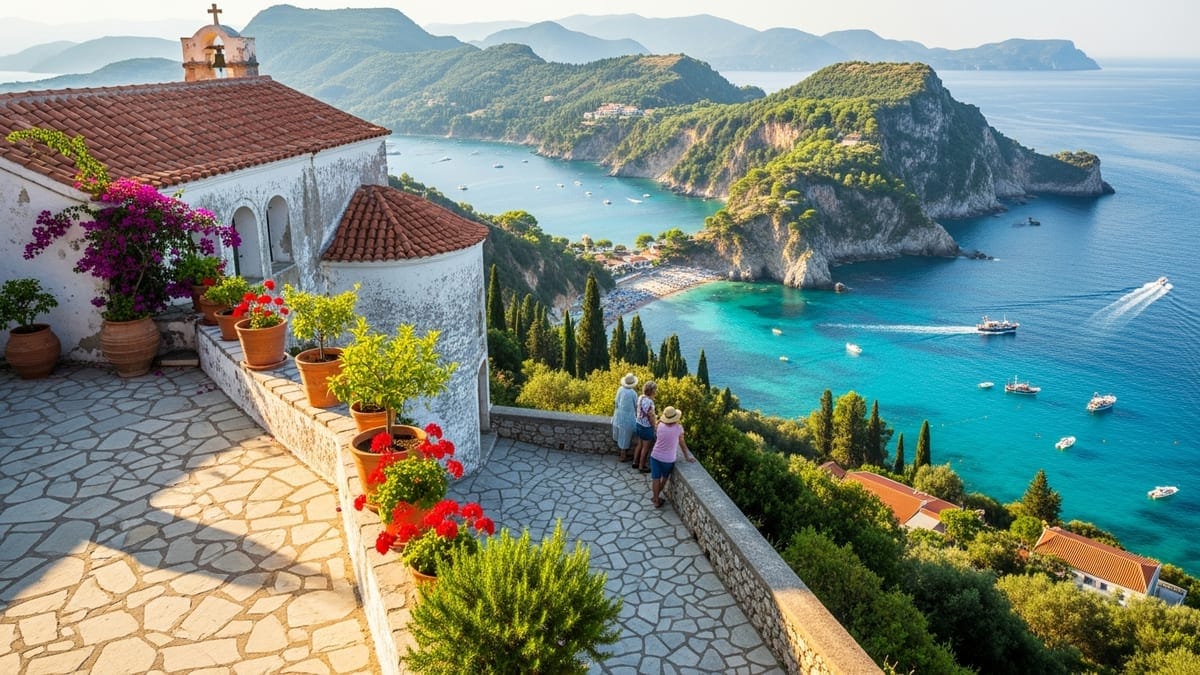
Approaching the entrance, you pass under a stone archway draped with bougainvillea and fragrant jasmine, emerging into a courtyard that feels intimate and sheltered despite the wild coast outside. The architecture is classic Ionian monastic style: thick stone walls, terracotta roof tiles, arcaded walkways, and small wooden doors leading to cells and storerooms. Bright pots of geraniums and herbs soften the stone and invite you to linger.
The church, at the heart of the complex, has a richly decorated interior that contrasts with the simplicity of the cloisters. Inside, you will find a gilded iconostasis, hanging oil lamps, and a dense array of icons that glow softly in the filtered light. Many of these images are post-Byzantine works, some dating to the 16th and 17th centuries, depicting Christ, the Virgin Mary, and a host of saints venerated in the Greek Orthodox tradition. Even if you are not religious, the craftsmanship and atmosphere are striking.
One of the monastery’s most intriguing corners is its small museum. Here, glass cases display Byzantine and post-Byzantine icons, ecclesiastical vestments, manuscripts, and silverware that trace the monastery’s role in local religious life. Among the more unusual exhibits is the large skeleton of a whale, said to have been killed by a fisherman in the 19th century. It is a surprising maritime relic that underlines the community’s deep connection to the surrounding sea.
On the lower level you can often see the old olive press, a reminder that monastic communities traditionally relied on agriculture and olive oil production for sustenance. Nearby, small rooms sell locally produced items such as wine, liqueurs, preserves, and religious souvenirs. While simple, these spaces help visitors visualize the monastery not only as a spiritual center but also as an economic and social hub for the wider Paleokastritsa area over the centuries.
Spectacular Views and Atmosphere
What truly sets Paleokastritsa Monastery apart, even in an island filled with scenic viewpoints, is its commanding position over one of Corfu’s most beautiful stretches of coastline. From the terraces and viewpoints around the complex, you look down onto a cluster of bays with vivid blue-green water, steep cliffs clad in pines and cypress, and tiny boats tracing white wakes across the surface. On clear days, the horizon feels limitless, with the Ionian Sea stretching away in layers of blue.
Several vantage points reward a slow circuit of the grounds. From the main terrace near the entrance, you get a sweeping, almost cinematic panorama of Paleokastritsa’s beaches and rocky headlands. A path leading toward the small cemetery behind the monastery reveals another spectacular viewpoint, slightly quieter and especially atmospheric in the late afternoon when the light softens and the cliffs glow gold.
Beyond the visual drama, it is the atmosphere that many visitors remember most vividly. The monastery’s gardens are carefully tended, with roses, bougainvillea, citrus trees, and aromatic shrubs adding color and fragrance to the stone courtyards. Although tour groups can create short bursts of noise, there are usually pockets of stillness where you hear only the wind in the cypress trees and the distant wash of waves below.
To fully appreciate this sense of peace, it is worth slowing down your visit. Rather than hurrying through to snap a few photos, consider sitting for a few minutes on a bench in the courtyard or by the outer walls. The combination of sea air, monastic chanting drifting faintly from the church during services, and the gentle bustle of monks and visitors creates a layered, contemplative mood that photographs alone cannot capture.
Practical Visiting Information
Paleokastritsa Monastery is open to visitors daily, with hours that typically run from early morning to early afternoon and again in the late afternoon. Current sources indicate opening times around 7:00 to 13:00 and 15:00 to 20:00 each day, though schedules can shift slightly depending on the season, religious holidays, or special services. It is wise to check the most up to date information locally once you arrive on Corfu or through your accommodation, especially if you are visiting in early spring, late autumn, or during major Orthodox feast days.
Admission to the monastery is free, which reflects its identity as a place of worship rather than a commercial attraction. At the exit you will find a donation box, and contributions are appreciated to support the upkeep of the buildings, gardens, and museum. For travelers, this makes the monastery one of the best-value experiences on the island, combining art, history, and world class views at no formal cost.
The dress code is a crucial aspect of planning your visit. As an active Greek Orthodox monastery, it expects modest clothing from all visitors. Shoulders and knees should be covered, so sleeveless tops, short skirts, and short shorts are not appropriate inside. Men are generally asked to avoid sleeveless shirts; women should ensure shoulders and upper legs are not bare. If you arrive without suitable attire, staff usually provide wraps or skirts at the entrance to borrow, but bringing your own light scarf or shawl is more comfortable in summer and ensures you are prepared.
Photography is typically allowed in the outdoor areas and courtyards, where the views and architecture are among the most photographed in Corfu. However, rules can be stricter inside the church and museum, where flash or any photography may be prohibited to protect icons and preserve the sanctity of worship. Check signs or ask discreetly if you are unsure, and always avoid taking photos during active services or of monks without their explicit permission.
Getting There, Parking and Accessibility
Paleokastritsa lies on Corfu’s northwest coast, roughly 25 kilometers from Corfu Town. By car, the journey usually takes about 30 to 40 minutes, following a scenic road through olive groves and small villages before you arrive at the resort area clustered around the bays. The final approach to the monastery winds uphill through dense greenery, with glimpses of the sea appearing through the trees as you climb.
If you are staying in Corfu Town or another major resort, one of the simplest ways to reach Paleokastritsa is by rental car or taxi. Driving gives you flexibility to explore nearby beaches and viewpoints, including the famous Angelokastro fortress a short distance away. Road conditions are generally good, though the last stretch up to the monastery can feel narrow and busy in high season, so drive cautiously and expect to use low gears on the incline.
Parking options vary depending on how close you want to be to the entrance and the time of day. There are paid parking areas near the lower part of the resort and sometimes near the start of the uphill road leading to the monastery. Recent visitor reports mention charges of a few euros in some lots, particularly close to the main beaches. Many travelers choose to park in an intermediate free or low-cost area partway up the hill and then continue on foot for the final ascent, which usually takes about 10 to 15 minutes and offers excellent views along the way.
For visitors relying on public transport, Corfu’s Green Buses operate regular services between Corfu Town and Paleokastritsa, especially from spring through autumn. The bus stop is near the main resort area at the bottom of the hill; from there you can either walk up to the monastery or take a short taxi ride if the climb feels daunting. The walk is uphill but manageable for most reasonably fit travelers, though the combination of summer heat and gradients means you should bring water and take your time.
Best Time to Visit and Seasonal Considerations
While Paleokastritsa Monastery is open throughout much of the year, the experience you have will be shaped by the season and time of day you choose. From late May through September, Corfu’s high season brings warm to hot temperatures, long sunny days, and a steady flow of visitors. During these months the monastery can become quite busy, particularly in the late morning when tour buses arrive and independent travelers head up after a few hours on the beach.
If your schedule allows, aim to visit early in the morning, shortly after the monastery opens, or later in the afternoon after 16:00. At these times, the light is softer, temperatures are more comfortable, and crowds tend to be thinner. Early morning visits can feel particularly special, as you might hear the end of monastic services and share the courtyards with just a handful of other guests. Late afternoon offers golden-hour light that is ideal for photography, with the cliffs and sea taking on deeper tones.
Spring and autumn are especially rewarding seasons for travelers who prioritize atmosphere over beach time. From April to early June and from late September into October, temperatures are milder, and the hills around Paleokastritsa are lush and green. The monastery is generally less crowded, making it easier to appreciate the art and architecture at a gentler pace. Do keep in mind that bus timetables are more limited outside peak season, and some nearby tourist services, such as boat rentals or beach facilities, may operate on reduced schedules.
Winter, from November to March, is the quietest period on Corfu. The island can feel very local and atmospheric, with moody skies and occasional storms sweeping in from the Ionian. While the monastery may still welcome visitors, opening hours can be shorter, and certain days may be closed to tourists during major religious observances. If you are traveling in winter, always check locally in Corfu Town or with your accommodation for the latest visiting times and transport options.
Combining the Monastery with Paleokastritsa’s Other Highlights
One of the advantages of visiting Paleokastritsa Monastery is its proximity to many of Corfu’s classic coastal experiences. After exploring the cloisters and courtyards, you can descend to the resort area below and spend the rest of the day swimming, boating, or eating by the water. The contrast between the monastery’s quiet spiritual atmosphere and the lively beach scene below gives you a rich cross-section of Corfu life in a single outing.
The main beaches of Paleokastritsa are pebbly, with exceptionally clear water that ranges from bright turquoise to deep sapphire depending on the light. Sunbed and umbrella rentals are widely available in summer, and water is usually calm enough for relaxed swimming. Boat trips to nearby sea caves and hidden coves depart regularly from the small piers, offering another perspective on the cliffs you have just admired from above at the monastery.
Food and drink options are plentiful, from casual beach bars to traditional tavernas with terraces overlooking the bays. Many visitors like to time their monastery visit for the cooler morning hours, then reward themselves later with a leisurely lunch by the sea. Grilled fish, Greek salads, and local Corfiot specialties such as sofrito and pastitsada often feature on menus, washed down with house wine or a cold beer while you gaze back up at the monastery perched above.
If you are keen to explore further, the surrounding region offers excellent opportunities for hiking, scenic drives, and cultural visits. Angelokastro, a Byzantine castle perched on an even higher crag above the coast, is a short drive away and provides another set of sweeping views. A loop that takes in both the castle and the monastery, along with stops at village viewpoints and beaches, makes an outstanding day trip from Corfu Town or the central resorts.
Cultural Etiquette and Respectful Visiting
Visiting Paleokastritsa Monastery means entering a space that is meaningful not only to tourists but also to the monks who live there and the local community who worship there. A little cultural sensitivity goes a long way toward ensuring that this site remains welcoming for visitors and comfortable for those who call it home. Modest dress is one part of this, but behavior is just as important as clothing.
Keep voices low in the courtyards and especially in the church. Even if no service is taking place, people may be praying, lighting candles, or reflecting quietly. Avoid using mobile phones except for taking photos in permitted areas, and mute any alert sounds before entering. If a service is underway when you arrive, stand discreetly at the back rather than trying to move around for photographs, and leave if the space becomes crowded.
Monks and staff are generally courteous but may be reserved, as their primary focus is religious life rather than tourism. A friendly nod, a quiet greeting, and respectful body language are appreciated. It is best not to photograph monks without explicit permission, and you should refrain from entering areas that are clearly private or marked as off limits. Remember that behind the visible spaces there are cells, refectories, and workrooms where daily monastic routines unfold.
Finally, consider making a small donation or purchasing a locally produced item from the monastery’s shop if you have enjoyed your visit. These contributions help fund maintenance, restoration projects, and charitable activities associated with the monastic community. Supporting the monastery in this way is a tangible expression of gratitude for the chance to experience such a beautiful and spiritually charged place.
The Takeaway
Paleokastritsa Monastery is more than a viewpoint or a historic monument. It is a living monastery that has watched over Corfu’s northwest coast for centuries, a sanctuary of whitewashed walls and quiet cloisters framed by some of the island’s most dramatic scenery. Visitors who give it time, approaching with curiosity and respect rather than a rush for photographs, often find that it becomes a touchstone of their journey, a place where the rhythm of travel slows and the essence of Corfu comes into focus.
Whether you arrive by winding road, bus, or taxi, the experience is remarkably accessible: free entry, clear visiting guidelines, and a setting that rewards travelers of all ages, from solo explorers and couples to families with older children. Combined with the beaches, boat trips, and tavernas of Paleokastritsa below, a visit here can anchor a perfect day on the island. Plan for the cooler hours of morning or late afternoon, dress modestly, move gently, and let the views and atmosphere work on you. In a destination renowned for its coastline, Paleokastritsa Monastery offers something rarer: a meeting point of nature, history, and spiritual life that lingers long after you leave.
FAQ
Q1. Where is Paleokastritsa Monastery located on Corfu?
Paleokastritsa Monastery sits on a rocky headland above the bays of Paleokastritsa on Corfu’s northwest coast, about 25 kilometers from Corfu Town. It overlooks several small beaches and coves, making it easy to combine with a day by the sea.
Q2. What are the current opening hours?
Recent information indicates that the monastery is generally open daily from around 7:00 to 13:00 and from 15:00 to 20:00, though hours can change with the season and on major religious feast days. Always confirm locally in Corfu Town or with your accommodation shortly before your visit.
Q3. Is there an entrance fee?
Entry to Paleokastritsa Monastery is free. However, there is a donation box near the exit, and voluntary contributions help maintain the church, museum, and gardens. Many visitors choose to leave a small amount or support the monastery by buying items from its shop.
Q4. What should I wear to visit the monastery?
Modest dress is required. Shoulders and knees should be covered for both men and women, so avoid sleeveless tops, short shorts, and short skirts. If your clothing is not suitable, staff usually provide wraps or skirts at the entrance, but bringing your own light scarf or shawl is more comfortable in summer.
Q5. How do I get to the monastery without a car?
From Corfu Town, the Green Bus service runs regular routes to Paleokastritsa, especially between spring and autumn. The bus stops near the resort area; from there you can either walk up the hill to the monastery in about 10 to 15 minutes or take a short taxi ride for the final ascent.
Q6. Is parking available near the monastery?
Yes, there are paid parking areas in the lower resort zone and sometimes closer to the road leading up to the monastery. Some travelers park in intermediate areas partway up the hill, which may be free or cheaper, then walk the remaining distance. In high season, arrive early to secure a convenient space.
Q7. How much time should I allow for a visit?
Most visitors spend between 45 minutes and 1.5 hours at the monastery, depending on how long they linger in the church, museum, and viewpoints. If you enjoy photography, art, or quiet reflection, plan for the longer end of that range, then allow extra time to explore the beaches and tavernas below.
Q8. Can I take photos inside the church and museum?
Photography is usually fine in the outdoor areas and courtyards, but restrictions may apply inside the church and museum. Flash is almost always prohibited, and in some cases any indoor photography is discouraged. Follow posted signs and staff guidance, and avoid taking pictures during services or of monks without permission.
Q9. Is the monastery suitable for children and people with limited mobility?
The monastery can be enjoyable for children who are able to walk steadily and appreciate views and short periods of quiet. However, there are steps, uneven surfaces, and sloping paths that may be challenging for strollers or visitors with limited mobility. If accessibility is a concern, consider a taxi up the hill and allow extra time to move around carefully.
Q10. What else can I do nearby after visiting the monastery?
After your visit, you can swim at Paleokastritsa’s bays, rent a small boat or join a tour to explore sea caves, or enjoy a meal at a taverna overlooking the water. With more time, you can drive or take a tour to Angelokastro fortress for another set of panoramic views, or explore nearby villages and coastal viewpoints for a full day of Corfu’s northwest coast.