

More news on this day
Hundreds of travelers were left stranded or severely delayed on Sunday as a fast‑intensifying winter storm slamming the US Northeast forced airlines to cancel 69 flights and delay 83 more at Palm Beach International Airport, disrupting key routes to New York, Boston, Philadelphia and other major cities.
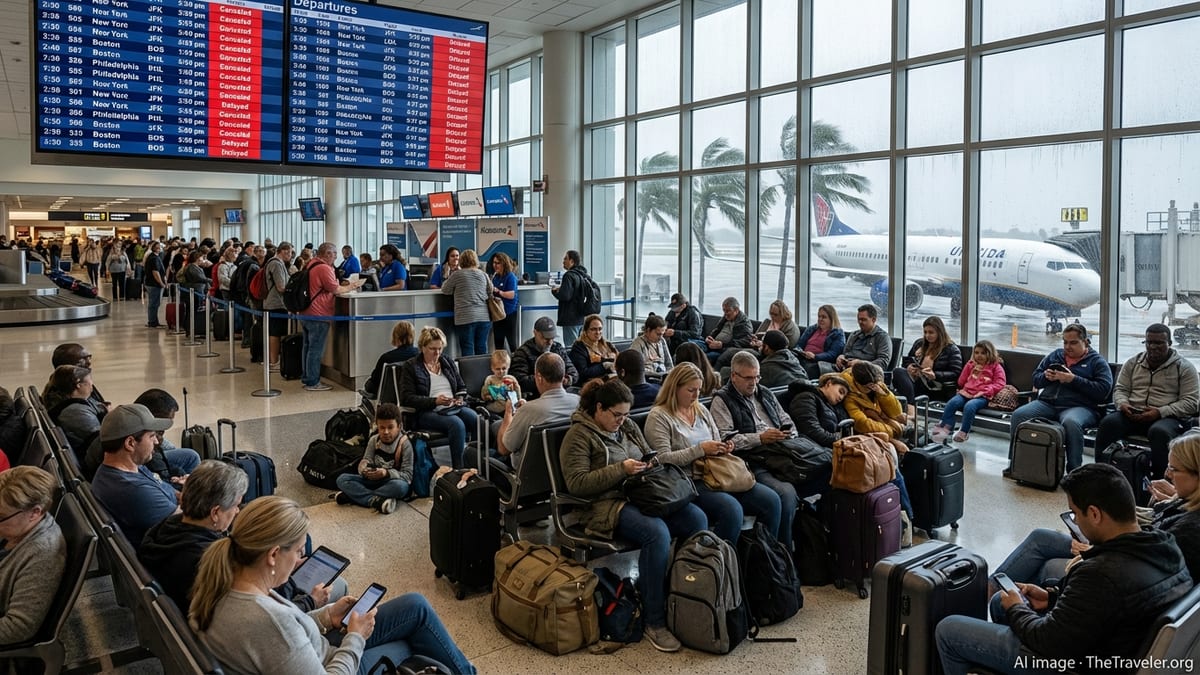
Storm Hernando Turns Northeast Skies Hazardous
The wave of disruption at Palm Beach International Airport comes as a powerful nor’easter, widely referred to as Winter Storm Hernando, bears down on the Northeast corridor from Washington to Boston. Forecasters warned of blizzard conditions, whiteout visibility and damaging wind gusts across densely populated areas, prompting emergency declarations and travel bans in several states.
Snowfall totals of up to 18 to 24 inches are expected in parts of New York, New Jersey and New England, with wind gusts forecast to reach 60 to 70 miles per hour in exposed coastal locations. That combination of heavy snow and fierce winds has made flying in and out of the region hazardous, forcing carriers to preemptively ground flights rather than risk diversions or in‑air emergencies.
The rapidly deteriorating conditions have turned some of the country’s busiest aviation hubs into virtual no‑go zones, with major airports from New York’s JFK and LaGuardia to Boston Logan and Philadelphia International reporting waves of cancellations and diversions. Those decisions have rippled all the way south to Florida, where sunny skies at Palm Beach have done little to shield travelers from a storm unfolding nearly a thousand miles away.
What began as scattered weather‑related schedule changes on Saturday has escalated into a full‑scale operational challenge for airlines on Sunday, with carriers racing to reposition aircraft and crew while also managing a sudden influx of stranded passengers seeking new ways to reach the Northeast.
American, Delta, JetBlue, United and Southwest Hit Hard
At Palm Beach International, the impact has been concentrated among the nation’s largest carriers, including American Airlines, Delta Air Lines, JetBlue Airways, United Airlines and Southwest Airlines. Together, these airlines account for the majority of the 69 cancellations and 83 delays recorded at the airport as of Sunday afternoon, according to airport and aviation tracking data.
JetBlue, with its heavy focus on New York and Boston routes, has been among the hardest hit, cutting numerous departures to Northeast hubs to avoid sending aircraft into the heart of the storm. American and Delta have reduced or temporarily halted services into airports where blizzard warnings are in place, while United and Southwest have trimmed schedules and consolidated flights as demand and operational realities shift by the hour.
Regional affiliates operating under the major brands have also been swept up in the disruption. Smaller jets that typically shuttle passengers on short hops between Florida and the Mid‑Atlantic have been grounded or re‑routed, compounding the squeeze on capacity for travelers trying to connect through Palm Beach to other parts of the country.
Airlines stressed that safety remains the paramount consideration as they weigh whether to operate, delay or cancel flights into storm‑affected cities. Operations managers at Palm Beach have been in constant contact with their counterparts in the Northeast, adjusting schedules as new weather and runway condition reports arrive.
New York, Boston and Philadelphia Connections Severed
The cancellations at Palm Beach are being driven largely by the near‑shutdown of air travel in New York, Boston and Philadelphia, which together form the backbone of the Northeast aviation network. As blizzard conditions intensified, airlines moved to suspend large parts of their Sunday and Monday operations at major hubs to prevent aircraft from being stranded on snow‑clogged taxiways and aprons.
New York City, which is under its first blizzard warning in several years, has seen thousands of flights canceled across its three main airports, with LaGuardia in particular expecting the vast majority of Monday operations to be scrubbed. Boston Logan has braced for feet of snow and sustained high winds, leading to hundreds of cancellations and widespread gate closures. Philadelphia International has also reported extensive disruption, with mounting delays and ground stops as visibility drops and runway crews struggle to keep up with the snowfall.
For Palm Beach passengers, the practical effect has been a near‑total suspension of nonstop links to the Northeast’s largest markets. Popular routes connecting Palm Beach with New York’s JFK and LaGuardia, Newark Liberty, Boston Logan and Philadelphia have been heavily thinned or halted outright. Some flights that did depart earlier in the day have been forced to circle or divert as conditions worsened faster than anticipated.
Travelers booked on connecting itineraries through those northern hubs have found themselves stuck in South Florida, even if their ultimate destinations lie elsewhere in the country or overseas. With key east coast connection points offline, rebooking options have become narrower and more complex by the hour.
Stranded Travelers Face Long Lines and Limited Options
Inside Palm Beach International’s terminals, the human impact of the storm‑driven disruption was apparent as lines snaked from airline counters and gate podiums. Families returning from winter breaks, business travelers heading back to the office and snowbirds shuttling between seasonal homes all converged on customer service desks seeking answers and alternatives.
Many passengers reported being notified of cancellations only a few hours before departure, triggering a scramble to rebook on later flights or different routes. Others who arrived at the airport early found their flights repeatedly delayed in 30‑ or 60‑minute increments before being canceled outright once Northeast airports tightened their operating windows.
With flights into New York, Boston and Philadelphia severely limited, agents have been attempting to reroute travelers through secondary hubs in the Southeast and Midwest where weather is more stable. However, the nationwide scale of the storm’s impact has meant that seats on those alternate routes are scarce, and some rebooked itineraries stretch a journey that should take a few hours into one lasting a day or more.
Airport staff and volunteers have been distributing updated information and directing passengers to seating areas as they wait out the delays. While Palm Beach itself has not been impacted by snow, the emotional toll of being stranded far from home or work has been evident in the weary faces of travelers camping out near power outlets and food concessions.
Airlines Roll Out Weather Waivers and Flexible Policies
In anticipation of the storm, most major US airlines introduced broad travel waivers allowing customers booked to or through affected Northeast airports to change their plans without typical change fees or fare differences on certain dates. Those policies cover a wide swath of airports along the Interstate 95 corridor, including New York, Newark, Boston, Philadelphia, Washington and Baltimore.
For Palm Beach passengers, the waivers mean that anyone with an itinerary touching the blizzard zone can often push their trip back several days, move to another Florida airport, or reroute through a different hub without incurring substantial extra costs. Some carriers have also allowed customers to cancel their trips in exchange for travel credits that can be used in the coming months, giving those with flexible schedules a chance to avoid the worst of the disruption entirely.
Despite the more lenient policies, navigating rebooking has remained challenging. Airline call centers have been inundated with requests, leading to long hold times, while mobile apps and websites have periodically slowed under heavy traffic. At Palm Beach, gate agents have been urging travelers to use digital self‑service tools whenever possible, reserving in‑person queues for those with complex itineraries or limited internet access.
Industry analysts note that such widespread waivers, although costly in the short term, are now a standard tool airlines use to manage expectations and reduce chaos when major storms threaten large swaths of the network. By encouraging early voluntary changes, carriers can ease peak‑day demand and better align their schedules with actual operating conditions.
Ripple Effects Across the US Aviation System
The 69 cancellations and 83 delays at Palm Beach represent just one node in a much larger web of disruption extending across the US aviation system. As aircraft, crews and passengers become misaligned due to weather‑driven changes, even airports far from the snow zone can experience knock‑on effects in the form of late arrivals, missed connections, and sudden schedule gaps.
Airlines have been forced to reshuffle aircraft assignments, often sending larger jets on routes with heavy concentrations of stranded passengers while trimming service on less critical sectors. Crews who time‑out due to extensive delays must be replaced, further complicating an already fragile staffing puzzle shaped in part by ongoing shortages of pilots and ground personnel.
These operational challenges follow a winter season that has already seen multiple high‑impact storms batter the country, including a late January system that snarled travel from Texas to New England. Each successive event leaves carriers with less slack in their systems, from maintenance backlogs to crew schedules, increasing the likelihood that a storm like Hernando will produce more severe or prolonged disruptions.
Transportation officials have urged passengers across the country, not just in the Northeast or Florida, to monitor their flight status closely and consider adjusting nonessential travel until the storm passes and airlines can restore a more normal rhythm to their operations.
Road and Rail Also Struggle Under Blizzard Conditions
Air travelers are not the only ones facing difficulty as Hernando intensifies. Transportation departments from Maryland to Maine have warned of treacherous driving conditions, with plows struggling to keep pace with snowfall rates that could top two to three inches an hour in some regions. High winds are expected to create towering snowdrifts on interstates and secondary roads alike.
Some states and cities, including New York, have implemented temporary travel bans on certain roads or vehicle types to keep emergency routes clear and reduce the risk of pile‑ups. Public transit agencies have scaled back or suspended service on bus and commuter rail lines where blowing snow and ice make operations risky or impractical.
Intercity rail corridors, which often provide an alternative to air travel during moderate storms, are also feeling the strain. Amtrak has issued service advisories and canceled a number of trips along the busy Northeast Corridor, citing snow‑clogged tracks, frozen switches and reduced power on overhead lines in exposed coastal segments.
For would‑be flyers stranded at Palm Beach and other southern airports, the strain on highway and rail options in the Northeast has closed off some of the usual backup plans, leaving many with little choice but to wait until airlines can safely resume full schedules.
What Travelers Through Palm Beach Should Do Next
With the storm still unfolding and conditions in the Northeast likely to remain hazardous into Monday, officials and airline representatives at Palm Beach International are urging travelers to take a proactive and flexible approach. The most important step, they say, is to check flight status frequently through airline apps, text alerts or airport departure boards, as schedules remain fluid and additional cancellations are possible.
Passengers with nonessential or leisure trips have been encouraged to consider postponing their travel until later in the week, when blizzard warnings are expected to expire and runway conditions improve. Those who must travel urgently are advised to arrive at the airport early, prepare for extended waits and carry essential items such as medications, chargers and snacks in their hand luggage in case of prolonged delays.
Travel experts also recommend that passengers keep an eye on flights from nearby Florida airports, such as Fort Lauderdale and Miami, where different mixes of airlines and routes might open occasional opportunities for last‑minute rebookings. However, any new itinerary that relies on a connection through the blizzard‑affected Northeast carries a significant risk of additional disruption.
For now, Palm Beach International remains fully operational from an infrastructure standpoint, with runways clear and weather calm. Yet as long as Hernando continues to lash the Northeast with snow and high winds, the airport’s status as a gateway to New York, Boston, Philadelphia and beyond will remain constrained, serving as a sobering reminder that in a tightly connected aviation system, a storm in one region can paralyze travel across an entire continent.