

More news on this day
Palm Springs is accelerating its transformation from classic desert escape to diversified tourism hub, aligning more closely with major California destinations such as Los Angeles, San Francisco, San Diego, Anaheim and Riverside as new air routes, hotel investments and cultural programming broaden its visitor economy.
Get the latest news straight to your inbox!
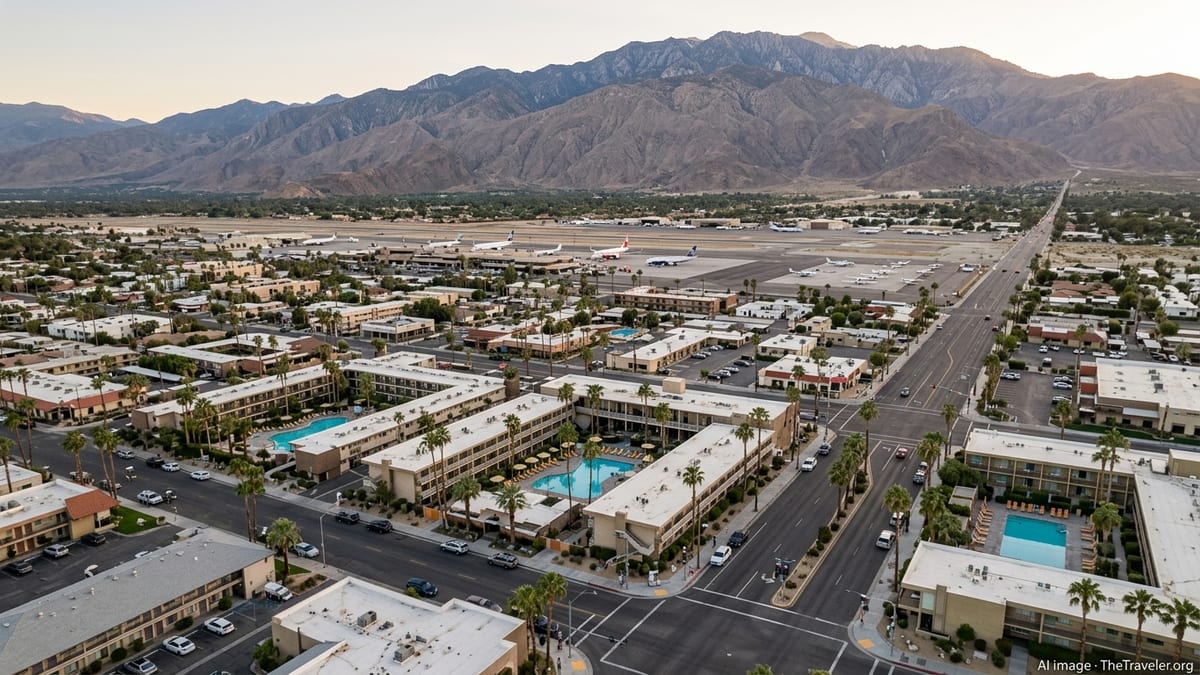
Air Connectivity Links Palm Springs to California’s Major Gateways
Recent air service expansions are positioning Palm Springs International Airport as a critical connector within California’s tourism network. Publicly available information from the City of Palm Springs shows the airport handled more than 3.2 million passengers in 2024, with March 2024 marked as its busiest month on record, underscoring growing demand for year-round access to the Coachella Valley.
New and expanded routes are deepening links between Palm Springs and the state’s largest tourism gateways. Airport updates indicate nonstop flights now connect the desert city with Los Angeles and San Francisco alongside a broad portfolio of domestic routes, enabling smoother same-day transfers between Palm Springs and long-haul international arrivals funneled through coastal hubs.
Additional nonstop services to major U.S. cities such as New York and Washington, combined with seasonal and returning routes, are increasing the number of one-stop itineraries that link Palm Springs with overseas markets via Los Angeles, San Diego and San Francisco. Aviation reports describe this web of connections as a catalyst for integrated itineraries, with travelers able to combine a desert stay with coastal city visits, theme parks or wine regions in a single trip.
Regional planning documents for Southern California highlight the broader ambition to knit together air, highway and potential future rail links between Los Angeles and the Coachella Valley. This approach mirrors strategies already in place in larger metropolitan areas, where airports and intercity transport work together to support multi-stop travel throughout the state.
Hotel Growth and Visitor Spending Reinforce a Multi-Segment Strategy
Across California, travel spending has returned to and exceeded pre-pandemic levels, and Palm Springs is seeking to capture a larger share of this rebound. Statewide economic impact research released by Visit California reports that travel-generated state and local tax revenue rose to more than 12 billion dollars in 2024, reflecting sustained demand for overnight stays and visitor services.
In the Coachella Valley, recent hotel announcements signal confidence in Palm Springs as a year-round destination rather than a purely seasonal escape. New upscale properties and branded hotels in Palm Springs and neighboring cities, along with upgrades to existing resorts, are designed to tap into demand from leisure travelers, wellness seekers, meeting planners and festival audiences.
By contrast, coastal hubs such as Los Angeles, San Diego, Anaheim and San Francisco already derive substantial revenue from a broad mix of segments including conventions, cruise pre- and post-stays, major sports events and theme park tourism. Economic impact data for these cities, published by regional tourism organizations and state research partners, underline how diversified visitor portfolios help smooth seasonal fluctuations and protect against downturns in any single market.
Palm Springs is increasingly aligning with this model. Analysts point to a growing pipeline of boutique hotels and branded limited-service properties, combined with vacation rentals and established resort inventory, as evidence that the city is broadening its appeal beyond traditional winter visitors to include younger travelers, remote workers and domestic city-break guests arriving from Los Angeles, Riverside and Orange County.
Cultural Programming Connects Palm Springs to Hollywood and Global Audiences
Cultural events are central to Palm Springs’ strategy to position itself alongside California’s major tourism centers. The long-running Palm Springs International Film Festival regularly attracts global attention, with recent editions spotlighting high-profile studio titles and awards contenders. Coverage of the festival emphasizes its role within the wider Hollywood awards season calendar, linking the desert city directly to the entertainment industry concentrated in Los Angeles.
Beyond film, the Coachella Valley’s festivals and cultural venues contribute to a year-round events calendar. Museums, design-focused gatherings and architecture tours showcase the region’s modernist heritage, while nearby music and arts festivals contribute to demand for accommodations and air travel through Palm Springs International Airport. This ecosystem reflects patterns seen in Los Angeles and San Diego, where festivals, concerts and cultural institutions drive visitor stays far beyond traditional peak seasons.
Regional arts programming in neighboring desert communities, including amphitheater performances and seasonal concert series, further strengthens Palm Springs’ credentials as a cultural hub. Publicly available information about these venues indicates a focus on outdoor, destination-style events that appeal to regional drive markets from Riverside, Orange County and greater Los Angeles.
As these offerings grow, tourism analysts note that Palm Springs is no longer marketed solely as a poolside retreat. Instead, it is being positioned as a complementary cultural stop on itineraries that may also include studio tours, museum visits in Los Angeles, or waterfront attractions in San Diego and San Francisco.
Theme Parks, Day Trips and Multi-City Itineraries Boost Regional Revenue
While Palm Springs does not host major theme parks of its own, its strategic location within Southern California’s transport network allows it to benefit from the powerful draw of nearby attractions. Multi-day vacation packages promoted by tour operators and online travel agencies increasingly combine time in the desert with visits to Anaheim’s theme parks, Los Angeles studios, San Diego’s coastal attractions and cultural landmarks in San Francisco.
Travel pattern data for California’s largest metropolitan areas, published by state and regional tourism bodies, show that visitors often string together several stops within a single trip. Families may fly into Los Angeles or San Diego for theme parks and beaches, then continue by car to Palm Springs for a quieter resort experience before connecting through the desert airport to another destination.
For Riverside County, which encompasses much of the Coachella Valley, state research indicates that travel spending is an important and growing part of the local economy. As Palm Springs’ role within multi-city itineraries expands, more visitor dollars flow into restaurants, transportation providers, local attractions and retail businesses that serve both overnight guests and day-trippers arriving from nearby urban centers.
This interplay mirrors established patterns around Los Angeles and Anaheim, where visitors split time between theme parks, cultural neighborhoods and coastal communities, spreading revenue across multiple jurisdictions while relying on shared air and ground infrastructure.
Palm Springs Positions Itself Within California’s Statewide Tourism Recovery
California’s tourism recovery has been led by its largest coastal cities, but recent state-level reporting suggests that inland and secondary destinations are increasingly important to sustaining growth. Economic impact publications compiled for Visit California note that counties including Los Angeles, San Diego, San Francisco and Riverside together account for a substantial share of visitor spending and tax revenue.
Against this backdrop, Palm Springs’ airport expansion, hotel development and festival calendar signal a deliberate effort to align the city with the state’s primary tourism gateways. Aviation statistics showing record passenger volumes at Palm Springs International Airport, combined with federal investment in airport infrastructure, are viewed by analysts as key foundations for long-term growth.
Industry forecasts released at statewide tourism conferences anticipate continued demand for multi-segment trips that blend nature, culture, urban experiences and entertainment. Palm Springs’ proximity to Joshua Tree National Park, its links to Hollywood through film and design, and its expanding air connections position the city to capture travelers who previously might have limited their itineraries to Los Angeles, Anaheim or San Diego.
As California markets itself globally as a connected network of experiences rather than a collection of standalone destinations, Palm Springs is emerging as a prominent inland node in that system. Its evolution from seasonal resort town to year-round, multi-segment tourism hub is reshaping visitor flows and contributing to the wider state economy alongside its larger coastal counterparts.