

More news on this day
Palma de Mallorca is preparing a significant upgrade to its urban rail network, with new planning documents outlining a six-kilometer M2 metro corridor and four new stations designed to improve access to residential neighborhoods, regional train services and major public facilities.
Get the latest news straight to your inbox!
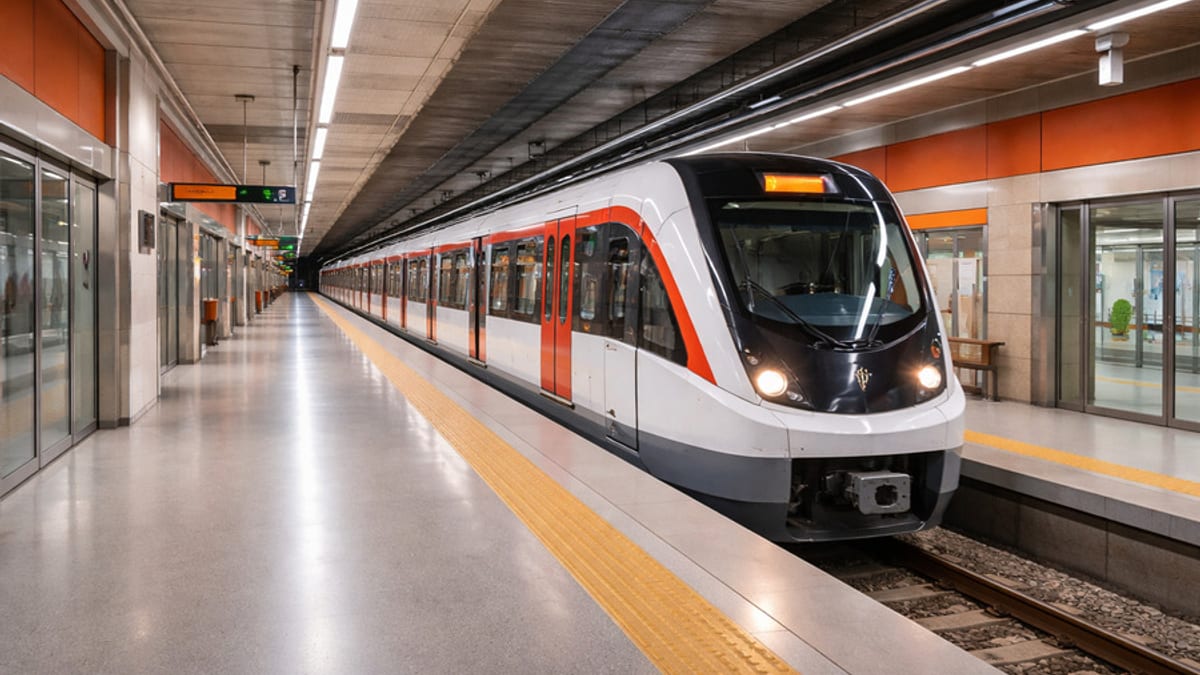
Image by Latest International / Global Travel News, Breaking World Travel News
A New Phase for Palma’s Urban Rail Network
Publicly available planning information indicates that the proposed Line M2 would operate as a dedicated metro service running from the Intermodal Station at Plaça d’Espanya toward the north and northwest of the city, over a distance of roughly six kilometers. The corridor is expected to build on the existing Palma rail and metro hub, which already concentrates regional and urban services at the central interchange.
Reports on Mallorca’s rail strategy show that the city has been moving gradually toward a more integrated network, combining the M1 university metro, existing suburban rail lines and a series of new projects such as the Palma to Llucmajor and Palma to Alcúdia routes. Within this broader context, the new M2 line is being framed as a key urban component, filling gaps in coverage inside Palma while also feeding passengers into the expanding regional system.
Technical documents and press coverage suggest that Line M2 will be conceived as a high-frequency service, broadly consistent with current metro operating patterns in Palma. While final service intervals have not yet been detailed, the project is described as an urban rapid transit link, rather than an extension of conventional heavy rail, with infrastructure and station design tailored to short, city-scale trips.
Local media analyses of mobility trends in Palma point to increasing pressure on road capacity and surface bus routes, especially along the axes connecting central Palma with growing residential zones and key institutions such as hospitals and university facilities. The M2 project is being presented as one of several rail-based responses intended to shift a larger share of daily travel to fixed-track public transport.
Four New Stations to Close Gaps in Coverage
According to project outlines reported in regional news coverage, the future M2 corridor is expected to include four entirely new stations within the six-kilometer stretch. The planned stops would be located in areas that today rely mainly on buses and road connections, despite being relatively close to existing rail corridors operated by Serveis Ferroviaris de Mallorca.
Preliminary descriptions indicate that one of the new stations would serve the area around the Conservatori Superior de Música de les Illes Balears, tying an important cultural and educational facility into the metro network for the first time. From there, the planned line would continue via a new underground section toward Son Costa – Son Fortesa, a site identified in other rail projects as a future intermodal node connecting different train and metro services.
Urban mobility maps and recent planning graphics show that other proposed stations would sit close to dense residential neighborhoods on Palma’s northern fringe and near major approach roads used by commuters. By threading a new metro line through these built-up areas, planners aim to shorten access distances to rail, potentially reducing the need for short car trips and easing demand on main bus corridors.
Design concepts described in technical summaries point to a mix of underground and surface or shallow cut-and-cover construction, depending on local street layouts and existing rail alignments. This approach is intended to limit visual impact while allowing new station entrances to be integrated into existing public spaces, sidewalks and local access roads.
Integration with Existing Metro and Regional Rail
The new M2 project comes as Palma’s rail network is undergoing a broader realignment. Published information on current services shows that metro Line M1 now links Plaça d’Espanya with the University of the Balearic Islands and the Parc Bit technology park, while regional train lines extend from the capital toward Inca, Sa Pobla and Manacor. The future M2 line is being developed to sit alongside these services rather than replace them.
Recent policy documents on the Palma to Llucmajor and Palma to Alcúdia projects describe Son Costa – Son Fortesa as a key junction where several rail corridors will intersect. The planned M2 stations and track layout are expected to provide direct interchange opportunities at this point, allowing passengers arriving from outlying municipalities to transfer to a metro service for the final leg into central Palma.
Draft timetables and network diagrams for existing services suggest that coordinated schedules and unified ticketing are likely to be central to the way M2 is integrated into the wider system. Current practice already allows passengers to move between metro, regional rail and interurban buses, and the new line is anticipated to adopt the same fare and validation framework, simplifying multimodal journeys across Mallorca.
Transport-focused publications covering Palma’s recent infrastructure developments note that earlier projects, such as the extension of M1 to Parc Bit, have been used as test beds for better interchanges and improved passenger information. Lessons from those schemes are expected to shape the way signage, accessibility features and platform layouts are designed for the new M2 stations.
Urban Mobility, Sustainability and Economic Impact
Strategic documents linked to Mallorca’s wider rail expansion emphasize the role of public transport in meeting climate and air quality goals, particularly in tourism-intensive areas such as Palma. By adding a six-kilometer metro corridor with four new stations, planners aim to offer a reliable alternative to private cars for residents and commuters, which could help reduce congestion on radial roads and in inner-city districts.
Environmental and mobility assessments prepared for other ongoing rail projects on the island underline the importance of shifting trips from road to rail in order to cut emissions and limit land take for future highways and parking. The M2 proposal is being framed within the same logic, with expectations that compact station catchment areas and frequent services will encourage higher public transport use in everyday commuting.
Economic analyses accompanying Mallorca’s rail program highlight potential benefits for local businesses and employment clusters served by new stations. Areas such as the planned Arts District of Palma, neighborhoods around Son Costa and the Conservatory zone are all earmarked for urban regeneration and higher-density development, and the arrival of a metro service is seen as a catalyst for investment in housing, retail and services.
Tourism-related reporting also points to possible advantages for visitors, who may find it easier to move between central Palma, cultural venues and accommodation areas without relying on taxis or rental cars. While the M2 line is primarily conceived as a service for daily urban mobility, its connections to the broader rail network could indirectly improve access to other parts of Mallorca for tourists traveling by train and bus.
Next Steps and Project Timeline
According to recent coverage in Mallorca’s regional press, the M2 line is progressing through the technical study and planning approval stages, alongside other major rail initiatives. A new informative study for the Palma to Llucmajor corridor, for instance, is expected to be approved during 2026, and the M2 metro scheme is being developed in parallel within the same rail modernization framework.
Procedural documents for current rail tenders indicate that infrastructure works of this scale typically advance through several phases, including preliminary design, environmental assessment, public consultation, detailed engineering and staged construction. The six-kilometer length of the M2, combined with four new stations and complex interfaces with existing lines, suggests a multi-year delivery period once final approvals and funding are in place.
Observers of Mallorca’s transport policy note that the island’s rail investment program has accelerated in recent years, backed by regional and state-level funding as well as European support mechanisms. The M2 project is widely viewed as one of the central urban elements of this program, complementing longer-distance links to Llucmajor and Alcúdia and anchoring a more robust metropolitan transit network based in Palma.
While specific opening dates for Line M2 have not yet been formally announced, the combination of technical studies, public communications about route options and the integration of the line into broader strategic plans indicate that Palma de Mallorca is moving steadily toward a new phase in its urban rail development, with the six-kilometer M2 alignment and its four planned stations positioned to play a pivotal role.