

More news on this day
Palma de Mallorca is preparing a significant upgrade to its urban transport network with the planned M2 metro line, a roughly six-kilometer extension that will add four new stations and connect the city’s Intermodal hub with rapidly growing western districts and the Son Espases university hospital area.
Get the latest news straight to your inbox!
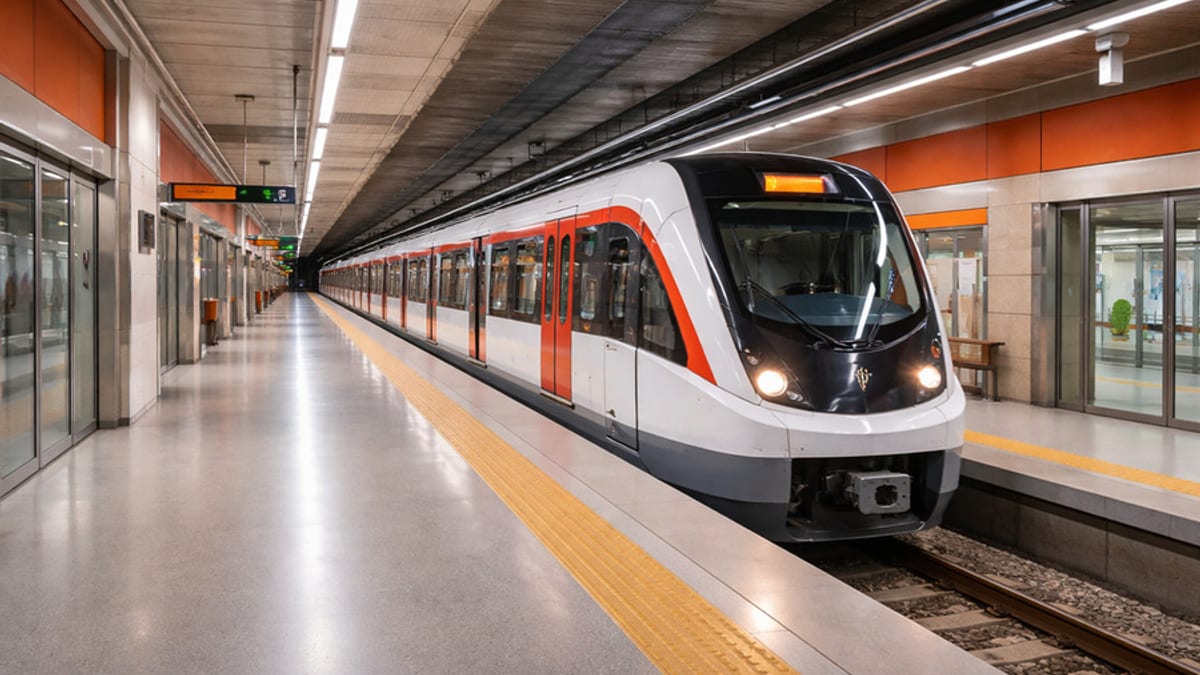
Image by Latest International Railway News, Global Rail Industry News
Second Metro Line Aims to Rebalance Palma’s Mobility
Publicly available planning documents and recent regional announcements describe M2 as the long-discussed second metro corridor for Palma, conceived to complement the existing M1 line between the Intermodal Station at Plaça d’Espanya and the Universitat de les Illes Balears. The project is framed as part of a broader effort to reduce congestion, cut private car use and improve access to essential services across the Balearic capital.
The new line is expected to run for around six kilometers from the Intermodal Station toward the northwest of the city, with a routing that serves residential neighborhoods, sports facilities, business areas and, ultimately, the Son Espases hospital complex. The four new stations highlighted in early descriptions are positioned to plug gaps in the current rail and metro map, particularly around Son Hugo, Son Pardo, the Son Rossinyol industrial area and the Secar de la Real district.
Regional planning material indicates that the M2 scheme is grouped with other major rail investments on the island, including new lines toward Llucmajor and Alcúdia, under a multi-year funding package that runs into the hundreds of millions of euros. The combined program is being promoted as a structural shift in how Mallorcans move within Palma and between the capital and the rest of the island.
Although final design work is still in progress, the decision to present M2 as a dedicated second metro line rather than a modest spur suggests a long-term vision of a denser network in and around Palma. The emphasis on interchanges, particularly at the Intermodal Station, signals a desire to create a more seamless system between rail, metro and bus services for daily commuters and visitors.
Route, Stations and Integration with Existing Services
Preliminary route descriptions indicate that M2 will start from the Intermodal Station beneath Plaça d’Espanya, Palma’s principal hub for rail, metro and regional buses. From there, the line is planned to swing northwest, serving new stops in areas that currently rely heavily on road traffic, before continuing toward the Son Espases hospital campus and the Secar de la Real neighborhood.
The four new stations outlined in recent coverage are understood to be located near the municipal swimming complex at Son Hugo, close to the Son Pardo racecourse, in the Son Rossinyol industrial and commercial zone, and in or near Secar de la Real, which hosts the Son Espases health facilities. These locations have been repeatedly cited in previous mobility studies as missing links in Palma’s high-capacity public transport network.
The M2 alignment is being planned to interface with existing rail infrastructure managed by Serveis Ferroviaris de Mallorca, especially at the Intermodal Station, which already handles heavy demand on the Palma-Inca line and the M1 metro corridor. Recent upgrades at the Intermodal hub, including new escalators and accessibility improvements, are presented as preparatory steps for higher passenger volumes expected once M2 comes into service.
Transport planners have stressed, through published project notes and briefing materials, that careful integration of timetables will be key. The M2 line is expected to operate at high frequencies during peak hours, offering an alternative to road bottlenecks on key radial routes and reducing journey times for workers, students and hospital staff traveling from across the metropolitan area.
Timeline, Investment and Construction Challenges
According to recent reporting from regional media outlets, the Balearic government has framed the Son Espases metro connection as a long-term project, with work on M2 not expected to begin before the end of the current decade. Current projections indicate that construction could start around 2029, with opening to passengers targeted for the early 2030s.
The cost of the new line is estimated in public presentations at around 300 million euros, forming part of a wider rail investment envelope that totals approximately 1.5 billion euros when combined with the planned Llucmajor and Alcúdia routes. The funding strategy is expected to include a mix of regional resources and national rail-support agreements, subject to ongoing negotiations.
Technical documents and past experience with underground works in Palma suggest that construction will be complex in sections that cross built-up areas and sensitive urban fabric. Balancing tunneling, cut-and-cover segments and temporary traffic diversions is likely to be a central challenge, especially near major facilities such as Son Espases and along key arterial roads.
Despite these hurdles, public-facing material emphasizes that the M2 project is designed to deliver long-term benefits that outweigh short-term disruption. The extension is positioned as an essential component of Palma’s climate and air-quality objectives, with projections of significant reductions in car journeys once the line and its four new stations are operational.
Impact on Residents, Commuters and the Wider Island
Mobility studies cited in regional coverage indicate that the completed M2 line could carry several million passengers per year, with a large share expected to be workers and visitors traveling to the Son Espases hospital complex. By offering a fast, direct link between the Intermodal Station and outlying districts, the line is projected to ease pressure on road corridors that are regularly affected by congestion.
For residents of neighborhoods such as Secar de la Real, Son Rossinyol and the areas around Son Hugo and Son Pardo, the new metro stations would represent a step-change in accessibility. These districts currently rely mainly on bus routes and private cars, with journey times into central Palma often extended by peak-hour traffic and limited parking availability.
The M2 line is also expected to have implications for tourism and regional connectivity. Visitors arriving in Palma and transferring through the Intermodal Station would gain a straightforward rail link to a major hospital and to parts of the city that are currently less visible on typical tourist itineraries, potentially encouraging more even distribution of visitor flows.
On a broader scale, the project aligns with ongoing efforts to create a more coherent rail spine on Mallorca, complementing future lines toward Llucmajor and Alcúdia. By anchoring one end of the new metro route at the Intermodal Station, planners are aiming to make M2 a core element of a network that connects Palma’s center, its western edge and, via existing and planned lines, much of the island’s populated corridor.
Part of a Larger Transformation of Palma’s Intermodal Hub
The decision to originate M2 at Palma’s Intermodal Station comes as that facility undergoes its first comprehensive upgrade since opening. The Balearic government has announced an investment program at the hub that includes new escalators, toilet facilities, accessibility improvements and a reconfigured customer service area.
Project descriptions for the station works underline a focus on passenger circulation and safety, anticipating heavier use as new rail projects come online. With M2 slated to feed additional metro traffic into the underground complex, optimizing platform access and vertical connections has become a priority.
The Intermodal Station is already the convergence point for commuter rail services to Inca and other island destinations, as well as for the M1 metro and a dense network of regional buses. The future arrival of M2 is expected to strengthen its role as the central interchange of Mallorca’s public transport system, allowing smoother transfers between modes and reducing transfer times.
Taken together, the six-kilometer M2 line, its four planned stations, and the continuing transformation of the Intermodal hub mark a decisive new phase in Palma de Mallorca’s transport strategy. While many details remain subject to final design and funding agreements, the direction of travel is clear: a more connected, rail-focused urban region that relies less on private cars and more on a modern, integrated metro and rail network.