

More news on this day
Pan American World Airways, the storied U.S. carrier that ceased operations more than three decades ago, is taking a decisive step toward a comeback after signing a letter of agreement with travel technology giant Amadeus to power its future operations and passenger experience.
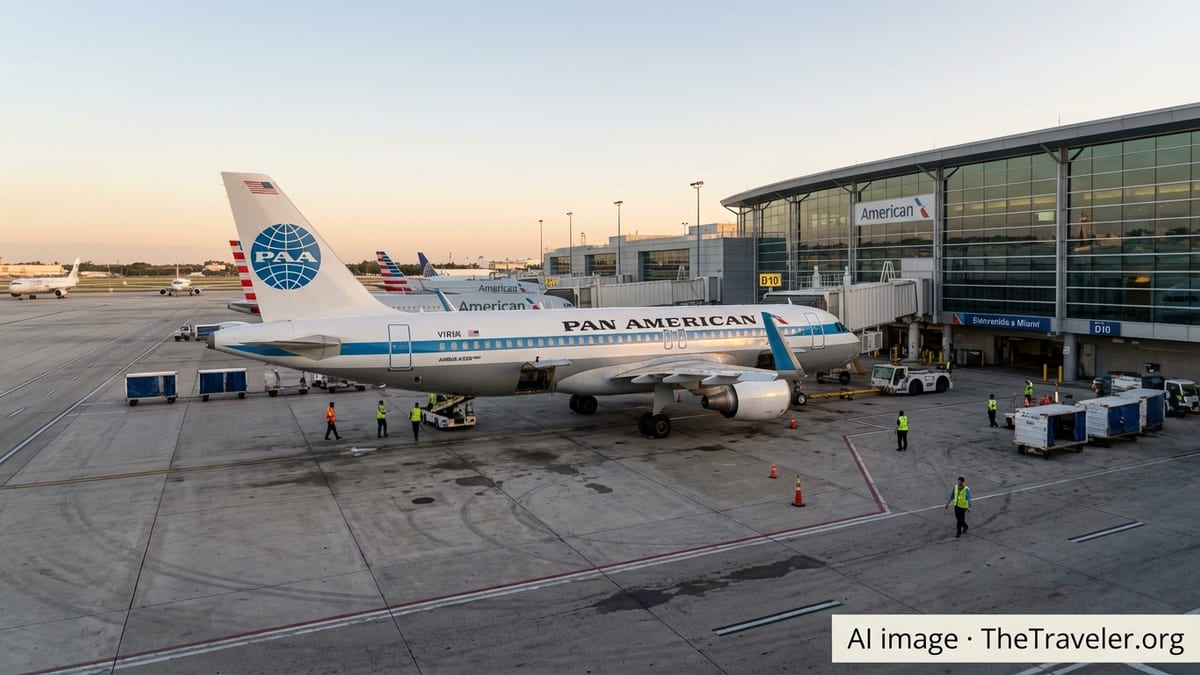
A Legendary Brand Positions Itself for a Modern Return
The new iteration of Pan American World Airways, commonly known as Pan Am, is being developed by a team of aviation veterans who see enduring commercial value in one of the most recognizable brands in airline history. The project, driven by Pan American Global Holdings and Miami-based aviation investment firm Avi8 Air Capital, is framed as a premium-focused carrier that connects Pan Am’s storied past with today’s highly digitized marketplace.
The agreement with Amadeus gives the rebooted airline a contemporary technology backbone at a relatively early stage, signaling that its backers understand the central role of data, automation and retail-style merchandising in today’s aviation economics. While Pan Am’s original heyday was defined by flying boats, widebody jets and glamorous long-haul routes, its planned return is explicitly tied to cloud-based platforms, modern retailing standards and an integrated digital experience from booking to arrival.
Executives behind the project emphasize that the partnership is not a nostalgic branding exercise, but a deliberate attempt to transform an iconic name into a viable, tech-forward airline. By embedding modern systems ahead of launch, they aim to avoid the legacy IT constraints that still hamper many established carriers, positioning Pan Am as a leaner operator with the ability to adapt quickly to market shifts.
Amadeus Infrastructure at the Core of the Relaunch
Under the letter of agreement, Amadeus is set to provide end-to-end technology capabilities spanning passenger service systems, inventory and revenue management, and day-of-travel operations. The framework envisages Pan Am running on a fully integrated platform that links reservations, check-in, disruption management and post-travel services, minimizing fragmentation and manual workarounds.
The future airline intends to exploit Amadeus tools that support modern retailing concepts such as dynamic offers, ancillary merchandising and tailored fare families. In practical terms, that means fares and products can be packaged in near real time based on demand patterns, customer profiles and competitive context, allowing Pan Am to sell more flexibly than in its previous incarnations.
Operationally, the technology roadmap emphasizes automation and self-service across the journey. Digital check-in, mobile boarding passes, automated rebooking during irregular operations and proactive communication are all expected to be part of the baseline offering. For a brand that once symbolized the glamour of air travel, the ambition now is to equate the Pan Am name with reliability, transparency and digital convenience as much as with nostalgia.
Regulatory Milestones Still Ahead Before Takeoff
Despite growing attention around the Amadeus tie-up, the Pan Am relaunch remains conditional on securing key regulatory approvals in the United States. The project must obtain certification from the Federal Aviation Administration as well as necessary permissions from the Department of Transportation before it can sell tickets or operate scheduled services.
Industry observers note that the path from brand revival to active airline can be lengthy, involving rigorous scrutiny of safety management systems, training programs, maintenance procedures and financial resilience. The backers of Pan Am have indicated that the current phase is focused on building the operational, technological and organizational foundations required to satisfy regulators and partners alike.
While no firm launch date has been announced, the decision to publicize the Amadeus partnership suggests confidence that the project is advancing beyond the conceptual stage. It also helps the nascent airline demonstrate seriousness to potential investors, lessors and corporate customers, who often view robust technology infrastructure as a prerequisite for long-term viability.
Premium Positioning Anchored in Short- and Medium-Haul Routes
Unlike the original Pan Am, which built its reputation on globe-spanning long-haul services, the revived carrier is expected initially to focus on domestic and short- to medium-haul routes from a base in Florida. Plans under discussion center on deploying a fleet of Airbus A320neo aircraft configured to emphasize comfort and revenue-generating flexibility, likely featuring a spacious premium cabin and an upgraded economy offering.
The choice of the A320neo family reflects both operational and branding considerations. The aircraft provides fuel efficiency and range suited to dense regional and near-international routes, while offering a cabin environment that supports modern inflight amenities such as high-speed connectivity, mood lighting and in-seat power. These features align with a business model that aims to attract time-sensitive travelers who still value service differentiation.
Analysts argue that focusing on premium service within a well-defined geographic footprint may help the airline avoid the overexpansion that contributed to Pan Am’s historic decline. A strong technology partner is seen as critical to managing yields, tailoring capacity to demand and refining the network over time based on detailed performance data rather than historical sentiment alone.
Distribution Strategy Blends NDC and Traditional Channels
A central pillar of the cooperation with Amadeus is a distribution strategy designed to give the revived Pan Am wide reach across both traditional and emerging sales channels. The airline plans to use New Distribution Capability standards alongside established global distribution system connections so that its fares and ancillary products can be sold through travel agencies, corporate booking tools and online platforms with rich content and real-time pricing.
By aligning itself closely with Amadeus on distribution, Pan Am aims to surface branded fares, seat selection, extra services and bundled offers in a way that is more transparent than the generic fare displays that once dominated travel agency screens. This approach is intended to give the carrier greater control over how its product appears in third-party channels, while still taking advantage of the scale that those intermediaries offer.
Such a hybrid strategy may prove important in the premium segment, where corporate travel managers and professional intermediaries still play a significant role. The ability to differentiate service tiers, manage negotiated corporate deals and track traveler preferences across channels could give the airline a clearer picture of its most valuable customer segments and how best to serve them.
Digital Maintenance and Operations Support Broader Tech Push
The Amadeus agreement sits alongside a wider digital strategy that encompasses aircraft maintenance and operational control. In recent months, the Pan Am project has also selected specialized maintenance software providers to underpin its technical operations, adopting cloud-based tools intended to reduce paperwork, improve compliance tracking and optimize fleet utilization.
Integrating maintenance platforms with passenger and operational systems is seen as a way to reduce delays, improve on-time performance and enhance safety oversight. Shared data can help planners anticipate when aircraft will be out of service, coordinate crew scheduling and ensure that passengers receive timely information when schedules need adjustment.
For a start-up airline operating under a historic name, demonstrating a strong, data-driven safety and reliability culture is likely to be critical in winning the trust of regulators, corporate clients and a public that remembers both Pan Am’s glory days and the turbulence that preceded its 1991 shutdown. The emphasis on contemporary digital tools suggests that the new team is framing reliability as a core brand promise, not just a regulatory obligation.
Balancing Nostalgia With Contemporary Passenger Expectations
The Pan Am brand continues to enjoy a strong emotional pull among aviation enthusiasts and older travelers, many of whom associate it with the so-called golden age of international flying. The relaunch effort is seeking to harness that nostalgia while avoiding the operational and financial pitfalls that beset earlier attempts to revive the name in the decades since the original airline’s collapse.
Branding concepts under development are understood to draw on classic Pan Am elements such as the globe logo and blue-and-white color palette, while adapting the visual identity for digital channels and contemporary aircraft interiors. The aim is to evoke heritage without appearing retrograde in a market where customers increasingly judge carriers by app usability, Wi-Fi reliability and disruption handling as much as by cabin aesthetics.
Industry commentators caution that nostalgia alone cannot sustain an airline in a competitive U.S. market characterized by consolidation, low-cost competition and shifting demand patterns. However, a recognizable legacy brand, paired with modern technology and a disciplined network strategy, can potentially carve out a niche among travelers seeking a blend of comfort, reliability and a sense of occasion when they fly.
What the Pan Am–Amadeus Deal Signals for the Industry
The decision of a high-profile brand revival to anchor itself on a modern technology provider highlights how central digital infrastructure has become to airline strategy. For established carriers considering system overhauls, the Pan Am project offers a real-time case study of how a start-up airline can design operations around integrated platforms from day one rather than layering new tools onto legacy systems.
For travel agencies, corporate buyers and technology partners, the tie-up underlines that any serious new entrant in today’s market must be digitally fluent, distribution-savvy and willing to adopt industry standards such as NDC. It also signals that project backers are prepared to invest in long-term capabilities instead of focusing solely on aircraft leases and route announcements.
Whether Pan Am ultimately succeeds in returning to scheduled service will depend on regulatory milestones, funding, competitive dynamics and execution. But its partnership with Amadeus has already turned the spotlight back onto a storied name and raised expectations that, if the airline does take to the skies again, it will do so with a technology stack that reflects how dramatically commercial aviation has changed since the brand last flew in 1991.