

More news on this day
After 47 years of torch-lit evenings on Oahu’s leeward shore, the Paradise Cove Luau has staged its final show, closing at the end of 2025 and underscoring how Hawaii’s tourism mix is being reshaped by redevelopment pressures, shifting visitor tastes, and growing calls to better protect local culture and shoreline lands.
Get the latest news straight to your inbox!
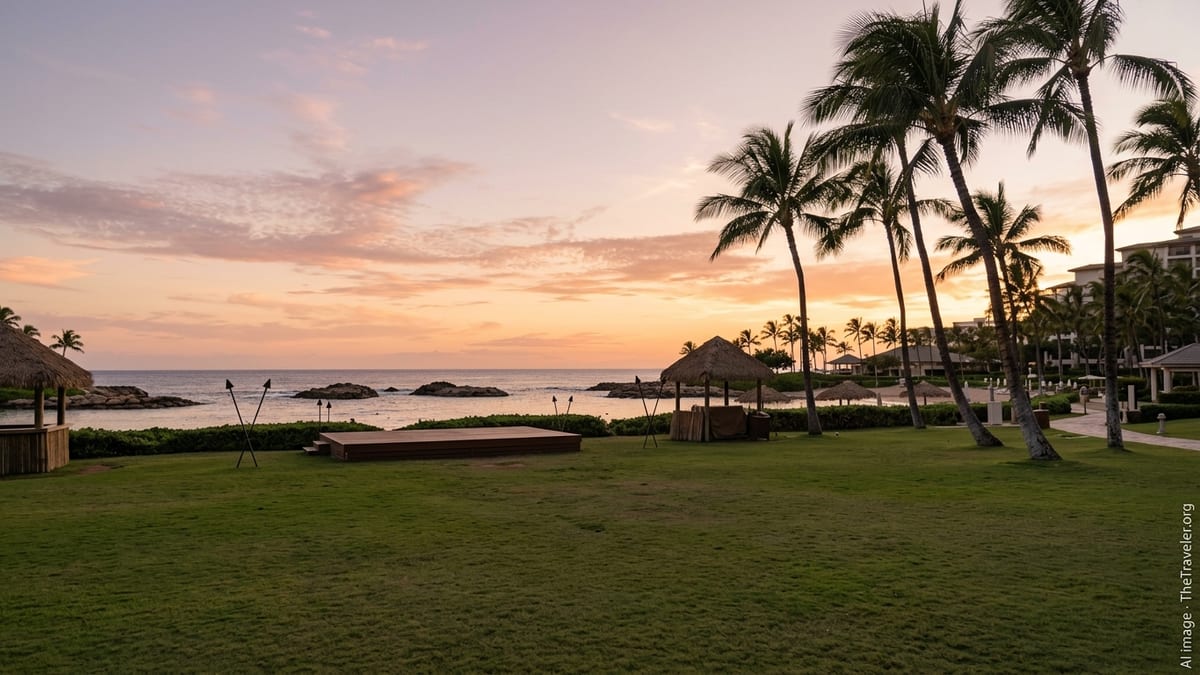
End of an Era at Ko Olina
Paradise Cove Luau, long marketed as one of Oahu’s most popular evening attractions, operated for nearly five decades at Ko Olina on the island’s west side. Publicly available information shows the venue hosted its last performance on December 31, 2025, wrapping up a run that began in the late 1970s and entertained hundreds of thousands of visitors and residents over the years.
Reports indicate the oceanfront site, spanning close to 20 acres, is being cleared to make way for a new commercial complex called The Cove. Planning documents and local coverage describe a dining, retail, and entertainment destination that will include a new amphitheater and a future commercial luau on essentially the same stretch of shoreline where Paradise Cove once staged sunset shows.
The change closes a chapter for a venue that had become intertwined with the Ko Olina resort area and nearby accommodations such as large branded hotels and vacation ownership properties. For many repeat visitors, the luau functioned as a familiar rite of passage: a buffet dinner, imu ceremony, and hula performances framed by palm trees and postcard views of the Pacific.
According to published coverage, the shutdown also brought tangible disruption for staff. Reporting by Hawaii-based outlets notes that more than 160 employees lost their jobs with the closure, even as job fairs and placement assistance were organized to soften the impact.
Redevelopment Plans: From Luau Grounds to Lifestyle Complex
The landowner, James Campbell Company, is moving forward with a broader redevelopment vision in Ko Olina, reflecting a wider trend in Hawaii of repositioning high-value coastal parcels toward mixed-use entertainment and retail projects. Environmental and planning filings describe The Cove as a multi-phase oceanfront complex combining restaurants, shops, performance spaces, and landscaped public areas.
Publicly available documents and local tourism reporting indicate that the new development is expected to break ground in 2026 and open in stages by around 2027. The project is projected to create several hundred jobs during operation, exceeding the direct employment once associated with the luau, while also expanding non-beachfront spending options for visitors staying on the leeward coast.
Supporters of the redevelopment frame it as a way to modernize visitor offerings in West Oahu and keep more economic activity within the resort area instead of flowing to Honolulu and Waikiki. They point to demand for more dining and shopping choices near existing hotels, as well as the potential to program a broader range of events in a purpose-built amphitheater.
At the same time, some community voices and online commentary question whether another commercial complex on the shoreline will deepen tourism intensity in Ko Olina and crowd out more modest, community-oriented uses of the coast. The replacement of a long-running luau with a higher-density entertainment district has become a focal point in that debate.
What the Closure Says About Hawaii’s Changing Visitor Experience
The end of Paradise Cove comes at a moment when Hawaii’s tourism sector is in flux. State data in recent years has pointed to plateauing or slightly declining visitor arrivals in some months while average daily spending edges higher, suggesting a shift toward fewer but higher-spending travelers. At the same time, resident sentiment surveys released by state agencies show rising concern about respect for local culture, crowding, and pressure on natural resources.
In this context, large-scale resort luaus occupy a complicated space. On one hand, they offer accessible introductions to hula, mele, and aspects of Hawaiian and broader Polynesian traditions for first-time visitors. On the other, critics argue that high-volume, scripted shows risk flattening complex living cultures into standardized entertainment, especially when ownership and decision-making sit largely with major corporations.
Paradise Cove’s closure highlights that tension. The venue’s supporters remember its role in sharing music and dance, hosting local celebrations, and sustaining steady employment in West Oahu. Yet its replacement by a new commercial luau embedded in a larger shopping and entertainment hub raises ongoing questions about how Hawaii can deliver the cultural experiences many visitors seek while honoring community priorities and evolving expectations around authenticity.
Observers of Hawaii tourism note that more travelers are seeking smaller, community-based cultural experiences, farm and fishpond tours, and guided activities led by cultural practitioners. The winding down of one of the state’s largest luau operations may create space for those alternatives to gain visibility, even as Ko Olina itself doubles down on a resort-forward model.
Jobs, Community Impact, and New Luaus on the Leeward Coast
For workers and nearby businesses, the closure of Paradise Cove has been felt most immediately through employment shifts. According to local news coverage, about 170 workers were directly affected, including dancers, musicians, food and beverage staff, and operations personnel. Some vendors and transportation companies that depended on nightly busloads of guests also faced adjustments.
However, new opportunities are already emerging in the same corridor. Early 2026 coverage by Honolulu television outlets and local travel publications describes the launch of Kaula Luau in Ko Olina, a new show operating near the resort’s lagoons. Reports indicate that a number of former Paradise Cove performers and staff have transitioned to this venue, helping preserve jobs and retain experienced cultural talent in the area.
Kaula Luau is described in local reporting as placing more emphasis on variety-style entertainment while still drawing on Polynesian dance traditions, reflecting how luau operators are experimenting with format and storytelling to appeal to contemporary audiences. Its opening signals that Ko Olina is unlikely to step back from evening cultural programming, even as the physical landscape shifts toward more structured commercial development.
For the surrounding community, the reconfiguration of jobs and nightly traffic patterns may take time to assess. Some residents may welcome reduced congestion along the resort entry corridor with one less major venue running at full capacity, while others may be more concerned about the long-term effects once The Cove opens and potentially increases visitor volume.
A Mirror of Broader Tensions in Hawaii Tourism
The story of Paradise Cove’s final curtain reflects broader crosscurrents shaping Hawaii’s tourism future. Across the islands, policymakers are weighing measures to address housing shortages and overtourism, from tighter regulation of vacation rentals on Maui to new fee systems for popular natural attractions. At the same time, private developers continue to invest in high-end resorts, entertainment districts, and luxury residences targeting affluent visitors and second-home buyers.
This push and pull is visible on Oahu, where coastal properties remain among the most coveted assets in the state. Converting a legacy luau site into a mixed-use complex with a new commercial luau encapsulates one pathway forward: deeper capital investment and expanded amenities within existing resort zones, rather than unchecked sprawl into new areas.
How this model balances community, cultural, and environmental priorities remains an open question. Paradise Cove’s closure has prompted reflections about who decides how Hawaiian culture is presented, who benefits financially from that presentation, and how much space along the shoreline should be dedicated to revenue-generating attractions versus open, low-impact public use.
As The Cove project advances and new luaus like Kaula take root, travelers to Oahu are likely to encounter an evolving landscape of cultural experiences. The disappearance of one of the state’s best-known luaus from the nightly schedule serves as a visible sign that Hawaii’s tourism industry is not static, but in the midst of a recalibration shaped by economic realities, resident sentiment, and shifting global travel trends.