

More news on this day
Passengers at Paris Charles de Gaulle and Orly airports are facing fresh disruption as more than 30 flights have reportedly been cancelled, affecting services operated by Air France, SAS, Lufthansa and other carriers on routes to Dubai, Bahrain, Tel Aviv, Oslo, Frankfurt, London, Nice, Munich, Amsterdam and additional destinations.
Get the latest news straight to your inbox!
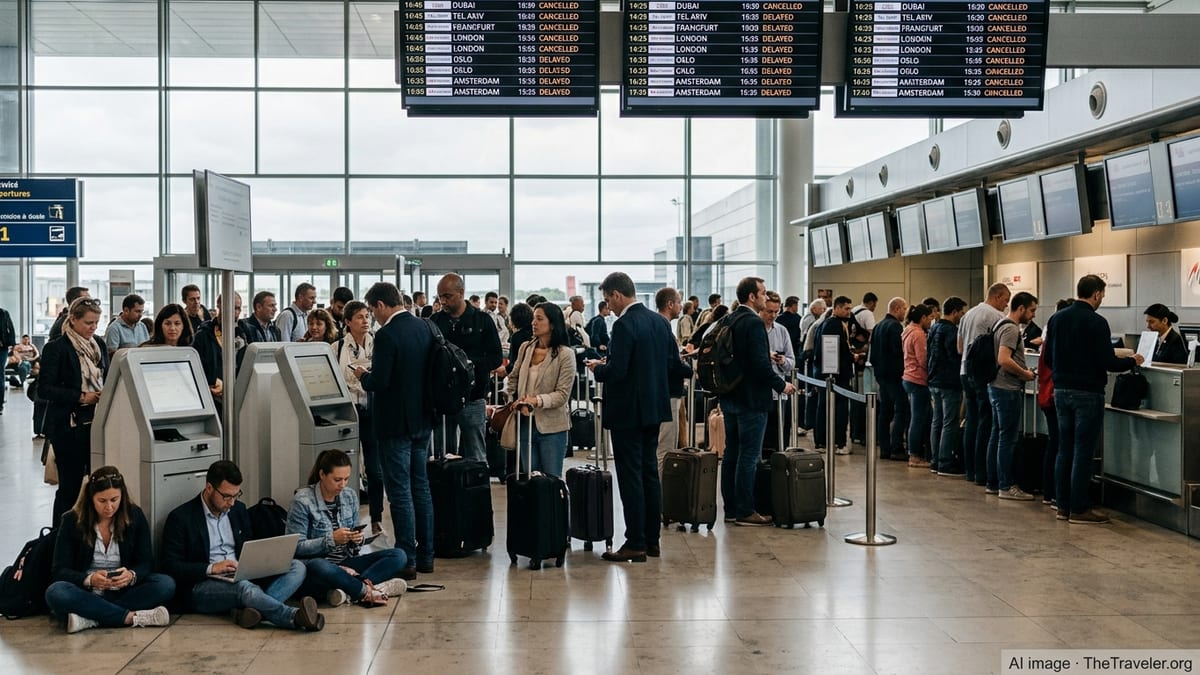
Wave of Cancellations Hits Paris Hubs
According to recent European media coverage and airline operational updates, Paris’s two main airports have been hit by a new round of cancellations concentrated on long-haul and key regional routes. The disruption, reported in late March 2026, follows weeks of turbulence for international flight schedules linked to security concerns and airspace restrictions across parts of the Middle East.
Publicly available information indicates that more than 30 flights scheduled to depart from or arrive at Paris Charles de Gaulle and Orly were removed from timetables over a short period, with services to Dubai, Bahrain and Tel Aviv among the most visible long-haul casualties. Regional and short-haul links to major European hubs such as Frankfurt, Munich, Amsterdam, Oslo, London and Nice have also been affected, leading to missed connections and rebookings for passengers travelling through France.
While the exact mix of flights varies by day and airline, operational data suggests that both point-to-point travellers and those using Paris as a transfer hub are experiencing knock-on delays. Travellers have reported longer queues at service desks and crowded departure halls as airlines work to reallocate passengers onto remaining services or alternative routings.
Industry trackers note that the reductions at Paris come on top of earlier schedule cuts at other European gateways serving the same regions, compounding the overall impact on connectivity between Europe, the Gulf and the Eastern Mediterranean.
Air France, Lufthansa and SAS Among Affected Carriers
Air France, the largest operator at Charles de Gaulle, has been prominent among the airlines adjusting services. Based on published coverage and airline advisories, the carrier has cancelled selected departures from Paris to destinations including Dubai and Tel Aviv on certain days, in addition to trimming some short-haul frequencies. These targeted cuts form part of a broader pattern of adjustments to routes that intersect with airspace restrictions.
German group Lufthansa, a key player on the Paris to Frankfurt and Munich corridors, has also seen flights curtailed on specific days, affecting passengers relying on German hubs for onward long-haul travel. Reports indicate that some of these cancellations are linked to wider operational pressures and earlier suspensions on routes into the Gulf and Israel, which continue to reverberate through the group’s European network.
Scandinavian Airlines (SAS), operating services from Paris to Oslo and other Nordic destinations, has been identified in airport schedules as another carrier experiencing disruption. Cancelled rotations between France and Norway have left some passengers seeking last-minute alternatives via other hubs such as Amsterdam or London when available seats permit.
Other European airlines with codeshares or parallel services on the affected city pairs are also indirectly impacted. When one major carrier drops a frequency, remaining flights on similar time bands often see higher load factors and limited availability, reducing options for rebooking and contributing to crowding on the flights that do operate.
Routes to Gulf and Eastern Mediterranean Under Strain
The cancellations at Paris airports are particularly acute on routes linking France with the Gulf and Eastern Mediterranean, where traffic has already been volatile since late February. Public reporting over recent weeks shows that multiple international airlines have suspended or reduced services to Dubai, Bahrain and Tel Aviv, citing evolving security assessments and temporary airspace closures across parts of the region.
In this context, each cancelled departure from Paris further tightens capacity on remaining links to major hubs such as Dubai International and Bahrain International airports. Long-haul flights from Paris to the Gulf are important for both direct traffic and as onward gateways to South and Southeast Asia, meaning that disruptions ripple well beyond the immediate city pairs.
Connections to Tel Aviv from Paris also remain fragile. Airline schedules and recent news coverage indicate that several European and Middle Eastern carriers have periodically halted or thinned out services to Israel in recent weeks, and the latest cancellations at Paris add to the uncertainty faced by travellers planning family visits, business trips or onward connections through Ben Gurion Airport.
Travel industry observers note that rerouting around restricted airspace often extends flight times and complicates crew planning, increasing the likelihood of last-minute timetable changes. For hubs like Paris, where slots and ground resources are tightly managed, even modest schedule shocks on sensitive routes can lead to a cascade of cancellations or retimings.
Knock-on Effects for European and Domestic Connections
Beyond the long-haul headlines, short-haul and domestic routes linking Paris to other European cities are also experiencing strain. Cancellations on services to Frankfurt, Munich and Amsterdam affect not only direct travellers between France and Germany or the Netherlands, but also passengers relying on those hubs for North American, African or Asian connections.
Reports from passenger forums and airport monitoring platforms suggest that some travellers are arriving in Paris only to find their onward legs to European hubs cancelled, forcing rebookings via alternative routings or overnight stays. With capacity tight across much of the continent during the late winter and early spring travel period, spare seats on popular corridors can be limited, especially at short notice.
Regional destinations such as Nice and other French cities have seen selected flights from Paris pulled from schedules, affecting domestic connectivity. While high-speed rail provides an alternative on some routes within France, travellers with tight international connections or heavy luggage may still prefer air links, making last-minute cancellations particularly disruptive.
On routes to cities like Oslo and London, where multiple carriers normally operate, cancellations by one airline often lead to fuller cabins and higher last-minute fares on remaining services. Travel analysts indicate that this dynamic can price some passengers out of same-day alternatives and push them toward later departures or different airports.
Advice for Affected Passengers and Outlook
Consumer organisations and travel advisers are urging passengers with upcoming itineraries via Paris to closely monitor their bookings in the days before departure. Publicly available guidance across airlines and airports emphasises the importance of checking real-time flight status, ensuring contact details are up to date in reservations and allowing extra time at the airport in case of rebooking queues.
Many carriers have temporarily relaxed change rules or introduced travel waivers for itineraries touching certain destinations, particularly in the Gulf and Eastern Mediterranean, enabling passengers to shift travel dates or request refunds. Eligibility and conditions differ from one airline to another, and passengers are being encouraged to review the latest policy notices for the carrier operating each leg of their journey.
For travellers departing from or transiting through Paris, flexible planning remains advisable. Experts in the travel sector recommend considering slightly longer connection times, exploring alternative routings via secondary hubs and keeping hotel reservations and ground transport arrangements as adaptable as possible while the situation evolves.
Airline schedules for early April remain subject to adjustment as security assessments and airspace availability change. While operators are gradually restoring some services where conditions permit, the recent wave of more than 30 cancellations at Paris airports underlines how quickly circumstances can shift for key routes to Dubai, Bahrain, Tel Aviv, Oslo, Frankfurt, London, Nice, Munich and Amsterdam, and why passengers are being advised to stay alert to further timetable changes.