

More news on this day
Hundreds of air passengers were left stranded in France after Paris Charles de Gaulle reported 25 flight cancellations and 153 delays on March 9, as rolling disruption across Europe and the Middle East rippled out to hubs in Dubai, Doha, Jeddah, Tel Aviv, Copenhagen and beyond, hitting major carriers including Lufthansa, ITA Airways, Finnair, Air France and easyJet.
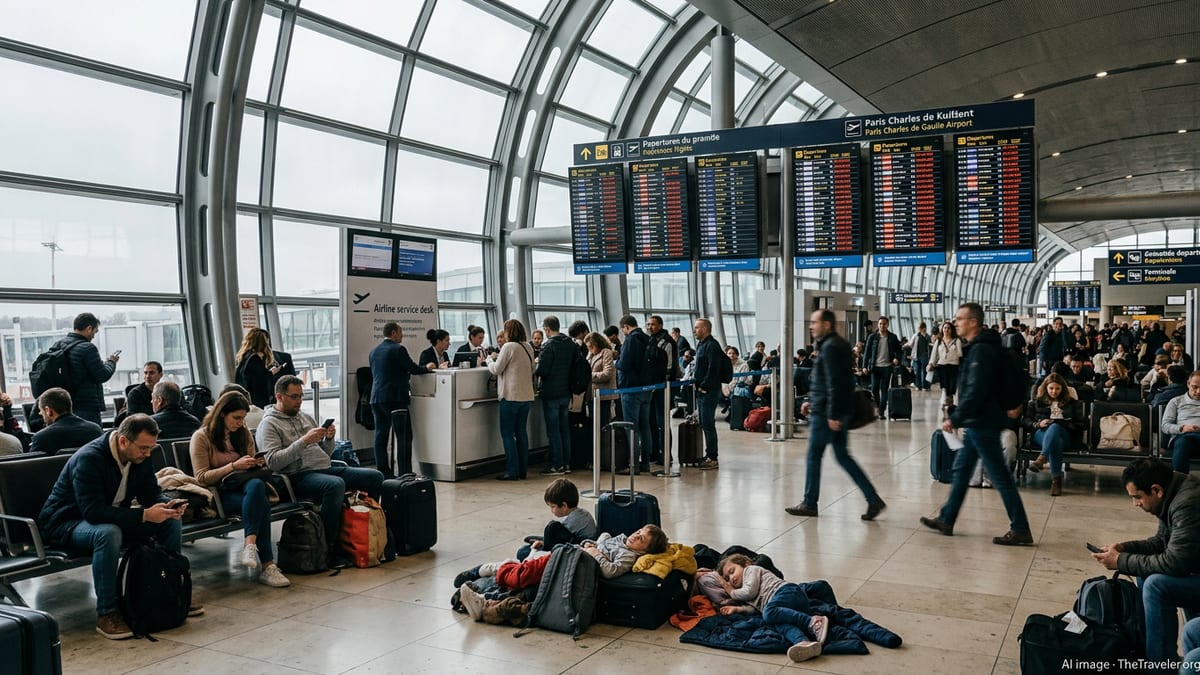
Paris Hubs Buckle Under Wave of Cancellations and Delays
Operational data from European air travel trackers show Paris Charles de Gaulle among the hardest hit airports in Europe on March 9, logging 25 cancellations and 153 delays in a single day. The figures place the French capital squarely in the center of a wider aviation squeeze, with departure boards dominated by red warning codes and long lines forming at rebooking desks.
While disruption has been building across the continent for days, Sunday’s performance at Paris underlined how vulnerable major transfer hubs remain to a combination of winter weather, crew shortages and complex rerouting around conflict zones. Passengers reported overnight stays in airport hotels or on terminal floors as airlines struggled to find alternative routings.
Charles de Gaulle, one of Europe’s busiest long haul gateways, serves as a hub for Air France and a key station for numerous alliance and low cost carriers. Knocked out schedules in Paris quickly cascaded to connecting cities worldwide, stranding travelers even if their flights did not originate or end in France.
Flag Carriers and Low Cost Airlines Equally Affected
The latest numbers indicate that the disruption cut across airline business models, affecting both full service and low cost operators. Lufthansa, ITA Airways, Finnair, Air France and easyJet all reported schedule changes touching Paris, with a mix of outright cancellations and rolling delays.
Lufthansa and ITA, both closely tied into Europe’s hub and spoke network, saw Paris services snarled along with key links to Germany and Italy. Finnair, already reworking its schedules because of constrained access to Middle Eastern airspace, faced additional pressure as delays in Paris jeopardized tight connections for Nordic passengers.
Air France, the dominant carrier at Charles de Gaulle, again found itself at the sharp end of passenger frustration as queues formed around customer service counters and self service kiosks. easyJet, which relies on fast aircraft turnarounds to keep costs low, was forced to stretch ground times and cut frequencies, denting its carefully calibrated network.
Industry analysts noted that carriers are increasingly choosing to cancel early rather than operate heavily delayed services that risk crew duty time violations and missed onward connections. For passengers, however, that strategy often translates into scarce rebooking options and extended time on the ground.
Shockwaves Reach Dubai, Doha, Jeddah, Tel Aviv and Copenhagen
Although the latest flashpoint was in France, the turbulence spread quickly across global networks. Long haul routes linking Paris to major Middle Eastern and Nordic hubs, including Dubai, Doha, Jeddah, Tel Aviv and Copenhagen, saw disrupted rotations as aircraft and crews fell out of position.
Gulf carriers already operating reduced schedules from Dubai and Doha because of regional airspace restrictions were forced to cancel or retime additional services as aircraft due to arrive from Europe failed to materialize. This created fresh pockets of stranded passengers waiting for scarce onward flights to Asia, Africa and Australasia.
In Tel Aviv and Jeddah, services operated by European and Middle Eastern airlines alike were affected by delayed arrivals from Paris and other EU hubs, leading to compressed turnaround windows and last minute gate changes. Copenhagen, a key transfer point for Nordic and Baltic travelers, reported its own spike in delays as late Paris departures knocked into tightly banked regional schedules.
Travel risk consultants said the pattern illustrates how a relatively modest number of cancellations and delays in one hub can radiate outward across several continents, especially when those flights connect into already fragile networks operating around closed or restricted airspace.
Why the Numbers Matter for Passengers
For stranded travelers in Paris and at onward destinations, the immediate concern is securing a seat on the next available flight. At Charles de Gaulle alone, more than 170 flights were directly affected by either cancellation or delay, translating into thousands of disrupted journeys when multiplied by average load factors on European and long haul aircraft.
Consumer advocates are urging passengers to document their disruption carefully, including boarding passes, delay notifications and receipts for meals or accommodation, to support potential compensation claims. Under European passenger rights provisions, travelers on flights that arrive more than three hours late or are cancelled may in some cases be entitled to financial compensation, although exemptions exist for extraordinary circumstances such as severe weather or security related airspace closures.
Airlines, facing their own staffing and aircraft availability constraints, are warning that recovery will take time. Some carriers have advised customers to consider postponing non essential trips or to build extra buffer days into multi stop itineraries that rely on vulnerable hubs like Paris, Copenhagen or Middle Eastern gateways.
Travel agents and corporate travel managers are meanwhile revisiting routing strategies, looking to diversify connections across multiple hubs to avoid over dependence on any single airport that could be knocked offline by weather, strikes or regional tensions.
What Travelers Can Expect in the Coming Days
With schedules still in flux, aviation forecasters expect lingering disruption around Paris and other European hubs for several days as airlines reposition aircraft and crew. Even flights that appear on time today may be operating with tighter margins, leaving limited room to absorb fresh shocks from weather systems or air traffic control restrictions.
Passengers booked on Lufthansa, ITA, Finnair, Air France, easyJet and other affected airlines are being advised to check their flight status repeatedly in the 24 hours before departure and to enable app notifications for last minute gate or timing changes. Those connecting via Dubai, Doha, Jeddah, Tel Aviv or Copenhagen should pay particular attention, as missed connections at those hubs can be harder to rebook due to limited alternative routings.
For now, the picture is one of an aviation system still wrestling with a volatile mix of seasonal weather, crew availability challenges and geopolitical constraints that complicate long haul planning. The experience of passengers stranded in France on March 9 underscores how quickly that mix can tip into widespread disruption, even for travelers who never expected Paris to be the weak link in their journey.