

More news on this day
Overnight rail is stepping back into the European spotlight in 2026, with Paris at the heart of a rapidly expanding web of night trains that promises to reshape how travelers crisscross the continent.
Get the latest news straight to your inbox!
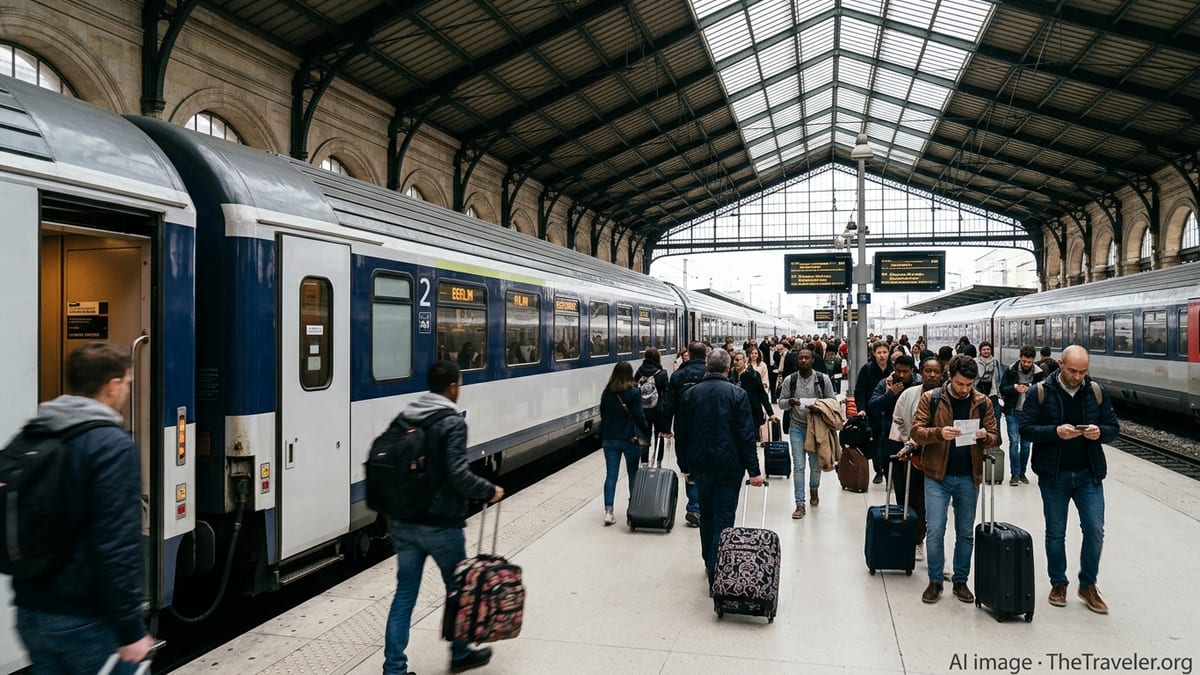
Paris Reconnects With Berlin in a New Era for Night Trains
The most symbolic change of the 2026 night train revival is the restoration of overnight services between Paris and Berlin. After the withdrawal of the Nightjet-operated route at the end of 2025, a gap briefly opened on one of Europe’s most in-demand city pairs. New schedules published in early 2026 show that cooperative operator European Sleeper will step into that space with a three-times-weekly service starting on 26 March 2026, routing via Brussels instead of Strasbourg.
According to publicly available timetable data and operator announcements, the Paris to Berlin train will depart from Paris Nord in the evening, pass through northern France and Belgium, and arrive in the German capital the following morning. The routing via Brussels is significant because it allows same-day connections from London and other Benelux cities, effectively tying the night train renaissance to the broader high-speed rail network.
Reports from rail industry observers indicate that the service is being positioned as a pragmatic alternative to short-haul flights, with a mix of seated coaches, couchettes and classic sleeping compartments rather than ultra-luxury cabins. For climate-conscious travelers and business passengers who want to reclaim the time lost in airports, the ability to leave central Paris after dinner and wake up in Berlin’s urban core is being framed as a defining feature of the new European night train era.
Paris also remains a prestige terminus for high-end rail tourism. Alongside scheduled services, luxury brands continue to base or showcase refurbished historic rolling stock in the French capital, reinforcing Paris’s status as both a practical rail hub and a gateway to nostalgic “grand tour” style journeys by night.
Brussels, Amsterdam and Milan: A North–South Sleeper Spine
Beyond the Paris–Berlin relaunch, one of the most closely watched developments in 2026 is a new overnight corridor linking Brussels and Amsterdam to Milan. Railway timetables and press material show that European Sleeper plans to begin a night train from Brussels and Amsterdam to Milan from 18 June 2026, initially as a seasonal operation through the summer period.
The route is expected to run via Cologne and Switzerland, creating a continuous north–south sleeper spine from the Low Countries into northern Italy. For travelers in Berlin and Prague already served by overnight trains to Brussels, this effectively opens up a same-operator connection from Central Europe to Milan with a single change of train. That network effect is one reason rail commentators describe 2026 as a tipping point, when once-isolated pilot services begin to resemble a cohesive grid.
In Milan itself, the growing presence of overnight trains dovetails with daytime improvements. Separate agreements between German, Austrian and Italian operators point to enhanced high-speed daytime services between Munich, Milan and Rome by late 2026, further underscoring the city’s role as a key interchange between Central Europe and the Mediterranean. Travelers heading to or from night trains in Milan will increasingly find onward options by both day and night within Italy.
Industry coverage also highlights that many of these services are supported indirectly by European Union funding frameworks aimed at boosting cross-border rail. While details vary by route, the Brussels–Amsterdam–Milan night train is often cited as an example of how new entrants are using cooperative models and leased rolling stock to stitch together international paths that traditional national operators were slow to restore.
Barcelona, Amalfi and the Rise of Rail-to-Coast Itineraries
If Berlin and Milan embody the business and city-break dimension of the 2026 night train revolution, Barcelona and the Amalfi Coast represent its growing appeal to leisure travelers bound for the sea. The Spanish city is already connected to the wider sleeper network via Zurich and emerging overnight coach-and-train combinations that prioritize low-carbon journeys through the Alps to the Mediterranean.
Travel media coverage points to a broader pattern: new or revived night trains increasingly terminate close to iconic coastal regions where visitors once relied almost entirely on short-haul flights. In Italy, the spotlight in 2026 falls on high-end rail journeys that include the Amalfi Coast as part of multi-day itineraries, often linking Venice, Rome and southern coastal gateways. While these services cater to a premium market, they contribute to a perception shift by demonstrating that long-distance rail can deliver both efficiency and aspirational experiences.
In parallel, mainstream operators are working to tighten rail links to ports and regional hubs that act as springboards to coastal destinations. Travelers heading to the Amalfi area, for instance, can increasingly combine night trains to Milan, Rome or Naples with frequent regional services onward to the Tyrrhenian coast. For Barcelona, improved cross-border night routes from France, Switzerland and potentially the Low Countries make it easier to wake up within reach of the city’s beaches rather than landing at a suburban airport.
This growing focus on rail-to-coast itineraries is also being framed as a response to environmental and capacity pressures at Mediterranean airports. As tourism numbers rebound, night trains are promoted in consumer media as a way to spread arrivals more evenly and reduce peak-time congestion in the sky, while still delivering the sunrise-on-the-sea moment many travelers seek.
Copenhagen, Prague and the New East–West Night Corridors
While much attention is on north–south axes, 2026 also brings a quiet transformation of east–west overnight travel, particularly involving hubs such as Copenhagen and Prague. Updated European timetables and planning documents outline new and strengthened services that tie these cities into a broader lattice of cross-border night routes extending toward Germany, Austria and the Balkans.
Prague, already served by existing sleepers toward Brussels and Berlin, is positioned to gain more frequent and better-timed overnight links as operators refine schedules and add capacity. For travelers from Central and Eastern Europe, this reinforces Prague’s role as a convenient jumping-off point for westbound night journeys, reducing the need for multiple day-time changes on long itineraries.
Farther north, proposals and pilot timetables for new or restored night trains connecting Copenhagen with cities such as Hamburg and Malmö feed into a vision of a continuous overnight chain from Scandinavia through Germany toward Central Europe. Some services are planned as seasonal, responding to strong summer demand, while others aim for year-round operation as rolling stock and track access become available.
Observers note that a common thread across these east–west developments is experimentation. Operators are testing different stopping patterns, carriage formations and booking models, learning which combinations appeal most to passengers who might previously have defaulted to budget airlines. The result for 2026 is a patchwork rather than a perfectly uniform network, but one in which gaps between major northern and central cities are steadily closing.
What Travelers Need to Know Before Booking 2026 Night Trains
For travelers planning European trips in 2026, the proliferation of night trains brings new opportunities but also a few practical considerations. Timetables are still evolving, particularly for seasonal routes, so industry publications consistently advise checking operator channels and updated pan-European rail planners before locking in flights, hotels or nonrefundable activities.
Another key point is that comfort levels and onboard services vary widely. From cooperative-run sleepers with shared couchettes to ultra-luxury trains serving the Amalfi Coast, the term “night train” now covers a spectrum of experiences. Publicly available route descriptions and seat maps provide important clues about whether a given service offers private cabins, showers, Wi-Fi or only basic reclining seats. For many new routes, demand is high and capacity relatively limited, so early booking is increasingly recommended, especially around summer and major events.
Travel coverage also stresses the importance of understanding ticketing and connections. On corridors where night trains connect with high-speed or regional services, such as London–Brussels–Berlin or Amsterdam–Cologne–Milan, tickets may be issued by separate companies using different platforms and refund rules. Allowing generous connection times, particularly when crossing between operators, is being presented as a simple way to reduce stress on complex multi-country itineraries.
Finally, there is the broader question of what this shift means for European travel culture. With Paris joining Berlin, Milan, Amsterdam, Barcelona, Copenhagen, Prague and even the Amalfi Coast in a revived night train ecosystem, 2026 is shaping up as a year when sleeping on the move once again becomes a mainstream choice rather than a niche curiosity. For many travelers, that could mean rethinking the default flight, and rediscovering Europe at a slower, more rhythmic pace, from city streets to coastal cliffs, one overnight journey at a time.