

More news on this day
A new day of severe flight disruption is rippling across the United States on April 1, as New York’s LaGuardia Airport anchors an estimated 504 delays and contributes to a broader cascade of schedule snarls for passengers from coast to coast.
Get the latest news straight to your inbox!
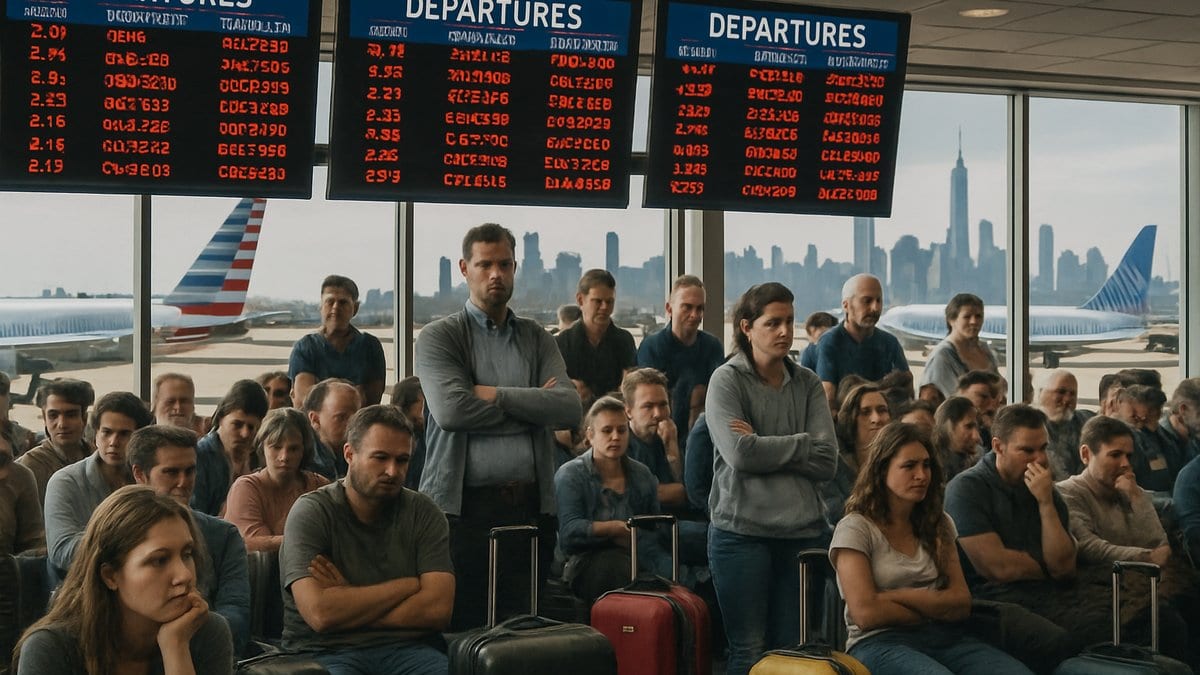
Image by Nomad Lawyer
LaGuardia’s Logjam Spreads Across the National Network
According to flight-tracking aggregators and industry-focused outlets, LaGuardia is among the most affected U.S. airports on Wednesday, with roughly 500-plus delayed departures and arrivals concentrated into the morning and early afternoon push. One widely cited operational tally puts the figure at 504 delays, placing LaGuardia among the top contributors to nationwide disruption.
Those bottlenecks are feeding directly into the wider U.S. aviation grid. Airlines use LaGuardia as a dense short-haul and shuttle hub, meaning aircraft and crews running late in New York often arrive late into downstream cities. Reports indicate knock-on delays stretching to hubs in Chicago, Atlanta, Denver, Houston, Los Angeles and several midsize airports that depend on tightly timed connections.
Travel and aviation outlets tracking Wednesday’s operations describe a patchwork of schedule strains across the country, with thousands of flights either late or facing extended ground holds. While LaGuardia is not the only chokepoint, its heavy concentration of short-haul flights and slot-controlled schedule make even modest slowdowns there especially disruptive for the national system.
Publicly available delay boards show congestion peaking around traditional morning and late-afternoon banks, when shuttle flights to Boston, Washington and Midwestern business markets are normally most frequent. For many passengers, short hops that should take under two hours are stretching into daylong odysseys.
Safety Scrutiny and Staffing Pressures After Fatal LaGuardia Crash
LaGuardia’s current struggles are unfolding less than two weeks after a deadly collision between an Air Canada Express regional jet and an airport fire truck on March 22. Federal summaries and independent aviation analyses describe the incident as a high-profile runway catastrophe that prompted an immediate ground stop at the airport and renewed scrutiny of safety practices in tightly constrained airfields.
Subsequent reporting has highlighted concerns about air traffic control staffing and workload at LaGuardia and other busy facilities. An independent review cited in national coverage found a marked increase in serious near-miss incidents across the U.S. in recent years, with controller workload during the most severe events rising sharply. At LaGuardia, analysts have pointed to a series of prior safety reports describing near-collisions on or near the runways before the March crash.
Newly circulated documents summarized in aviation and general news outlets suggest that controller roles at LaGuardia on the night of the collision may not have been aligned with internal staffing guidance, adding to questions about how traffic is managed at the airport. While investigations continue, the episode has intensified debate over whether facilities already operating near capacity can safely absorb additional strain from weather, construction or technology disruptions.
Travelers experiencing delays this week are not directly impacted by the crash investigation, but the heightened safety focus is shaping how operations are managed. Observers note that when facilities are under the microscope, conservative spacing between flights and stricter adherence to traffic-management programs can translate into more frequent and longer delays for passengers.
Ground Delay Programs Pinch Northeast Gateways
Much of Wednesday’s disruption appears tied to formal traffic-management measures, particularly Ground Delay Programs, that meter the flow of flights into constrained airports. Air traffic command advisories referenced in pilot and passenger forums show that LaGuardia has been under repeated Ground Delay Program orders in recent days, limiting the number of arrivals per hour.
These programs assign Estimated Departure Clearance Times to inbound flights, forcing aircraft to wait at their origin airports before taking off for LaGuardia. The goal is to avoid gridlock in New York airspace and on LaGuardia’s compact airfield, but the effect for passengers is often extended gate holds far from their final destination.
When one of the New York airports is constrained, the ripple effect can be felt across multiple time zones. Reports from other hubs on Wednesday, including Chicago O’Hare, Denver and Los Angeles, describe clusters of delayed departures linked to congestion on routes touching the Northeast. Airlines have been shuffling aircraft and rerouting some connections through alternative hubs to work around the bottlenecks.
Because LaGuardia is a slot-controlled, capacity-limited airport, there is little flexibility to simply add more arrival space during peaks. Aviation analysts note that under such conditions, even small schedule perturbations can stack up quickly, especially when combined with residual operational strain from earlier days of disruption.
Passengers Face Missed Connections and Long Rebooking Lines
For travelers, the statistics translate into missed meetings, abandoned vacations and overnight stays in unintended cities. Passenger accounts circulating on travel forums and social media on Wednesday describe domestic itineraries unraveling after initial delays at LaGuardia cascaded into missed connections in Chicago, Atlanta and other hubs.
Many travelers report spending hours in crowded customer-service lines as airlines attempt to rebook them onto limited remaining seats. With so many flights running late across the network, same-day alternatives are in short supply on some popular routes. In several cases described online, airlines have rerouted passengers away from New York entirely, shifting connections to alternative hubs to avoid the LaGuardia bottleneck.
Some carriers are offering travel waivers that allow customers to change dates or reroute trips without change fees when their itineraries touch heavily affected airports. However, the most constrained customers remain those starting or ending trips at LaGuardia, where departure times are tightly slotted and capacity is inherently limited.
Industry observers point out that disrupted days such as this can have lingering effects for several more cycles, as aircraft and crew rotations remain out of position. Even once Wednesday’s statistics improve, travelers over the next 24 to 48 hours may still encounter lingering delays and isolated cancellations linked to the current disruption.
What Travelers Can Do if Their Flight Is Affected
Travel advocates recommend that passengers scheduled to fly into or out of LaGuardia, or to connect through major hubs showing heavy delays, closely monitor their flight status throughout the day. Because Ground Delay Program times can change as conditions evolve, departure and arrival estimates may shift by the hour.
Experienced travelers suggest using airline apps to track not just the passenger’s own flight number but also the inbound aircraft operating that flight. If the incoming aircraft is significantly delayed at a previous airport, the odds increase that the onward leg will also depart late, even if local conditions appear normal.
Specialists in passenger rights note that U.S. Department of Transportation rules and individual airline policies may provide compensation, meal vouchers or hotel support in certain delay and cancellation scenarios, particularly when problems are linked to controllable airline causes rather than severe weather. Travelers are encouraged to review their airline’s published service commitments before requesting assistance at the airport.
With LaGuardia once again spotlighted as a flashpoint in the national air travel system, analysts expect continued debate over how much capacity the airport can realistically handle and what investments or rule changes might be needed to reduce the frequency and severity of days like this for passengers.