

More news on this day
Hundreds of passengers have been left stranded at New York City’s three major airports as a wave of delays and cancellations linked to a deadly runway collision at LaGuardia continues to upend flight schedules across the region.
Get the latest news straight to your inbox!
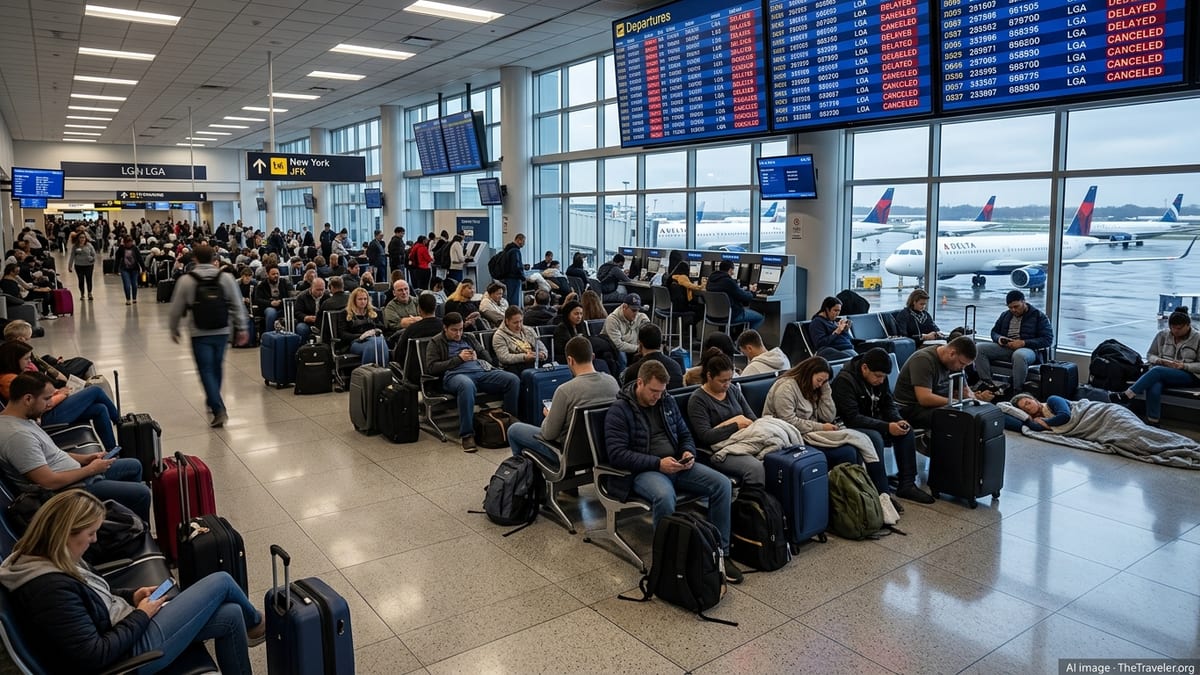
Runway crash triggers extended disruption at LaGuardia
New York’s LaGuardia Airport has been at the center of prolonged disruption since a March 22 collision between an Air Canada Express regional jet and an airport fire truck on one of its runways, an accident that killed two firefighters and injured dozens of people aboard the aircraft. In the days that followed, LaGuardia operated on reduced capacity while investigators examined the wreckage and airport crews worked to repair damaged infrastructure.
According to published coverage, one of the airport’s two runways remained closed until Thursday morning, when the Port Authority of New York and New Jersey reported that it had been inspected and cleared to resume operations. Even with the reopening, LaGuardia has continued to post some of the highest disruption numbers in the country, with tracking data cited by national outlets indicating more than 300 cancellations and a comparable number of delays within a single 24-hour period this week.
Travelers flying into and out of LaGuardia have reported spending long hours in crowded gate areas as departures are repeatedly pushed back or removed from departure boards altogether. Many have been forced to queue at customer service desks late into the night seeking hotel vouchers, rebooked itineraries or alternative routes through other hubs.
Publicly available information from airline advisories shows multiple carriers issuing flexible travel waivers tied to the LaGuardia incident, allowing passengers scheduled to transit the airport between March 23 and March 29 to change their plans without typical penalties. While these measures have eased some of the immediate pressure, they have also contributed to a rolling backlog of travelers trying to secure limited seats on later flights.
Ripple effects at JFK and Newark compound delays
The pressure on LaGuardia has spilled over to John F. Kennedy International Airport and Newark Liberty International Airport, where operations have also been affected by weather and air traffic control constraints in recent weeks. Earlier this month, severe storms along the East Coast prompted the Federal Aviation Administration to slow traffic into the New York airspace, contributing to more than 10,000 delays and cancellations nationwide on one particularly hard-hit day, according to widely cited aviation data.
At JFK and Newark, airlines have shifted some LaGuardia-bound travelers to alternative flights, adding strain to already busy schedules at two of the country’s largest international gateways. Flight-tracking dashboards on major carriers’ websites have shown clusters of delayed departures during peak periods, with aircraft waiting for available gates, crews approaching duty-time limits and upstream disruptions from other cities feeding into the congestion.
Passengers arriving at JFK after missed connections at other hubs have described being placed on standby lists for multiple successive flights, sometimes spending the night on terminal benches when nearby hotel rooms are fully booked. Others have opted to switch to Amtrak or intercity buses for shorter regional journeys when it became clear they would not depart the New York area the same day.
Newark has experienced its own pockets of disruption as transatlantic flights compete with domestic services for scarce departure slots. Aviation analytics referenced in recent news reports indicate that on some evenings, the number of takeoffs and landings in the New York metropolitan area has significantly exceeded the original schedules, as airlines attempt to work through rolling delays that cascade deep into the night.
Government shutdown and staffing shortages worsen queues
The flight disruptions have coincided with broader operational stress across the U.S. aviation system due to a partial federal government shutdown and related staffing shortages. Reports indicate that more than 450 Transportation Security Administration officers have resigned nationwide since the funding impasse began, with many others calling in sick or seeking temporary work elsewhere.
At LaGuardia, security lines in Terminal B stretched the length of the concourse on at least one midweek afternoon, according to on-the-ground reporting, adding an additional layer of uncertainty for passengers already facing unstable departure times. The three New York area airports have temporarily suspended the live security wait-time estimates normally provided on their websites, citing rapid swings in passenger volumes and available staffing.
Federal transportation leaders have publicly warned that if staffing levels continue to erode, some smaller U.S. airports could lose passenger screening services altogether, forcing airlines to consolidate operations at larger hubs. For New York City travelers, this backdrop has underscored how vulnerable their plans are to disruptions well beyond local weather or a single runway closure.
Aviation industry analysts note that long security queues can magnify the impact of schedule changes, as late-arriving passengers miss tight connections or must be rebooked onto already crowded later flights. For stranded travelers at New York airports, the combination of reduced screening capacity, overscheduled peak hours and irregular operations has produced a stop-and-go experience marked by uncertainty at every stage of the journey.
Airlines issue waivers as stranded travelers seek options
In response to the disruptions, major carriers serving New York have circulated multiple travel waivers over the past several weeks, first linked to winter storms and later expanded to cover the LaGuardia runway closure and broader East Coast thunderstorms. Publicly posted advisories from at least one large U.S. airline describe fee-free rebooking options for passengers ticketed to or from LaGuardia between March 23 and March 26, later extended through March 29 as the operational impact persisted.
These waivers generally allow travelers to change to new flights within a defined date range and fare class without incurring change fees, provided the origin and destination remain the same. While such policies are designed to give customers flexibility and help airlines smooth out demand spikes on the most heavily affected days, they do not guarantee immediate alternatives when flights are chronically oversold.
As a result, many travelers stranded in New York have turned to creative workarounds: booking last-minute seats into secondary airports such as Philadelphia or Hartford and completing the journey by train or rental car, or accepting multi-stop routings that add hours to already long itineraries. Social media posts and traveler forums over the past week are filled with accounts of passengers piecing together complex reroutes to reach weddings, cruises or long-planned vacations.
Consumer advocates emphasize that U.S. regulations currently distinguish between delays caused by weather or air traffic control and those attributed to an airline’s own operations, with compensation and entitlement rules varying accordingly. For passengers stranded in New York amid a mix of factors including a runway accident, storms and staffing constraints, the patchwork of policies has added another layer of complexity to an already stressful situation.
What New York–bound travelers can expect in coming days
Forecasts for the final weekend of March indicate a gradual return to more typical operations at LaGuardia now that both runways are available, although the accumulated backlog of displaced passengers may take additional days to clear. Airlines are expected to continue operating some late-evening and early-morning services as they reposition aircraft and crews to restore normal rotations.
Aviation data specialists caution that while the most acute phase of the LaGuardia shutdown has ended, the New York region remains prone to sudden slowdowns whenever thunderstorms, high winds or low visibility affect the tightly choreographed airspace shared by JFK, LaGuardia and Newark. Passengers with upcoming trips are advised, in publicly available guidance from airlines and travel organizations, to monitor their flight status closely, enable app notifications and allow extra time for security screening.
For travelers who experience cancellations, published consumer information from the U.S. Department of Transportation outlines refund eligibility when a flight is dropped altogether or significantly changed, even when the airline offers a voucher. Rebooking policies vary by carrier, so checking the exact terms of any travel waiver or schedule-change notice remains essential.
At terminal gates across New York this weekend, departure boards still show a patchwork of red and yellow next to green on-time indicators. For stranded passengers trying to salvage spring-break plans or return home after business trips, each status refresh is another reminder of how quickly the region’s interconnected airports can seize up when accidents, weather and systemic strains collide.