

More news on this day
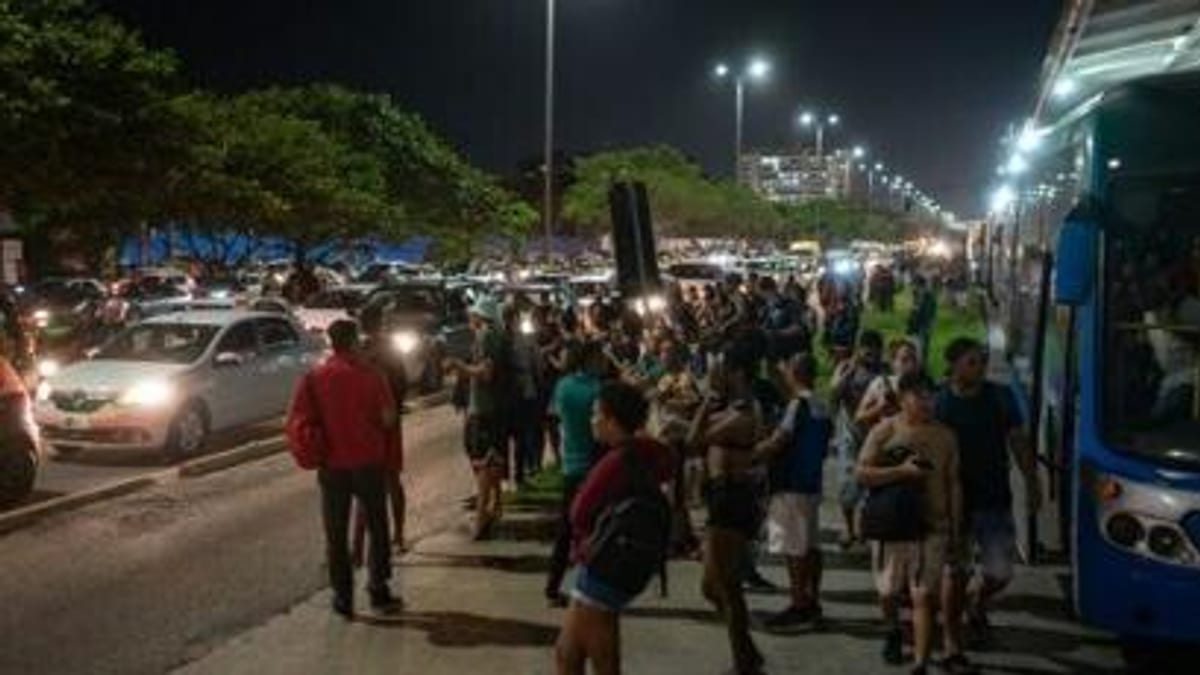
Thousands of passengers were left stranded in Rio de Janeiro in October 2023 after suspected paramilitary militia members torched 35 public buses, paralyzing major transport corridors and underscoring the growing influence of criminal groups over Brazil’s largest cities.
Get the latest news straight to your inbox!
Coordinated Arson Wave Follows Killing of Militia Figure
Published coverage indicates the bus burnings erupted on October 23, 2023, shortly after a police operation in Rio de Janeiro resulted in the death of a senior figure linked to one of the city’s powerful militias. Reports describe the attacks as an apparent act of retaliation, with suspected militia members targeting buses across the city’s west side.
According to information compiled from Brazilian and international outlets, at least 35 buses and a train driver’s cabin were set on fire in quick succession. The scale of the damage marked one of the most extensive single-day arson incidents involving Rio’s public transport network since such records have been kept.
Publicly available information from Rio’s bus operators indicates that five of the destroyed vehicles were articulated buses used on dedicated bus rapid transit corridors built ahead of the 2016 Olympic Games. The destruction of these larger-capacity vehicles further reduced the ability of the network to absorb demand once limited services resumed.
Security analysts quoted in regional policy and conflict studies journals describe the attacks as consistent with previous patterns of militia retaliation in Rio, where criminal groups have long used spectacular acts of violence against infrastructure to display strength and pressure authorities.
Commuters Caught in the Middle of a Turf War
For ordinary passengers, the sudden loss of dozens of buses translated into hours of uncertainty. Morning and evening peak services in parts of western Rio reportedly collapsed as operators withdrew vehicles from certain routes for fear of further attacks, leaving passengers waiting at crowded stops with no clear information on when buses might run again.
Local media accounts describe scenes of commuters walking long distances along major avenues, attempting to reach work, school, or home after services were abruptly suspended. Many reported searching for informal vans and ride-hailing options, often at sharply higher prices as demand spiked.
The west side of Rio, where many of the attacks occurred, is heavily dependent on buses and bus rapid transit lines, with fewer rail alternatives than other parts of the metropolitan area. As a result, the arson wave disproportionately affected lower and middle-income neighborhoods whose residents rely on public transport for daily mobility.
Travel-industry observers note that tourists staying in western coastal districts also faced disruptions as hotel shuttles and airport connections were rerouted or delayed. While major tourist zones closer to the city center were less directly hit, the incident renewed concerns about the vulnerability of visitors who depend on overland transport to move between beaches, hotels, and airports.
Impact on Rio’s Transport Network and Operators
Bus company representatives cited in Brazilian news reports characterized the loss of 35 vehicles in a single day as unprecedented for the city’s fleet. Replacing that number of buses requires significant capital, and some operators signaled that services on lower-revenue routes might be reduced or reorganized while insurance claims and financing are arranged.
Analysts focusing on Latin American urban mobility point out that the incident hit a system already under strain. Rio’s bus operators have faced years of financial pressure stemming from fare disputes, rising fuel costs, and shifting ridership patterns following the COVID-19 pandemic. The sudden destruction of vehicles compounded these challenges and raised questions about who ultimately bears the cost of criminal violence.
Published commentary also notes the symbolic nature of targeting buses and a train driver’s cabin, rather than more fortified government facilities. Public transport vehicles are highly visible, relatively easy to access, and central to the daily life of the city, meaning attacks have an immediate psychological effect on residents while disrupting economic activity.
In the weeks following the arson wave, transport planners and civic groups used the incident to argue for greater investment in security measures for buses and depots. Proposals discussed in public forums included expanded monitoring along key corridors, better integration between transit agencies and law enforcement databases, and financial cushions for operators forced to suspend or reroute services after violent incidents.
Militias and the Geography of Fear in Rio
The 2023 arson attacks cannot be separated from the broader role of militias in Rio de Janeiro’s security landscape. These armed groups, often composed of or historically linked to former police and military personnel, are known to control territory in various neighborhoods, running extortion schemes, parallel transport services, and illicit businesses.
Academic and policy research on Rio’s militias describes how control over transportation corridors can be a lucrative asset, both for extortion of legitimate operators and for the protection of illegal enterprises such as contraband fuel and informal real estate. In this context, buses are not only a public service but also a contested economic and territorial resource.
The killings of prominent militia figures have frequently been followed by acts of reprisal that are designed to send a message to rivals and the state. Destroying dozens of buses at once, particularly on routes through militia-influenced districts, signaled both capability and a willingness to impose costs on the broader public when group interests are threatened.
Residents in affected neighborhoods have long reported an atmosphere in which daily commuting choices carry a layer of risk assessment, with some preferring to avoid certain lines or times of day. The 2023 events intensified this sense of unease, reinforcing perceptions that the city’s geography of fear extends to the bus stops and terminals many rely on every day.
Travel Considerations and Ongoing Concerns
For travelers and commuters using Rio de Janeiro’s transport system today, the 2023 incident serves as a reminder that urban mobility can be directly shaped by criminal conflict. While large-scale arson attacks on the scale of 35 buses are rare, transport disruptions linked to security operations, protests, or localized violence are an ongoing feature of life in many Brazilian cities.
Public information from transport agencies and local news outlets indicates that services in Rio have since returned to regular operation, though the destroyed vehicles were gradually replaced rather than immediately restored. Operators continue to adjust routing and schedules in response to changing security conditions, and occasional incidents of vandalism or targeted attacks still occur on a smaller scale.
Travel analysts suggest that visitors monitor local news and consult hotel staff or tour providers about current transport conditions, especially when planning trips through outlying neighborhoods or late-night movements. In some situations, using registered taxis, app-based ride services, or organized transfers can reduce exposure to sudden route suspensions or detours.
Urban security specialists argue that as long as militias retain territorial power and substantial economic interests, transport systems in Rio and similar cities will remain vulnerable. The 2023 bus burnings, with their images of charred vehicles and stranded passengers, continue to be cited in discussions about how to balance enforcement with long-term strategies that address the social and financial foundations of criminal control.